Nitria and Scetis: H. G. Evelyn White,The Monasteries of the Wadi ‘N Natrun

The valuable Syriac documents which came from the Monastery of the Virgin in the Wadi el-Natrun, are still labeled sometimes as “Nitrian.” Similarly, the dialect of the Coptic manuscripts from St. Macarius’ Monastery, situated in the same desert, is called “Nitrian Bohairic.” This label seems to imply that the two monasteries are located in the desert of Nitria.

However, neither the Monastery of the Syrians, nor that of St. Macarius is situated there! The assumption that Nitria and Wadi el-Natrun would be one and the same place is wrong, being based on a topographical confusion.

The ancient name of the Natron Valley, the source of the documents mentioned above, was “Scetis.” While the first community in Nitria goes back to Amoun, the founder of Scetis was Macarius the Egyptian. These two settlements, along with Kellia, formed the three important monastic communities situated to the West of the Nile Delta.

From a geographical point of view, Scetis is situated deeper in the desert than Nitria and it is the paneremos (or vastissima eremus, as Rufinus calls it). According to the Historia monachorum in Aegypto, it takes 24 hours to walk the distance between the two hermitages.

As to the four well-known monasteries, they are located in Scetis, not in Nitria. Therefore, the adjective “Nitrian” could not apply to them in any sense. This label was used by scholars in a period when the geography of the Egyptian desert was still obscure, but today it must be discarded.

The first who pointed out that the Wadi el-Natrun is not Nitria, was Hugh G. Evelyn White in his monumental The Monasteries of the Wadi ‘N Natrun. Here are the first two volumes of this important work:

H. G. Evelyn White, The Monasteries of the Wadi ‘N Natrun Part 1: New Coptic Texts from the Monastery of Saint Macarius (New York 1926)

H. G. Evelyn White, The Monasteries of the Wadi ‘N Natrun Part 2: The History of the Monasteries of Nitria and of Scetis (New York 1932) (this volume is available also here)
Posted in Bibliographies, Monasteries | Tagged , , , , , , , , , | 15 Comments

A Further Fragment from the Apocryphal Acts of John in Coptic: Once Again Concerning the Sotheby-Bolaffi Fragments

I have already discussed several times the ten Coptic fragments which were sold by Sotheby’s in July 2009. I was in Vienna when the auction took place and, as Cornelia Römer was at that time the director of the papyrus collection, she wanted to purchase the fragments for the Austrian National Library. That’s how I became aware that some new Coptic manuscripts were on the market.

However, it appeared that the fragments were purchased by somebody else so I lost track of them. It was only at the beginning of this year that Enzo Lucchesi drew to my attention that the same fragments were discussed by Federico Bottigliengo in 2009 in the magazine “Il collezionista,” which is published by the auction house Bolaffi in Turin. It was clear, therefore, that the Italian antiquarians must be the new owners of the fragments. Shortly thereafter, Bolaffi found about my interest in the material and they have kindly sent me digital photos of all the fragments which they acquired from Sotheby’s.

The paleographical examination that I made of them on the basis of the photographs confirmed that all the fragments came from codices which once belonged to the White Monastery in Upper Egypt. So far, I have managed to identify the following items from the Sotheby-Bolaffi lot:

Cyril of Alexandria, Scholia on the Incarnation of Monogenes (CPG 5225)

Pseudo-Cyril of Jerusalem, On the Passion of Christ, homily 1 (CPG 3598; clavis coptica 0114)

Pseudo-Cyril of Jerusalem, On the Finding of the True Cross (CPG 3602; clavis coptica 0120)

Pseudo-Evodius of Rome, On the Passion of Christ (clavis coptica 0149)

Pseudo-Evodius of Rome (?), On the Life of Jesus and His Love for the Apostles (clavis coptica 0150; fragments of this work were sometimes mistakenly attributed to the Gospel of the Twelve Apostles)

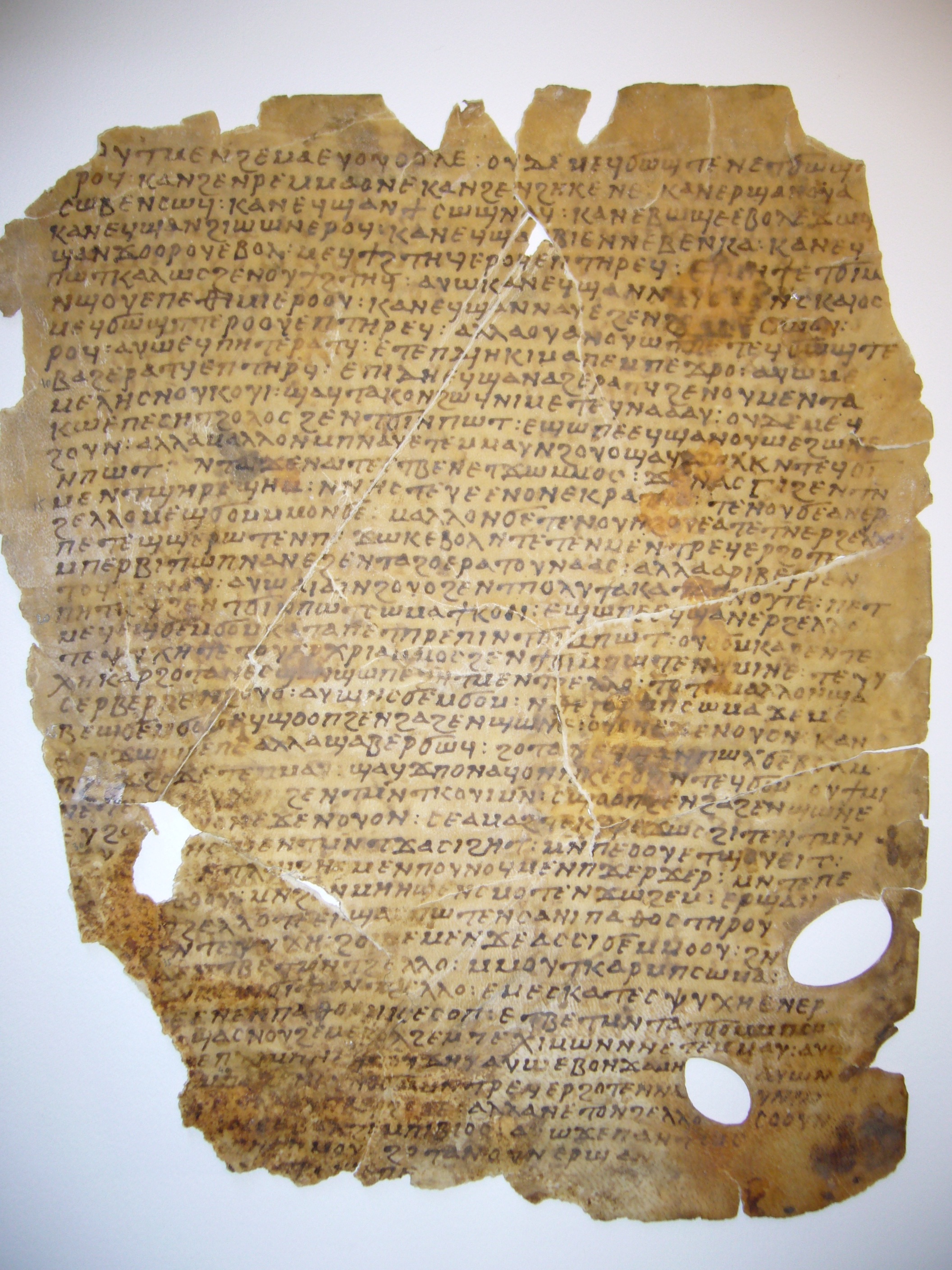
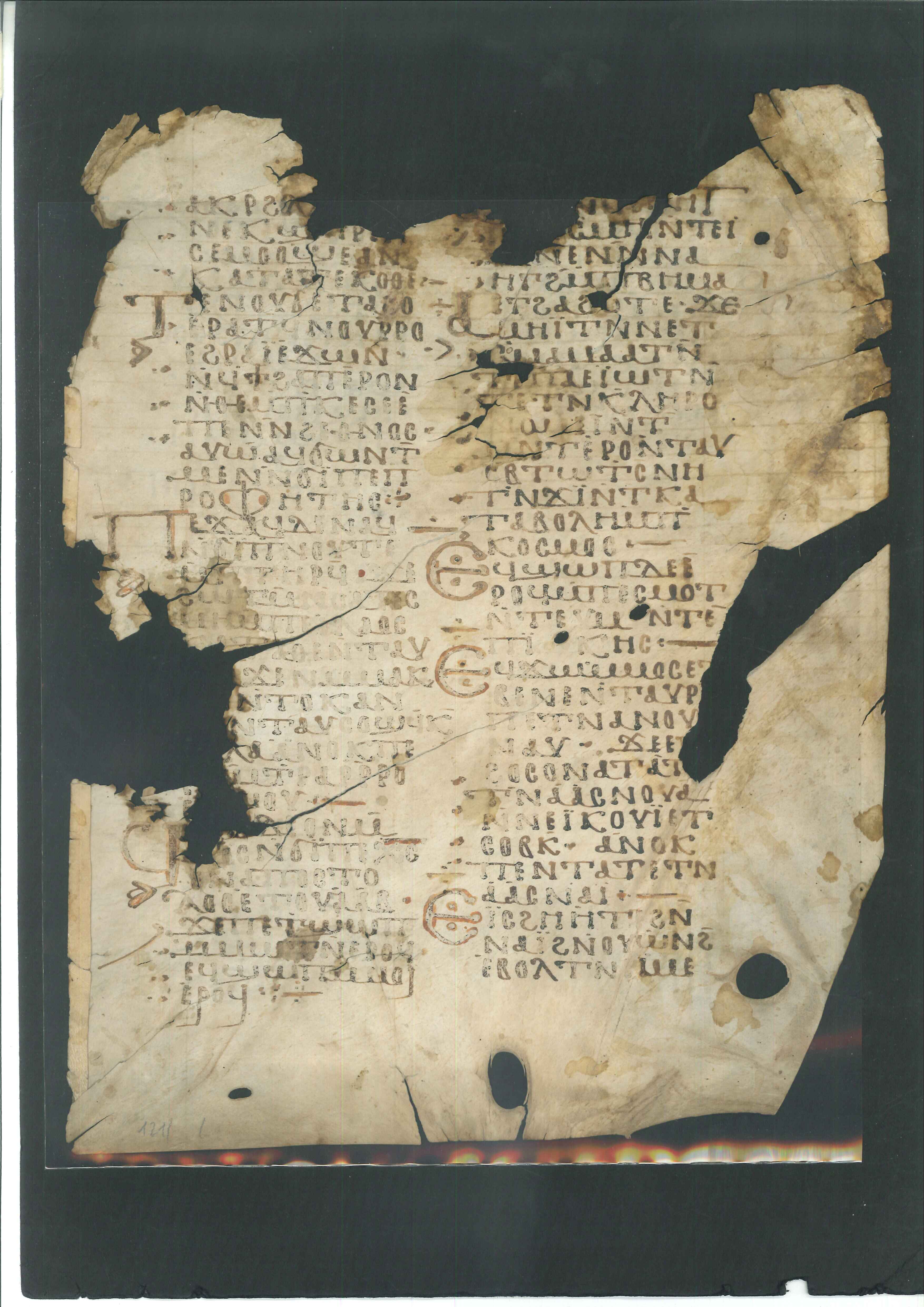
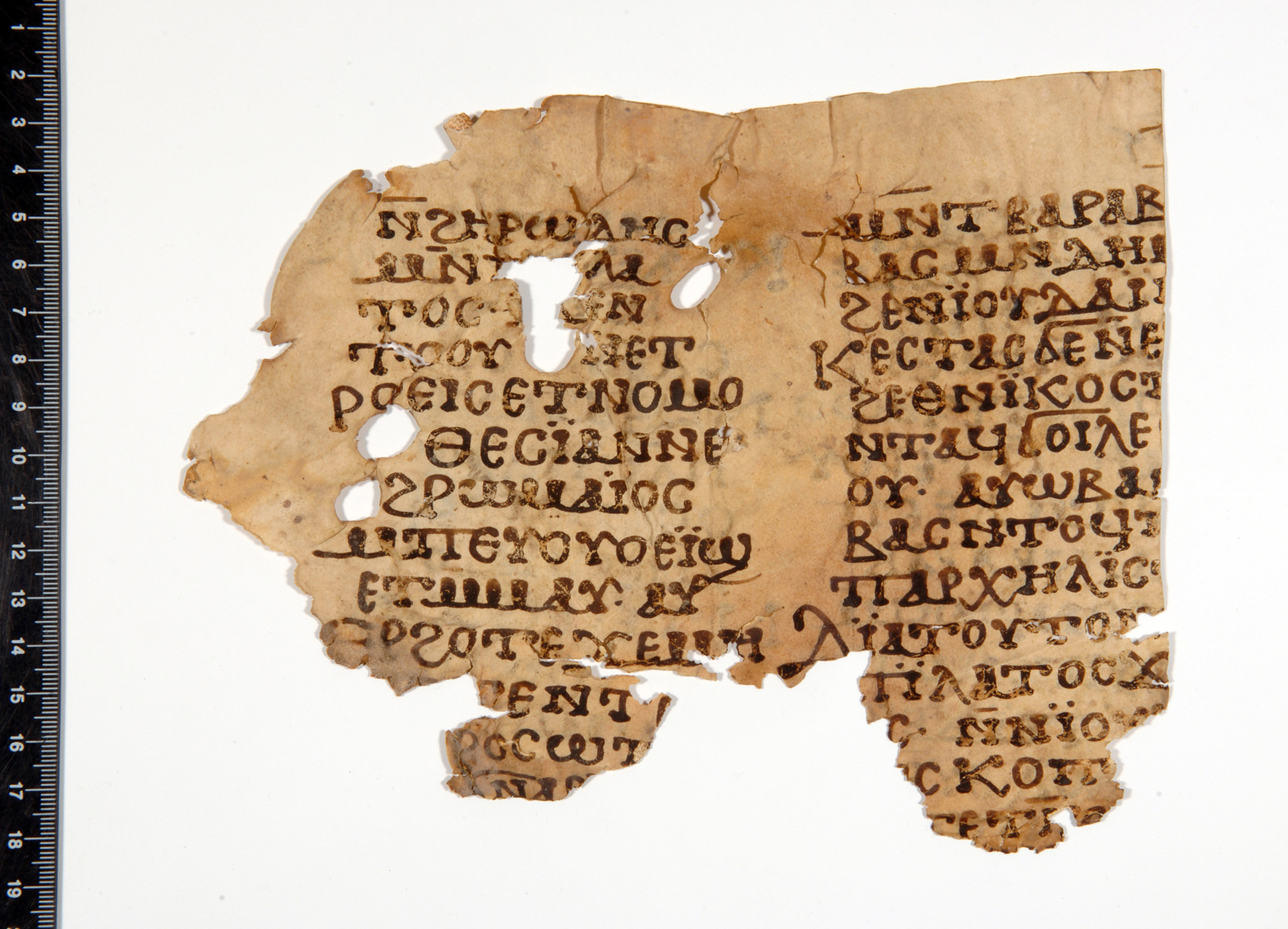
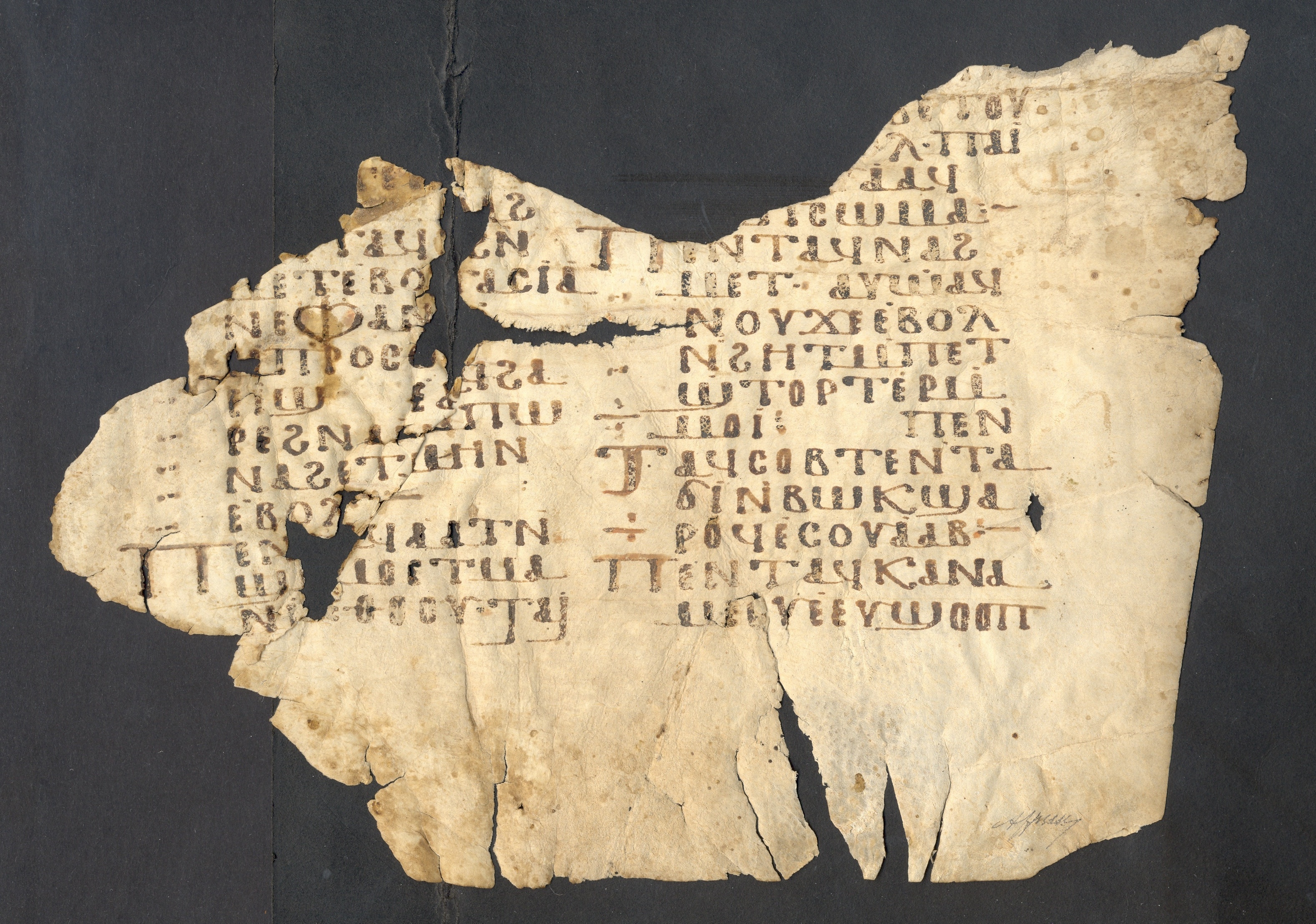
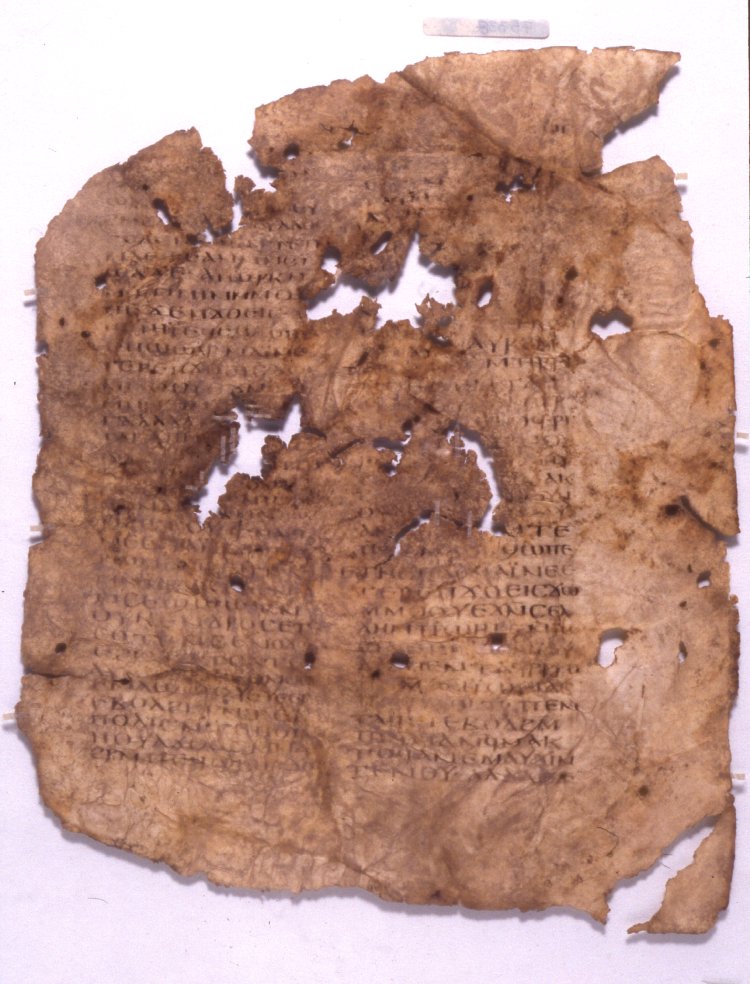
A few days ago, another interesting work came to light from those several fragments which were still unidentified. This is Bolaffi no. 4 and it contains a portion from the Acts of John in Coptic.

First of all, here is a picture of the fragment in question, which I received from Bolaffi:

THE IDENTIFICATION OF THE FRAGMENT

The text of this fragment is a portion from the so-called Metastasis (or Dormitio) Iohannis (CANT 215.2; BHG 910-913d). This work is in fact an extract from the Acts of John, more precisely the chapters 106-115. The events are placed in Ephesus, but unlike the account of John’s martyrdom which appears in some apocryphal acts, Continue reading

Posted in Acts of John, Apocrypha, Apocryphal Acts of the Apostles | Tagged , , , , , , , , , , , , , , , | 3 Comments

The Catalogue of the Coptic Manuscripts in Berlin

Beshoy Ramzy, a reader of my blog, was kind enough to send me the catalogue of the Coptic manuscripts in the papyrus collection in Berlin, prepared by the late Walter Beltz. The catalogue was published in two parts in Archiv für Papyrusforschung (in 1978 and 1980). It contains the manuscripts on papyrus, parchment and paper, but also the ostraka:

W. Beltz, “Katalog der koptischen Handschriften der Papyrus-Sammlung der Staatlichen Museen zu Berlin (Teil 1),” Archiv für Papyrusforschung 26 (1978) 57-119

W. Beltz, “Katalog der koptischen Handschriften der Papyrus-Sammlung der Staatlichen Museen zu Berlin (Teil 2),” Archiv für Papyrusforschung 27 (1980) 121-222

Posted in Bibliographies | Tagged , , , , | 2 Comments

A British Museum Fragment Purchased from Christie’s: New Evidence of the Book of Jeremiah in Coptic

A few days ago, I found out via Roger Pearse (who took over the news from AWOL) that the British Museum has prepared a searchable database of its collections. I was naturally interested to see whether they offer access to some of the Coptic material. Indeed, it appeared that there are many Coptic items worth checking that are accessible there.

A Sahidic parchment leaf caught my attention in particular. According to the information supplied in the database, this manuscript fragment was purchased by the British Museum from Christie’s in 1996.

Pictures of both sides of the fragment are available on British Museum’s website:

Here is some relevant information connected to this manuscript:

Registration number: 1996, 0608.38

BM/Big number: 75338

Description
Parchment sheet from a codex with two columns of Coptic text on either side (34 lines).

Dimensions
Height: 24 centimetres
Width: 19.5 centimetres

Condition
fair (incomplete – fragmentary)

Acquisition date
1996

Acquisition name
Purchased from Christie’s

As far as I am aware, this Coptic fragment was neither studied, nor identified before. It would be useful, therefore, to say here a few words concerning it.

The fragment is paginated 213-214, which means that the original codex must have been quite substantial. Its handwriting does not look familiar to me and I was unable to find other leaves codicologically related to the London fragment. However, examination of the photographs led me to the conclusion that the manuscript contains a portion from the Book of Jeremiah in Sahidic. More precisely, the Coptic text corresponds to Jer. 21:14-22:20 (LXX). The document is of particular importance as it supplies us with a passage from Jeremiah which was unknown in Sahidic. According to Hany N. Takla’s estimations,[1] the currently known Sahidic manuscripts give us only 52% of this Biblical book. Thus, every newly found fragment is a valuable textual witness which adds another piece to the puzzle. Therefore, it is important not only to record properly this new witness, but also that it is edited in the near future.


[1] H. N. Takla, An Introduction to the Coptic Old Testament, published as Coptica 6 (2007).

Posted in Bible, Jeremiah, Old Testament | Tagged , , , , , , , | 5 Comments

Corpus Scriptorum Christianorum Orientalium. Scriptores Coptici series – Online Volumes

I come to know from AWOL and Roger Pearse that several volumes from Corpus Scriptorum Christianorum Orientalium, Scriptores coptici series are available on the website of the Oriental Institute of the University of Chicago:

It appears that the eighth volume is still missing: H. Wiesmann, Sinuthii archimandritae vita et opera omnia, III (Paris, 1931).

I add here a few other volumes from the same series:

Posted in Apocrypha, Bibliographies, Corpus Scriptorum Christianorum Orientalium, Patristics | Tagged , , , , , , , , | 17 Comments

About Some Coptic Fragments on the Dormition of the Virgin

(This post would have been impossible without the invaluable help of David Tibet, aka Anok Pe)

My friend Hans Förster has recently published with Walter de Gruyter a volume that brings together a number of Coptic fragments on the Dormition of the Virgin.[1] Two out of the four fragments in this book are edited for the first time in a modern language. In addition to the edition and the German translation of the material, the author has prepared an erudite commentary on each individual fragment.

The four fragments, all copied on parchment, are as follows: 1) a folio from the collection of Archduke Rainer, now to be found in the Austrian National Library in Vienna; 2) two leaves from the National Library in Paris; these belong to the same codex; 3) a fragment in Cambridge University Library. The photographic plates of each item are found at the end of the volume.

In this post, firstly I shall talk briefly about the two Parisian leaves and I will comment on their identification. Secondly, I will deal with the Vienna fragment, indicating that two other leaves, which very likely belong to the one and the same text about the Virgin, can be found in other collections of Coptic manuscripts. I hope this brief report will be of use to those interested in Eastern traditions concerning the Dormition of Mary and that they will be properly studied in the future.

The Paris Fragments

The two Paris fragments edited by my friend bear the inventory numbers BnF Copte 12917, ff. 28-29. A French translation of these leaves was published in 1903 by Eugène Revillout in an issue of the Journal Asiatique.[2] However, Revillout’s translation is of little use today. It is not only that it is defective on many points, but also that the French scholar did not even indicate which fragments he translated! Förster’s edition has been therefore necessary and is most welcomed.

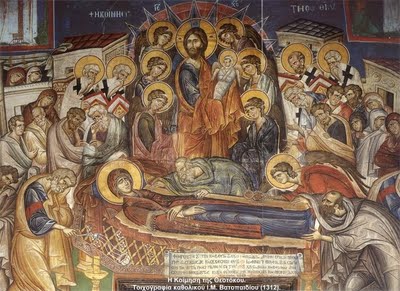
The two fragments are consecutive and the scribe paginated them only on the verso, with even numbering. It appears thus that they were pages [41]-[44] of the codex from which they had been torn. The text describes a scene in which Jesus, the apostles and Mary’s accompanying maidens gathered around her death-bed. This episode is abundantly represented in iconography.

Christ sits by his mother’s bedside, he kisses her and then blesses different parts of her body. Mary’s Dormition is said to occur on 21 Tobe, the standard date of the dormitio in the Coptic sources.

There is just one thing which I have to add to Continue reading

Posted in Apocrypha, Dormition of the Virgin | Tagged , , , , , , , , , , , , , , | 2 Comments

An Encomium on the 12 Apostles Attributed to Severian of Gabala: New Sahidic Fragments

(Kudos is due again to Rev. James M. Leonard)

Sever Juan Voicu published recently in the journal Apocrypha an extensive article concerning the apocryphal traditions in the Encomium on the 12 Apostles ascribed to Severian of Gabala.[1] This text is known in one complete Coptic parchment manuscript (its leaves are shared by the Pierpont Morgan Library in New York, the Michigan University Library and the Coptic Museum in Cairo), as well as in two Arabic paper codices (one is in the Vatican Library, and the other in the Coptic Museum, Cairo). The Coptic text was edited in 1993 by Michael E. Foat in a collective volume,[2] and re-edited more recently, together with the Arabic witnesses, by Davide Righi.[3]

The aims of this post are modest. First of all, I will briefly introduce the encomium on the apostles to the general reader. Secondly, I will show that the Pierpont Morgan codex is not the only Coptic witness of this text. Another surviving manuscript was brought to light during my research on the collections of Coptic manuscripts. This codex belonged to the White Monastery and its leaves were dismembered and scattered among different libraries and museums around the world. Finally, I will argue that Continue reading

Posted in Apocrypha, Apocryphal Acts of the Apostles, Patristics, Severian of Gabala | Tagged , , , , , , , , , , , , , | 3 Comments

The Discovery of an Extract from “De Passione et Cruce” by Pseudo-Athanasius of Alexandria in a Coptic Patristic Florilegium

(Thank you, David Tibet, for helping me with this post!)

The homily De Passione et Cruce Domini (CPG 2247) is amongst the most interesting documents ascribed to Athanasius of Alexandria. In a recent article, I showed that an extract from this sermon existed as well in a Coptic version. The fragment newly-identified is the only witness of Pseudo-Athanasius’ sermon found until now in Coptic.

*

The surviving manuscripts of De Passione et Cruce credit Athanasius of Alexandria as the author of the homily However, the authenticity of this work has been seriously challenged. In Migne’s Patrologia Graeca, the text was printed amongst the dubia of Athanasius (see PG 28, coll. 125-249).

In an important article published in 1919, the Jesuit scholar V. Hugger had shown that the author of the text knew and Continue reading

Posted in Athanasius of Alexandria, Patristics | Tagged , , , , , , , , , , , | 2 Comments

A New Fragment of the Life of Moses of Abydos (Formerly Attributed to a Homily on Penitence by Shenoute of Atripe)

In the field of Coptic studies, it often happens that an isolated manuscript fragment which does not bear any clear detail as to allow its instant identification, is wrongly attributed to a particular author or work. This is largely due to the deplorable state in which the Coptic manuscripts from the first millennium came down to us, but also to the haste with which some scholars edit random fragments or just poor scraps of papyrus and parchment, without the necessary patience to identify them. Enzo Lucchesi noted in one of his articles that this sad situation should give some thought “to those who will catalogue in the future the collections of Coptic manuscripts, but also to the papyrologists in general, because the homiletic look of a fragment, in the absence of a formal identification or precise textual parallelism, does not necessarily imply that it belongs to a homily”[1] (my own translation from French).
For my part, I had remarked in some articles on this blog that certain fragments attributed in the past to the apocryphal Gospel of Bartholomew came in fact from a homily by ps.-Epiphanius, that two leaves formerly considered to contain a work by Shenoute of Atripe are actually preserving the spiritual homilies of Pseudo-Macarius, or that an “apocryphal fragment on the Virgin” is to be rather restituted to a homily by Cyriacus of Behnesa.

In this post and the following one, I would like to discuss two fragments that belong to the Coptic vitae of two Egyptian monks, but which were wrongly attributed in the past to some homiletic texts.

*

CUL Or. 1699 F is a Sahidic parchment fragment which is currently preserved in the collection of Cambridge University Library. The piece came from the ancient library of the White Monastery, Continue reading

Posted in Moses of Abydos, Shenoute of Atripe | Tagged , , , , , , , , , , , , | 1 Comment

An Encomium on the Archangel Gabriel of Unknown Authorship

In a recent issue of Zeitschrift für Antikes Christentum, Hans Förster published the editio princeps of P. Vindob. K 9670, a Sahidic parchment folio from the collection of the National Library in Vienna.[1] The fragment seems to come from an unidentified encomium on the archangel Gabriel and recounts the story of a man who is tempted by the wife of his business partner. At a certain point in the narrative, the man prays for the intervention of the archangel, the tenor of the text suggesting that it belongs to the miracula section of the encomium.

The fragment edited by my friend was dismembered from a larger codex which once belonged to the library of the White Monastery in Upper Egypt. Hans has studied and very carefully edited the text and supplied us with high-quality black-and-white photos of the manuscript. While I was checking these pictures, I realized that the hand-writing looks familiar and that good fortune has preserved other leaves from the same codex.

Interestingly enough, one of the newly identified fragments is the leaf to which the fragment published by Hans Förster was originally joined in a single bifolio (a bifolio is a sheet folded as to form two leaves). This new fragment is of special importance as it contains a colophon which mentions the name of the scribe, the place where the codex was copied and the year of its completion.

THE MANUSCRIPT

But let’s start with the beginning. In ancient times, the copyists used to number not only the pages of the codices, but also their quires (a quire is a gathering of sheets folded in two). Each quire used to be numbered twice, on the first and last page, in the superior inner corners. The parchment leaf K 9670 edited by Förster is paginated 81-82. On the upper left corner of the recto, one can still read the number 7, which means that the fragment used to be the first leaf of the manuscript’s seventh quire.

As for the fragment I identified as being the other half of the parchment sheet from which K 9670 was cut off, it is kept in the National Library in Vienna under the inventory number P. Vindob. K 351.[2] The text has the concluding remarks of the encomium on the archangel Gabriel and the final doxology. The leaf is paginated 87-88 and the signature of the same quire, the seventh, is visible on the upper right corner of the verso. This means that the two Vienna fragments were separated by only one bifolio, which was paginated 83-86.

In order to show that Vienna K 9670 and K 351 were joined in a single parchment sheet, I reconstructed the original bifolio in Adobe Photoshop.

Flesh side of the parchment (the quire signature is visible on both fragments, near the spine):

Continue reading

Posted in Archangel Gabriel | Tagged , , , , , , , , , , , , | 2 Comments

Pseudo-Athanasiana

The draft version of an article concerning the identification of several Coptic fragments that contain writings attributed to Athanasius of Alexandria (including a letter of the patriarch to Horsiesius, the head of the Pachomian congregation). The paper can be read here.

Posted in Articles, Athanasius of Alexandria, Pachomius, Patristics | Tagged , , , , , , , , , , | 1 Comment

The Homilies on the Epistle to the Hebrews by John Chrysostom: A Complement to the Coptic Version

The series of the Homilies on Hebrews (CPG 4440; PG 63, coll. 9-236) was traditionally ascribed to John Chrysostom’s last years in Constantinople (403-404). However, this assumption has been challenged recently by Pauline Allen and Wendy Mayer,[1] the two scholars from Australia who changed so much in our understanding of Chrysostom’s preaching activity. More precisely, they indicated that Chrysostom delivered some of the speeches on Hebrews during his Antiochian period.

Of all the Coptic translations of Chrysostom’s biblical commentaries, his Homilies on Hebrews are probably the best represented. Even if only fragments have survived, it is likely that all 34 homilies were translated into Coptic.

While browsing through the Sahidic manuscripts from the White Monastery which are kept today in the National Library in Paris, I came across a new parchment fragment of John Chrysostom’s Homilies on Hebrews. This fragment, which belongs to the 12th homily, was previously unidentified.

Before introducing the new witness, let’s see what fragments were already known from the Homilies on Hebrews in Coptic.

Codex 1 (MONB.CP)

In 1909, in his catalogue of the Coptic manuscripts in John Rylands Library in Manchester, Walter Ewing Crum showed that this collection possesses a palimpsest parchment leaf which contains part of a homily on the Epistle to the Hebrews by John Chrysostom.[2] This is MS 25, fol. 4 and the original manuscript, today dismembered, came from the Monastery of Apa Shenoute, or the White Monastery, in Upper Egypt.

I have pointed out in a previous article that the second copyist used as writing material a manuscript which can be safely dated around 990 AD.[3] This means that the palimpsest must have been manufactured after this date (perhaps in the 12th or even 13th century).

Another fragment from the same palimpsest, which contains a part from the 7th homily on Hebrews, is kept today in the collection of the French Institute in Cairo (IFAO no. 171). This bit is mentioned by Catherine Louis in her still unpublished catalogue of the Coptic manuscripts in IFAO.[4]

The two fragments identified so far are not, however, the only witnesses of John Chrysostom’s Homilies on Hebrews in this codex. I have found two other fragments from the same manuscript which Continue reading

Posted in John Chrysostom, Patristics | Tagged , , , , , , , , , | 7 Comments

Coptic Fragments from Cyril of Alexandria’s Scholia on the Incarnation of Monogenes

In July 2009, during a research visit at the Papyrussammlung of the National Library in Vienna, Cornelia Römer drew my attention to ten Coptic parchment fragments that were on offer by Sotheby’s at that time. As Dr. Römer was the director of the papyrus museum, she was willing to acquire the fragments for the Viennese collection, but eventually I found out that they had been purchased for 28,750 GBP by Bolaffi, the Italian antiquity dealers based in Turin.

Since then, I posted on my blog several articles on what I called the “Sotheby’s fragments” (for example here and here). I would like to discuss again one of them, which was identified as part of the Coptic translation of the Scholia on the Incarnation of the Only Begotten by Cyril of Alexandria.

Here is the report on the fragments in question, posted on Sotheby’s website:

Sale: L09740

10 fragments of varying sizes: (1) a near complete leaf, 335mm. by 261mm.; (2) (3) & (7) substantial fragments of leaves approximately 240mm. wide, (4) & (6) large sections of single columns; the remainder small pieces approximately 60mm. across; written space of (1) 255mm. by 165mm, double column, with 31 lines in black ink, capitals within the text touched in red, those beginning significant sections with clubs at the end of their terminals, dots within their bodies and outlined in red, vellum dry and brittle in places, many tears to outer edges of leaves, but in good and presentable condition.

Sotheby’s claimed that all the fragments auctioned came from the same ancient manuscript. However, after receiving a set of pictures from Bolaffi, the new owners of the fragments, I realized that they come in fact from different codices.

The only picture available on Sotheby’s website shows the verso of the best-preserved leaf, which I conveniently called “Sotheby’s 1.”[1] The little amount of text which I could obtain in 2009 from the picture posted on the website, already suggested a possible author. The fragment calls Christ Logos, Emmanuel and Only Begotten and discusses the relationship between his divinity and humanity. This issue represented the main controversy during the Nestorian crisis and was often debated by Cyril of Alexandria. Indeed, “Sotheby’s 1” can be safely identified as a portion from Cyril’s Scholia on the Incarnation of the Only Begotten (CPG 5225),[2] a dogmatic work central to the Christological debates of the 5th century. Unfortunately, the scholia survived only partly in Greek, but their text is recoverable from the translations made into Latin and various languages of the Christian Orient.[3]

More precisely, the Coptic text parallels the Latin version published by Schwartz in his Acta Conciliorum Oecumenicorum, vol. I.5.1, p. 214, lines 10-20.

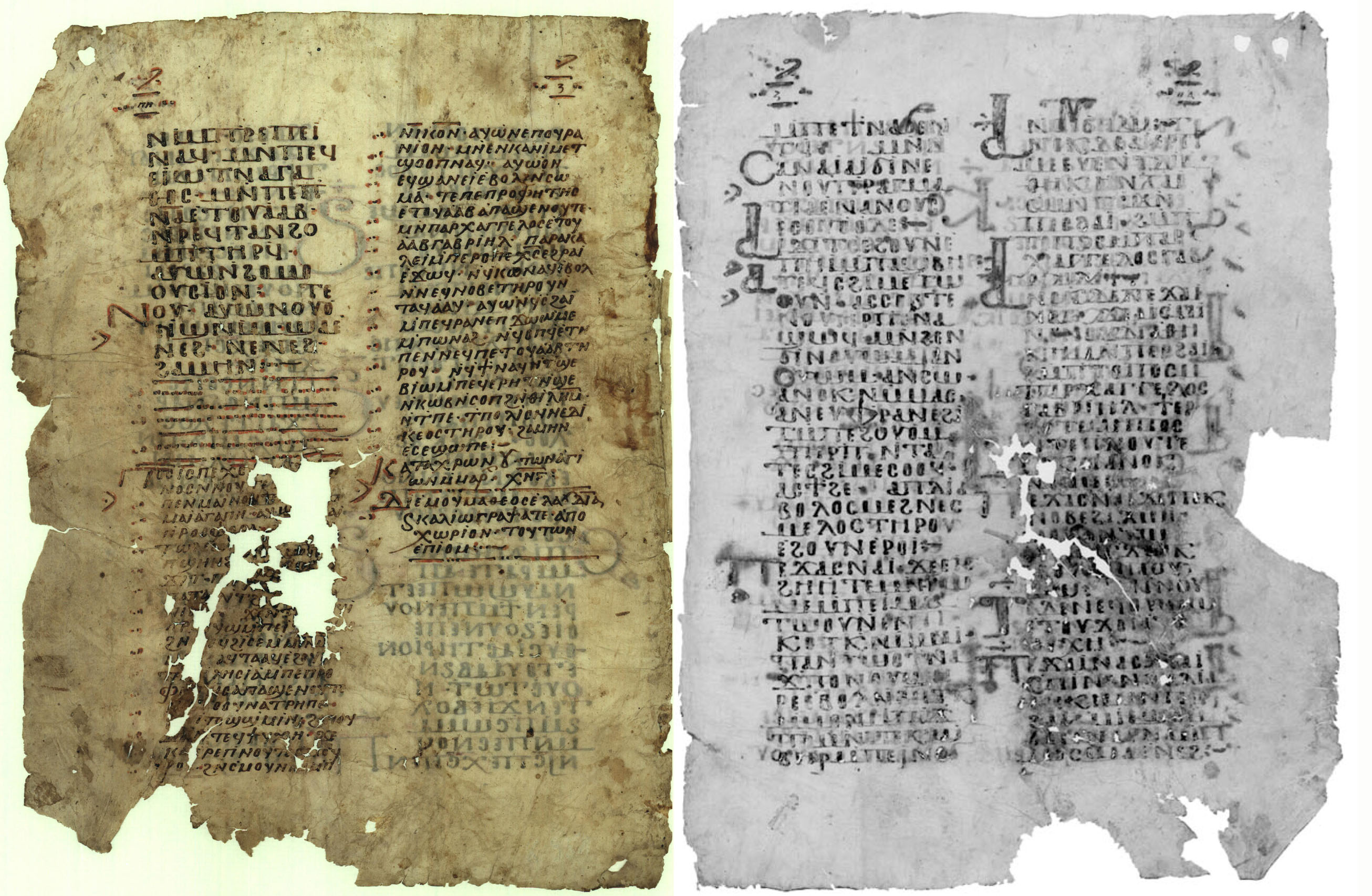
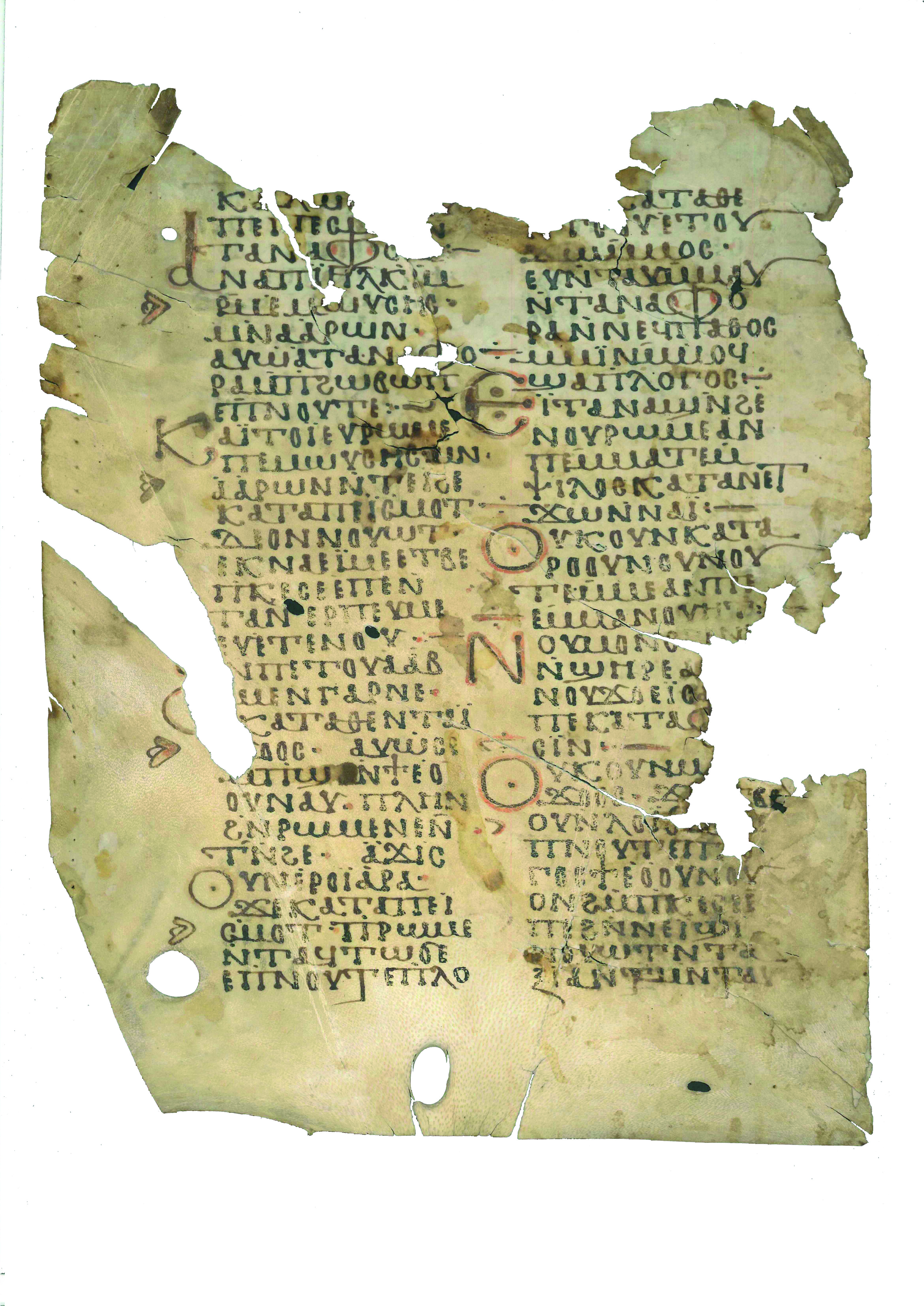
These are the pictures of the fragments, which the Bolaffi house kindly sent me:

Recto

Verso

“Sotheby’s 1” originally belonged to a White Monastery codex which is divided among several collections. Other fragments from the same codex have been identified some time ago by Enzo Lucchesi.[4] The seven fragments found by Lucchesi are completed by a supplementary folio, previously unidentified, kept in the National Library in Vienna (call number K 9580).

Adding the newly recovered fragments, Continue reading

Posted in Cyril of Alexandria, Patristics | Tagged , , , , , , , , , | 4 Comments

Notes on the Canons of Pseudo-Athanasius

I recently tried to reconstruct codicologically a White Monastery manuscript on the basis of several parchment sheets spread among several libraries. I have not yet managed to identify their content, but the text suggests that they belonged to certain church canons. To find some possible parallels, I went through the canons used by the Egyptian Church. Thus, among other things, I read again the so-called Canons of pseudo-Athanasius of Alexandria, and I find useful to treat hereby some problems related to the Coptic version of this text. Last but not least, I would like to add to the known witnesses of pseuso-Athanasius’ Canons a new Sahidic fragment, which is part of the Coptic MSS collection in the National Library in Vienna.

*

The Canons of pseudo-Athanasius (CPG 2302; clavis coptica 0089) offers a series of precepts for the clergy, often interspreaded with passages of homiletic character. Even if the authenticity of this work cannot be proven, it must have enjoyed some popularity in the Egyptian Church. The full version has been preserved only in Continue reading

Posted in Athanasius of Alexandria, Canons of the Church, Patristics | Tagged , , , , , , , , , | 1 Comment

New Writings Attributed to John Chrysostom in Coptic

In an article which will be published soon, Sever Voicu identified the first Sahidic fragments from the pseudo-Chrysostomic piece In Psalmum 50, hom. 2 (CPG 4545; Clavis coptica 0486; Greek text in PG 55, coll. 575-588). Voicu found a cluster of six folios containing this homily, which are kept in the National Library in Paris (BnF Copte 1314, ff. 133-138).

His identification is brilliant given that it was based only on the laconic description of these fragments by the Abbot E. Porcher.[1] In a forthcoming article from Orientalia Christiana Periodica, I indicated that another Parisian fragment should be added to the same text and codex, namely BnF Copte 1305, f. 126. All these leaves came from a parchment codex which survived only fragmentarily and dismembered. The manuscript originally belonged to the White Monastery, situated near Sohag, and its remnants are scattered today among several collections.

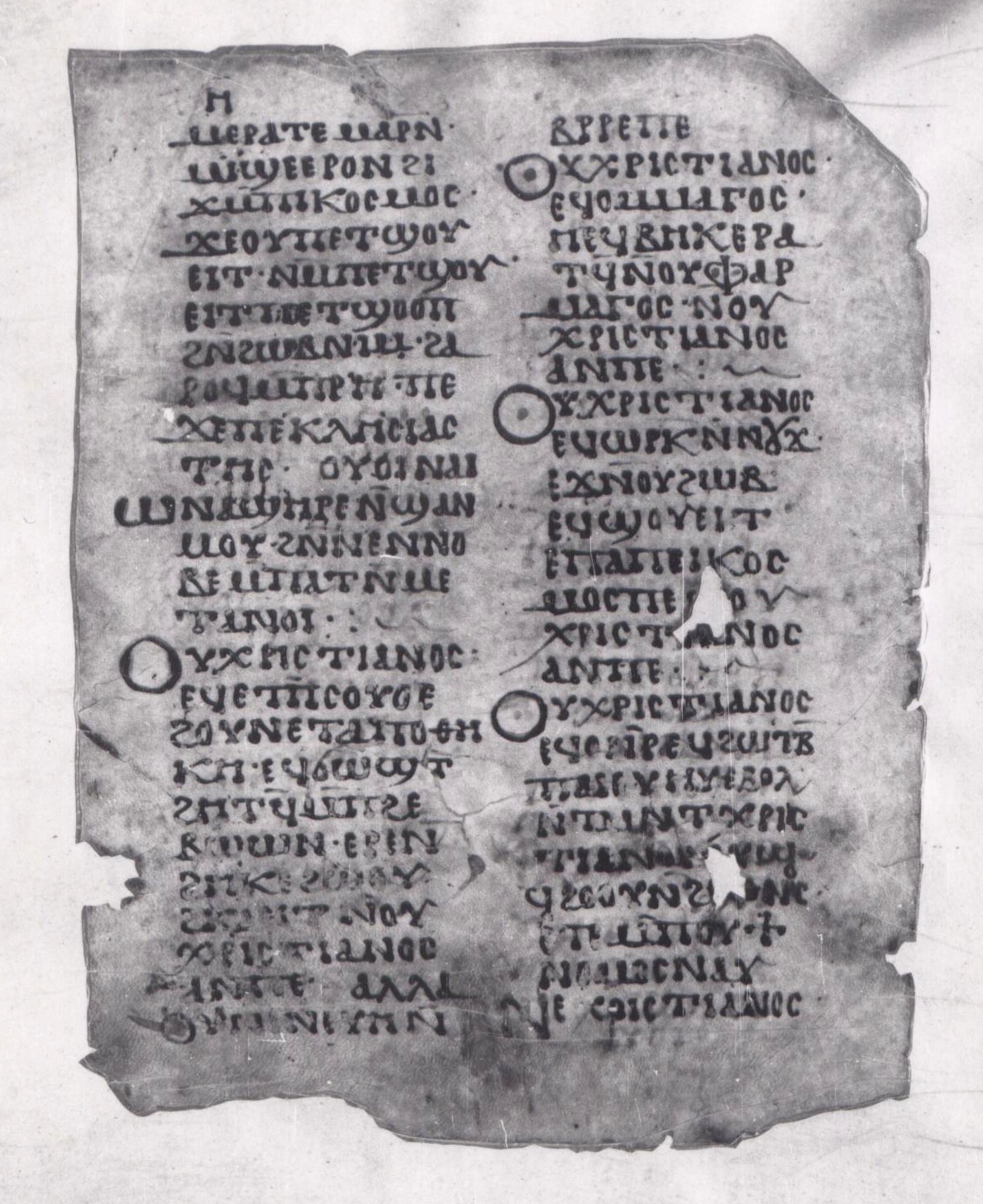
Many new fragments have surfaced during my attempt to reconstruct the codex. On the basis of the new material, it became apparent that In Psalmum 50, hom. 2 was immediately followed in the same manuscript by Si qua in Christo nova creatura (CPG 4701; Clavis coptica 0482; Greek text in PG 64, coll. 25-34). This is another Chrysostomic spuria, based on 2 Corinthians 5:17: “Therefore if any man be in Christ, he is a new creature” (KJV). At least three leaves containing this sermon have survived. One of them arrived in the National Library of Austria, in Vienna (inventory number K 9805).

The Vienna fragment preceded in the manuscript two folios in Michigan Continue reading

Posted in John Chrysostom, Patristics | Tagged , , , , , , , , | 3 Comments

A Supplementary Leaf from the Ancoratus of Epiphanius in Coptic

The Ancoratus was written by Epiphanius of Salamis in 374, in order to oppose the theologies of Origen and Arius.[1] In this inluential dogmatic work, Epiphanius argued that salvation belongs to the Christians “anchored” in the Apostolic tradition of the Church, far from the bubbling waters of the heretical doctrines.

Epiphanius of Salamis was one of the principal saints of the Coptic Church, and his work, the Ancoratus, appears in several Sahidic manuscripts. According to some scholars, the translation was made at an early date by Pachomian monks in order to defend the Orthodox viewpoint against the Origenist current.[2] Although this possibility might be true, there is insufficient evidence to support it.

In this post, I will briefly introduce a newly identified fragment from the Coptic version of Ancoratus.[3] This fragment was formerly part of the Charles Woide collection in the Clarendon Press, Oxford, but is currently kept in the Bodleian Library as “Clarendon Press b.4, f. 63” (olim 82). The leaf is paginated 105-106 and was dismembered from a parchment codex copied in two columns.

A comparison with the Greek text shows that the Oxford witness contains the text of Ancoratus 50,5-52,1 according to Holl’s edition. Like all other Sahidic manuscripts in the Woide collection, the fragment came from the library of the White Monastery, situated in Upper Egypt. The paleographical features enable us to attribute the new bit to a codex from which numerous other leaves have been identified in the past century. In the CMCL database, a scholarly enterprise which tries to reconstruct the dismembered White Monastery manuscripts, this codex is designated under the siglum MONB.HA.

The first fragments of this codex containing the Ancoratus were published by Johannes Leipoldt in the beginning of the 20th century.[4] A significant amount of supplementary fragments was discovered and presented by Enzo Lucchesi in an article published in Analecta Bollandiana.[5] Lucchesi first observed that, Continue reading

Posted in Epiphanius of Salamis, Patristics | Tagged , , , , , , , | Leave a comment

New Coptic Fragments from a Homily by Severus of Antioch (Attributed Also to Gregory of Nyssa and Hesychius of Jerusalem)

Severus, the “Monophysite” patriarch of Antioch, was one of most gifted theologians of his time.[1] He came to the Episcopal See of Antioch in 512, under the rule of the anti-Chalcedonian emperor Anastasius, and was in charge of the bishopric until 518, when Justin I became emperor. After Justin’s rise to power, Severus was deposed and he fled Antioch taking refuge in Alexandria.

In Egypt, Severus featured prominently in ecclesiastical circles.[2] His writings, especially the cathedral homilies,[3] and also some of his letters,[4] were translated at an early date from Greek into Coptic. Moreover, the Copts composed various homilies under Severus’ name, which show their admiration for this champion of the anti-Chalcedonian resistance.[5] Hereby, I would like to draw attention to a couple of Coptic fragments from his 77th cathedral homily, which I found some time ago in the papyrus collection of the National Library in Vienna. This is part of my research on the Coptic version of this 77th homily by Severus of Antioch, which I hope to publish soon.

Continue reading

Posted in Gregory of Nyssa, New Testament, Patristics, Severus of Antioch | Tagged , , , , , , , , , | 4 Comments

A Leiden Manuscript Containing the Apocryphal Names of the Two Thieves

Among the unidentified Coptic literary manuscripts deposited in the collection of the Rijksmuseum van Oudheden in Leiden, there are two parchment fragments that bear the inventory number F 1976/4.31. According to the museum acquisition book, the items were purchased in 1976 together with other Coptic fragments from the Dutch antiquity dealer Johannes Möger. In the same lot of manuscripts was a fragment from John Chrysostom’s Homilies on the Epistle to the Romans, which I identified in a previous post.

To the best of my knowledge, the two fragments inventoried as F 1976/4.31 were neither identified, nor discussed yet in any scholarly publication. That’s what I’ll try to do in the following lines.

The page numbers [103]-104 and [105]-106 are still visible on the parchment, showing that the fragments come from two consecutive leaves of a larger codex.

The text is a development of the Crucifixion scene, in which the author introduced elements taken, directly or through an intermediary, from the Acts of Pilate. Here is a tentative translation of the text, which is Continue reading

Posted in Apocrypha, Evodius of Rome | Tagged , , , , , , , , | 2 Comments

Two Coptic Fragments Containing Extracts from Isaiah of Scetis: A New Manuscript Witness of the Asceticon

A few days ago, Dr. Heinzgerd Brakmann drew my attention to a Coptic parchment folio from the collection of the National Library in Paris. The leaf survived dismembered from its original binding and is currently bound as folio 147 in the volume BnF Copte 12920, which is a miscellany of different liturgical fragments (including lectionaries, euchologia, hymnaries, directory of Psalms etc). The fragmentary text is written in a single column and the pagination, 181-182 is still clearly visible on the upper outer corners of the pages. As Dr. Brakmann informed me, Hans Quecke[1] edited and translated into German the verso of the leaf (from line 4 onward), the recto still being unpublished.

Here is Father Quecke’s presentation of the unedited part:

Auf Seite 181 und den ersten drei Zeilen von Seite 182 lesen wir den Schluß eines homiletisch-aszetischen Textes, den ich bisher nicht identifizieren konnte.[2]

Indeed, this part of the fragment remained unidentified until now.

However, upon a closer examination, it appeared to me that the unpublished text of BnF Copte 12920, f. 147 contains in fact a selection of passages from the Asceticon of Abba Isaiah. This means that good fortune just brought to light another previously unknown witness of the Asceticon!

Continue reading

Posted in Ascetic Authors, Isaiah of Scetis, Patristics | Tagged , , , , , , , , , , | 2 Comments

Additional Fragments from the Coptic Version of Ephrem Graecus

In a recent article, I presented two new Coptic fragments from pseudo-Ephrem.[1] They contain portions from the ascetical sermon De perfectione monachi (CPG 3971; Clavis coptica 0860). Some modern authors have mistakenly attributed this writing to Maximus the Confessor, but Peter van Deun rightly argues it as belonging in fact to pseudo-Ephrem.[2]

The new Coptic fragments come from a White Monastery codex which has not yet received the attention it deserves. This valuable manuscript contains the Sahidic version of the ascetic writings which are transmitted in Greek under the name of Ephrem the Syrian.[3] Enzo Lucchesi has found among the pseudo-Ephremian pieces a short work by Evagrius, On the Monastic Life (Rerum monachalium rationes = CPG 2441).[4] It is, however, very likely that this writing has been transmitted in Coptic under the name of Ephrem, since we have reasons to believe that codex was exclusively dedicated to him.

Unfortunately, the manuscript Continue reading

Posted in Ascetic Authors, Ephrem the Syrian | Tagged , , , , , , , , , , | 3 Comments