Radiocarbon Dating of Codex Glazier

During a recent meeting, Stephen Emmel drew my attention to an article published by John Lawrence Sharpe in the proceedings of the International Conference on Conservation and Restoration of Archive and Library Materials, Erice, April 22nd-29th 1996.[1]

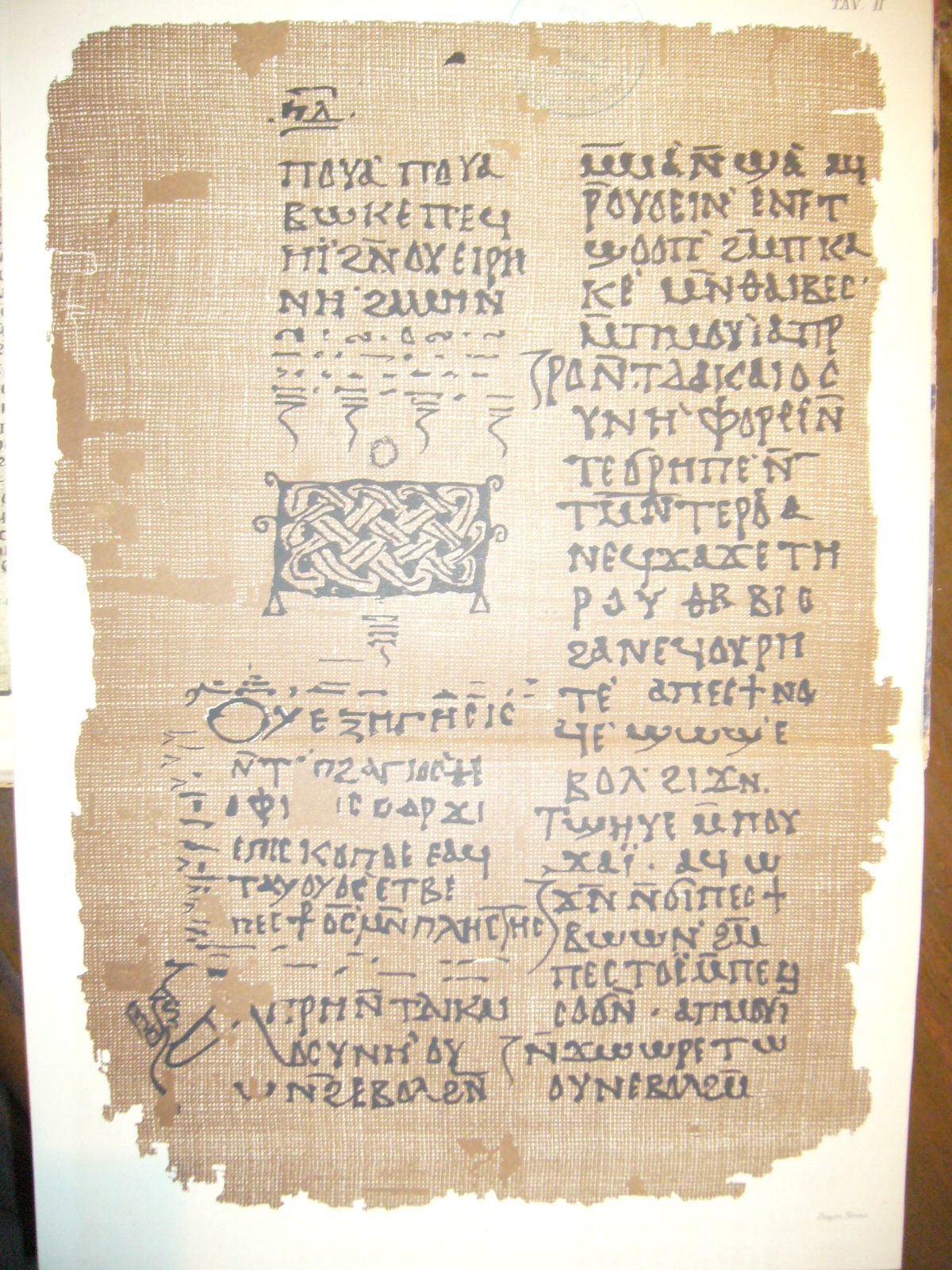
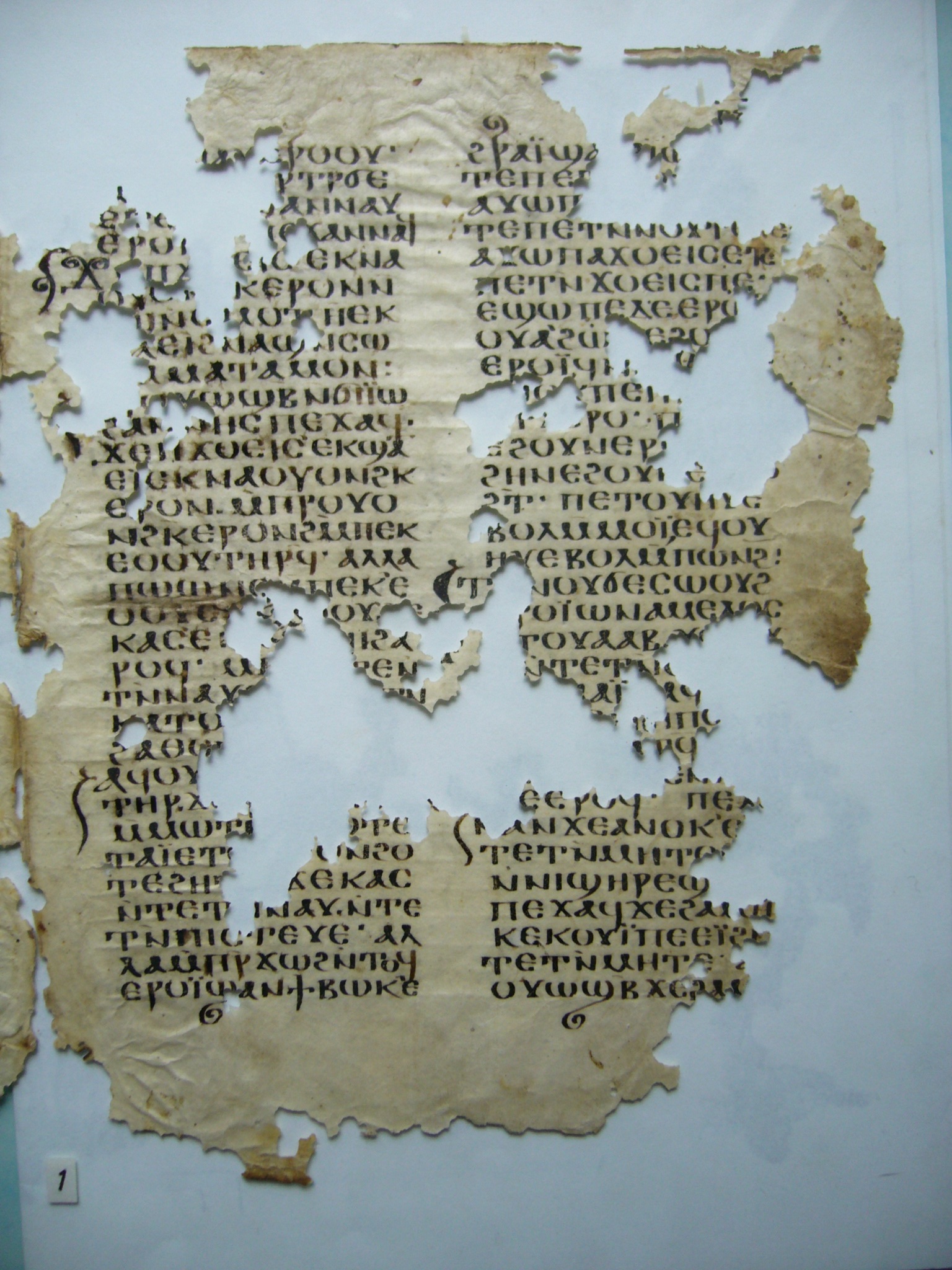
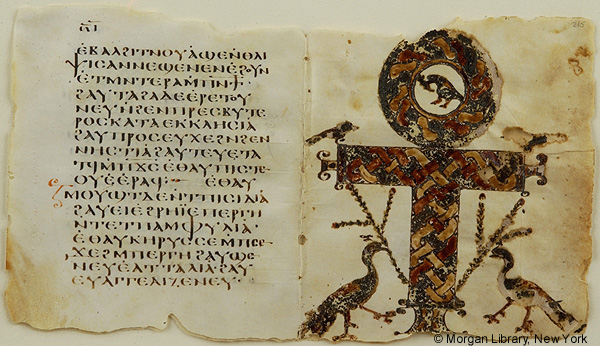
ms_g67_pg215

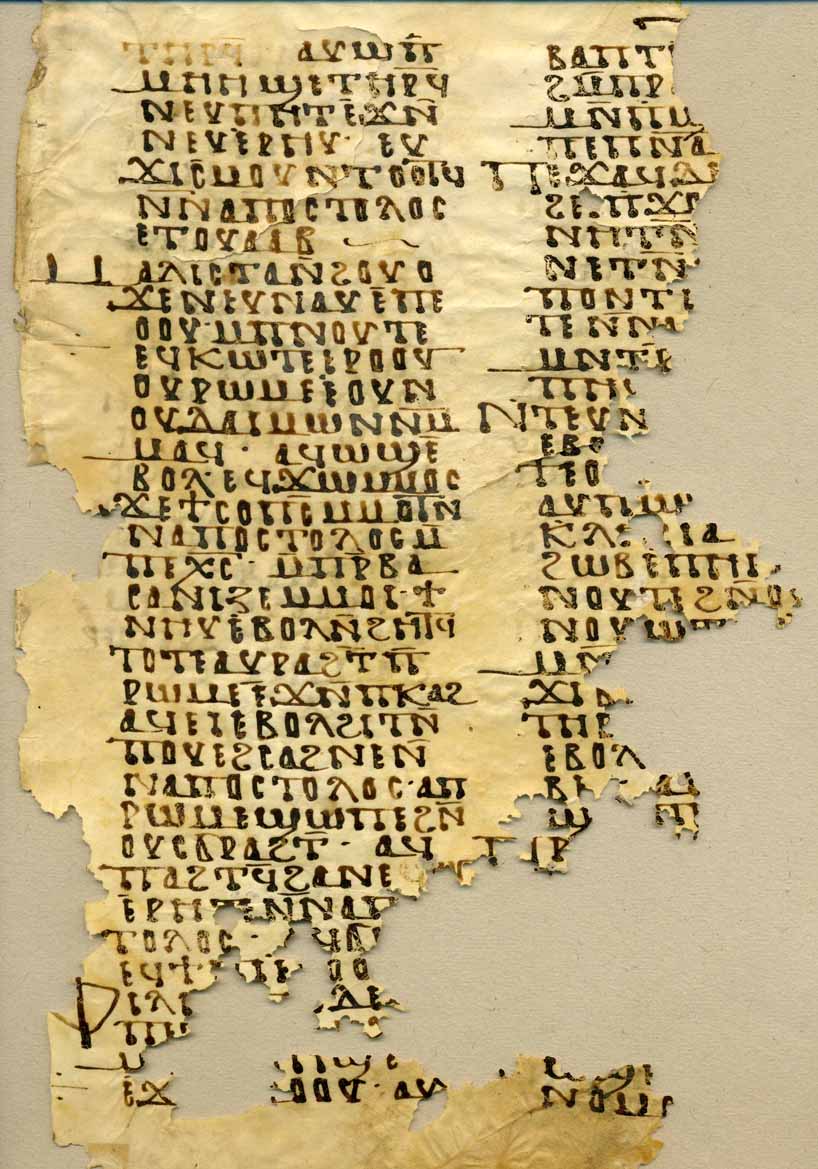
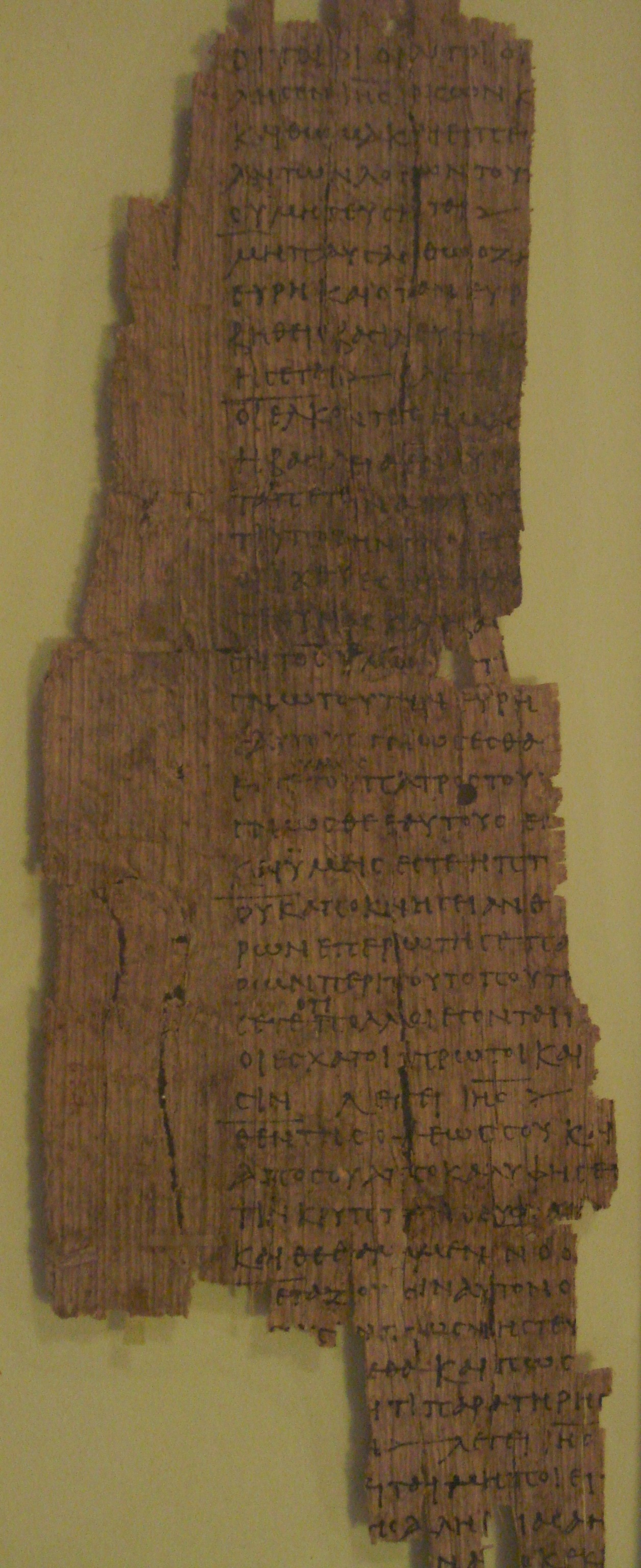
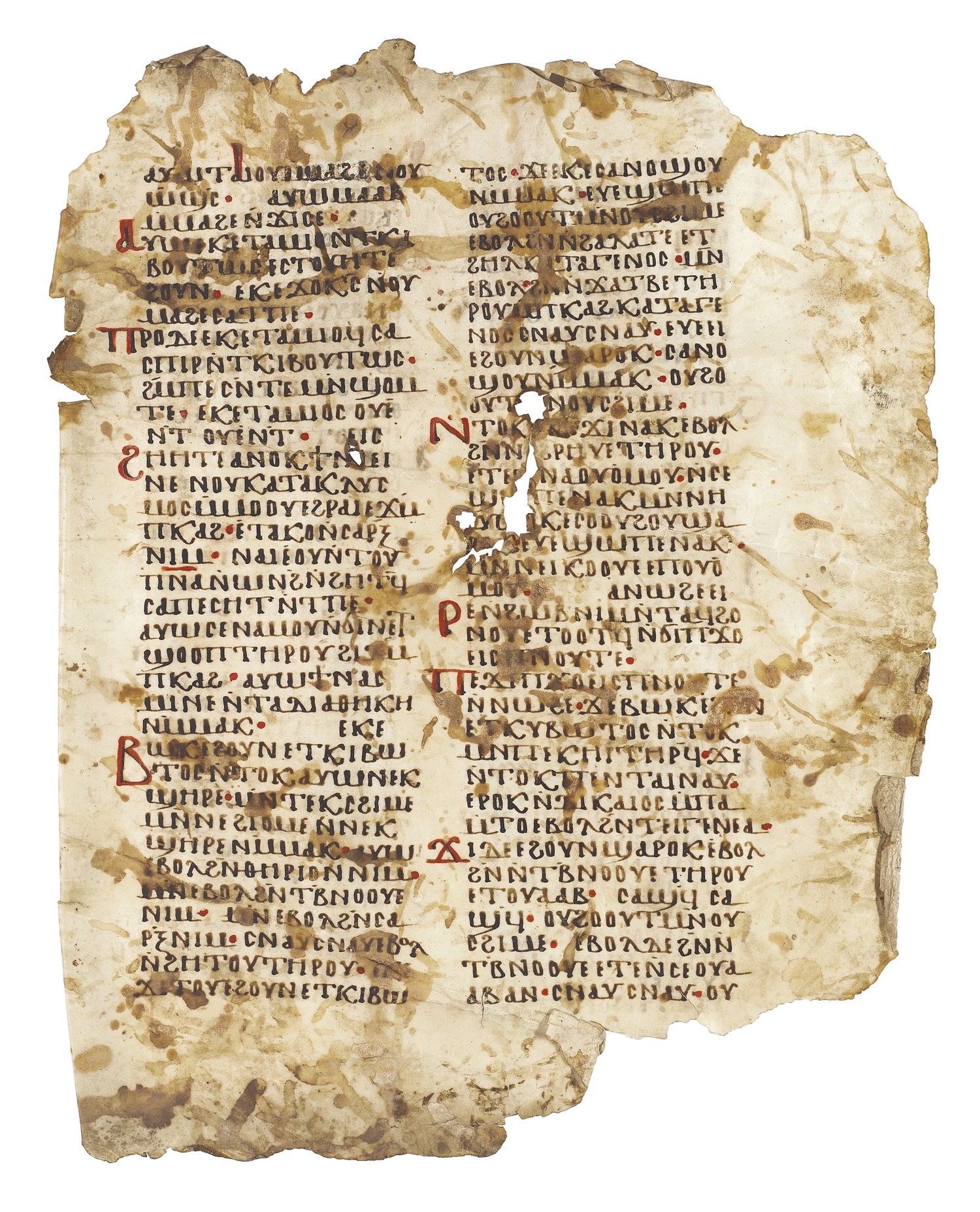
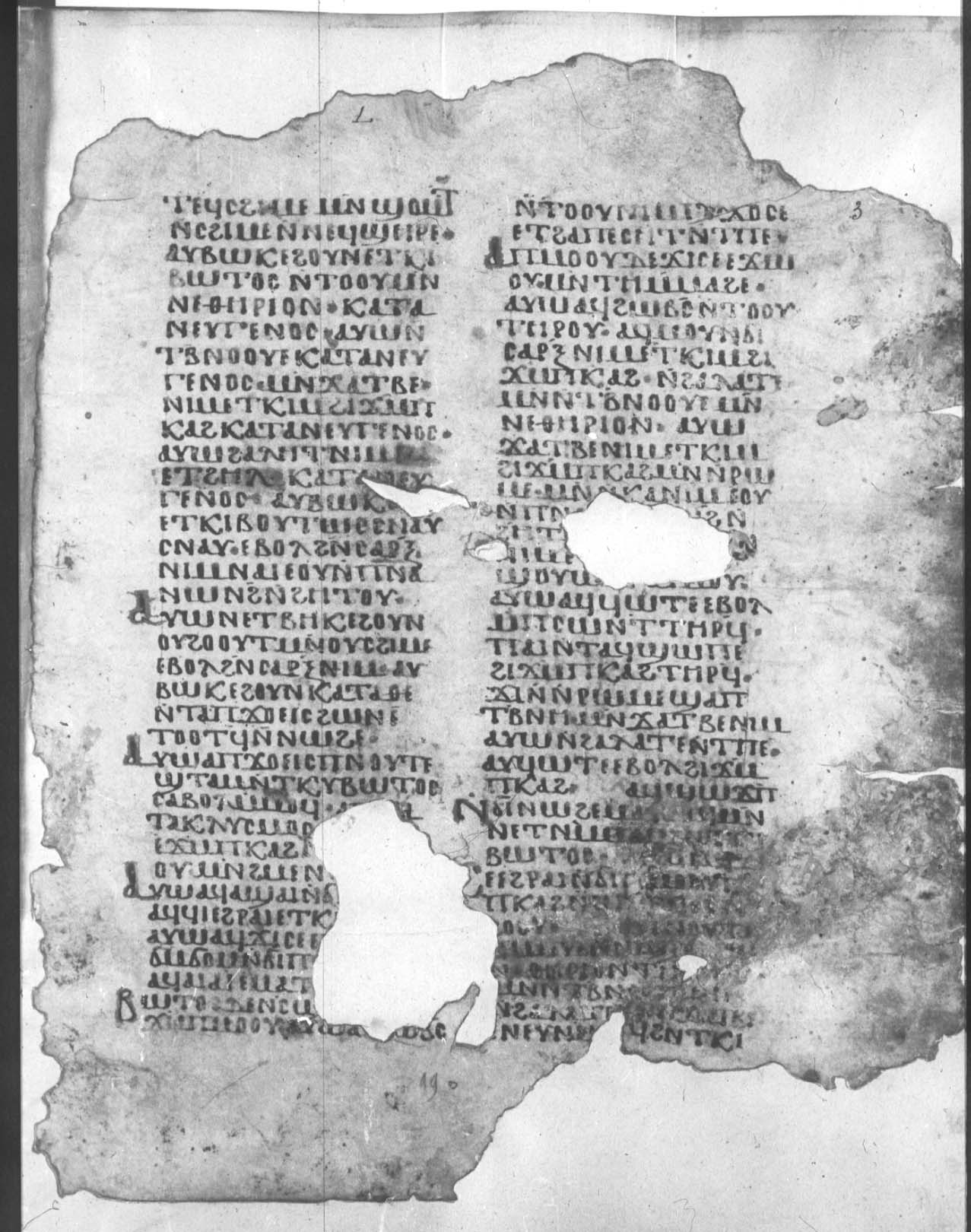
In his paper, Sharpe studied the binding of certain Coptic codices. What is interesting is that he managed to convince William M. Voelkle, curator and head of the Department of Medieval and Renaissance Manuscripts, to accept the radiocarbon testing of a piece from the binding of the Glazier Codex (Acts 1:1-15:3 in the Middle-Egyptian dialect of Coptic). As far as I am aware, the results of the testing have passed unnoticed by Coptologists and scholars interested in biblical manuscripts. Here is the passage in which Sharpe explains the experiment:

“In consultation with W. Voelkle of the Pierpont Morgan Library, a piece of the wrapping band of Morgan G.67 approximately 17mm.2 and .25mm thick was selected for analysis. A piece of the wrapping band was chosen because of all the possible replacements, the most likely would have been the leather of the bands – those elements which would be represented by those pieces which are least likely to have been replaced. So the terminus post quam for the latest binding would be represented by those pieces which are least likely to have survived and most likely to have been replaced. So on the 18th of April 1994, a piece of the leather wrapping band was sent to the Eidgenössiche Technische Hochschule in Zürich (Institute of Partial Physics) for analysis for the AMS 14C dating. On the 19th of May 1994, the report for the piece of leather was returned from Dr. Georges Bonani with the following report: from Lab. No. ETH-12270, a sample of leather produced the AMS 14C Age [y BP] of 1’565 ± 45 with the results of δ13C[o/oo] of – 23.6 ± 1.1 with the calibrated Age [BC/AD] of AD 420-598 […]” (p. 383 n. 13)

Of course, all one can sensibly say after the radiocarbon testing is that the latest possible date for codex Glazier’s binding is 598 CE. However, as the manuscript is in a very good state of preservation, I find unlikely that the binding has ever needed to be replaced. Being the case that Codex Glazier is similar, especially in terms of format, to certain manuscripts from the Monastery of Apa Jeremias at Saqqara (which can be dated ca. 600 CE), I would opt for a late 6th century dating.

[1] J.L. Sharpe, “The Earliest Bindings with Wooden Board Covers: The Coptic Contribution to Binding Construction.” In: Erice 96, International Conference on Conservation and Restoration of Archive and Library Materials, Erice (Italy), CCSEM, 22nd-29th April 1996: Pre-prints, edited by Piero Colaizzi and Daniela Costanini, 2:381-400. 2 vols. Rome: Istituto centrale per la patologia del libro 1996.

Posted in Bible, New Testament | Tagged , , , , , , , | 8 Comments

“Apocryphization”: Theological Debates in Biblical Disguise. 8 May, 2014, King’s College London

On May 8, 2014, I will attend a workshop organized by Peter Toth and Ioannis Papadogiannakis at King’s College, London. Here is the announcement.

“Apocryphization”: Theological Debates in Biblical Disguise

8 May, 2014, King’s College London 

This workshop focuses on a hitherto under-studied form of Christian erotapokritic literature which, keeping the format of alternating questions and answers, shifts the scene from the context of a historical event or a school discussion into a biblical scenario with biblical discussants. We aim to explore the origins and techniques of this literary phenomenon by analyzing the doctrinal stance of the various pseudo-biblical scenes in order to understand why and how they expand the original narratives and create new, “apocryphal” scenes and motifs. It is the purpose of the workshop to get closer not only to outlining the rationale in the background of these dialogues, but also to understand the origin of the very concept of “apocryphicity” too.

http://www.kcl.ac.uk/artshums/depts/trs/eventrecords/2014/apocryphization.aspx

Confirmed Speakers 

Sebastian Brock (University of Oxford) Averil Cameron (University of Oxford) Carmen Cardelle de Hartmann (University of Zürich) Sophie Lunn-Rockliffe (King’s College, London) Yannis Papadogiannakis (King’s College, London) Alin Suciu (University of Hamburg) Peter Toth (King’s College, London)

Organisers: Peter Toth (peter.toth@kcl.ac.uk) and Ioannis Papadogiannakis (ioannis.papadogiannakis@kcl.ac.uk).
The workshop is free and open to all. However, due to a limited number of places, registration is required. register by sending an email to Peter Toth: peter.toth@kcl.ac.uk. For more information on the programme and the practicalities, visit our website.
Download the flyer of the workshop HERE.
Posted in Announcements, Apocrypha | Tagged , , , , | 1 Comment

Conference on the Bodmer Papyri

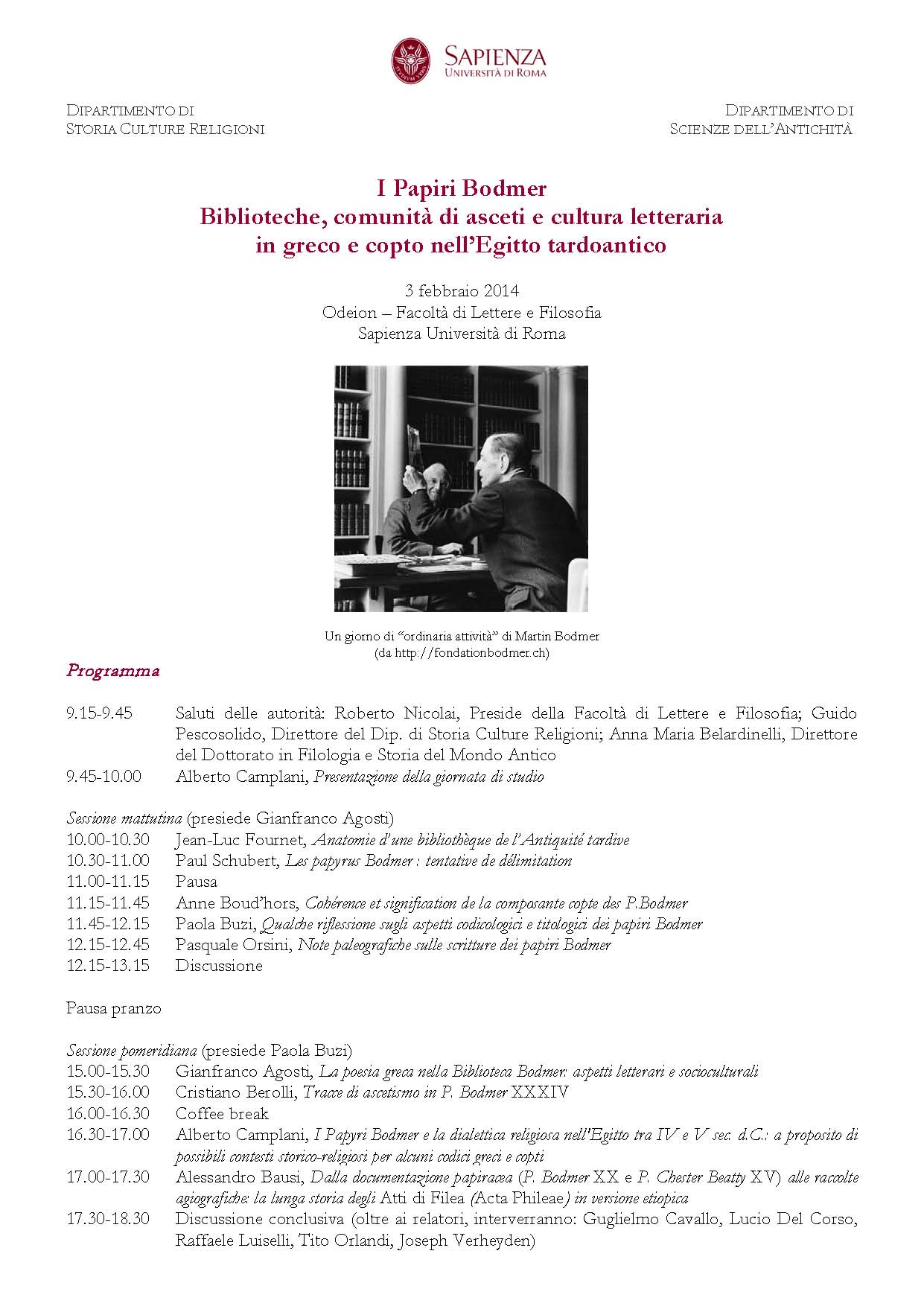
Alberto Camplani just sent me the announcement concerning this importance conference on the Bodmer Papyri, “I Papiri Bodmer. Biblioteche, comunità di asceti e cultura letteraria in greco e copto nell’Egitto tardoantico.” The conference will take place February 3, 2014 at the Facoltà di Lettere e Filosofia, Sapienza Università di Roma.

Pages from programma convegno BodmerAbstracts

→Jean-Luc Fournet, Anatomie d’une bibliothèque de l’Antiquité tardive

Cette communication se propose de faire une présentation synthétique de la bibliothèque qui est l’objet de ce colloque: recension des ouvrages qui la constituaient ; leurs caractéristiques bibliologiques ; le profil des utilisateurs; la provenance. Concernant ce dernier point, qui a fait l’objet de discussions, seront présentés pour la première fois des documents inédits provenant de la reliure d’un P.Bodmer.

→Paul Schubert, Les papyrus Bodmer : tentative de délimitation

Les papyrus Bodmer constituent un ensemble d’une complexité extrême : si les codex conservés par la Fondation Bodmer à Cologny forment de toute évidence le noyau central, les circonstances d’acquisition des papyrus font que de nombreux éléments du lot ont été dispersés dans d’autres collections ; la Fondation Bodmer s’est aussi séparée de plusieurs pièces. En outre, certains papyrus présentent un profil atypique par rapport à l’ensemble. Par conséquent, toute tentative de délimitation des papyrus Bodmer oscille entre la recherche d’un dénominateur commun et la reconnaissance d’exceptions qui rendent le tout moins homogène qu’on ne voudrait le croire. Les travaux de James Robinson ont apporté un éclairage intéressant sur la question, mais ne permettent pas de résoudre tous les problèmes. Le bref aperçu d’un fragment inédit tiré d’une reliure ouvrira par ailleurs une nouvelle perspective, celle de la nature des papyrus qui ont servi à fabriquer, parfois en second emploi, les codex Bodmer.

→Anne Boud’hors, Cohérence et signification de la composante copte des P. Bodmer

L’hypothèse de Robinson (1990, 2011) que les P. Bodmer (au sens large, c’est-à-dire avec des manuscrits conservés dans d’autres collections) constitueraient les restes d’une bibliothèque pachômienne, continue à buter sur l’absence de certitude concernant leur provenance. Laissant de côté cette discussion, je voudrais réexaminer les données linguistiques (variétés dialectales) fournies par les manuscrits coptes appartenant ou rattachés à cet ensemble, ainsi que leurs caractéristiques textuelles (à la fois la position textuelle des témoins bibliques dans l’histoire des versions coptes et le regroupement de certains textes, bibliques ou non). Cet examen se fera aussi en comparaison avec d’autres manuscrits coptes anciens présentant le même genre de caractéristiques, mais ne se rattachant pas à la même collection.

→Paola Buzi, Qualche riflessione sugli aspetti codicologici e titologici dei papiri Bodmer

Tra i molti aspetti che rendono il fondo dei papiri Bodmer di estremo interesse e, al contempo, di estrema complessità vi sono senza dubbio quelli codicologici. Il fondo, che verosimilmente rappresenta una raccolta libraria cresciuta nel tempo, comprende infatti codici papiracei e pergamenacei, fascicoli sciolti, rotoli e – se si accetta l’identificazione “ampia” dei manoscritti riferibili al fondo ad opera di Robinson – persino rotuli, questi ultimi sia papiracei che pergamenacei. Una siffatta varietà di formati e di supporti scrittorî ha, inevitabilmente, una ricaduta sulla struttura dei testi e sulla loro articolazione per mezzo dei titoli.

La biblioteca Bodmer offre dunque una rara opportunità di analisi di prassi scrittorie e librarie in evoluzione, sui cui aspetti più notevoli, soprattutto relativamente ai codici copti, questa comunicazione tenterà di soffermarsi.

→Pasquale Orsini, Note paleografiche sulle scritture dei papiri Bodmer

Da un punto di vista paleografico le scritture (greche e copte) utilizzate nei papiri Bodmer offrono un campo di indagine di grande rilievo sia per la loro collocazione cronologica (III – V secolo d.C.) sia per le diverse tipologie (formali ed informali) documentate. Tuttavia, negli studi dedicati a questi manoscritti (a partire dalle edizioni che si sono susseguite dal 1956) l’approccio paleografico si può definire marginale o accessorio, quasi esclusivamente funzionale alla datazione relativa dei singoli pezzi. Pertanto, in questa relazione – sulla scia di ricerche pubblicate nell’ultimo decennio – si vogliono considerare le manifestazioni grafiche dei papiri Bodmer nel contesto più ampio della storia della scrittura greca (e copta) e della produzione libraria tardoantica.

DOWNLOAD THE PROGRAMME AND THE ABSTRACTS IN PDF FORMAT

Posted in Announcements | Tagged , , , , , , , | Leave a comment

Ps.-Theophilus of Alexandria, Sermon on the Cross and the Good Thief (CPG 2622; clavis coptica 0395)

This translation of Ps.-Theophilus of Alexandria’s sermon on the Cross and the Good Thief (CPG 2622; clavis coptica 0395), which is preserved only in the Sahidic dialect of Coptic, appeared in A. Suciu, “Ps.-Theophili Alexandrini Sermo de Cruce et Latrone (CPG 2622): Edition of M595 with Parallels and Translation,” Zeitschrift für Antikes Christentum – Journal of Ancient Christianity 16 (2012) 181-225. For details concerning the text, please refer to this article.

The homily attributed to Theophilus of Alexandria contains a long hymn of the Cross (cf. par. XV) which is derived from the pseudo-chrysostomic work In venerabilem crucem sermo (CPG 4525).

 Codex B-Turin Egyptian Museum cat. 63000 cod. 2 (title page of Ps-Theophilus-De Cruce

An exegesis of Apa Theophilus, the archbishop of Alexandria, which he pronounced concerning the Cross and the thief. In the peace of God, Amen!

I. Proemium: Christological hymn

The sun of righteousness has appeared from out of the Eastern places,

Lightening those who are in the darkness and the shadow of death.

The king of justice has borne the crown of the kingdom

(And) all his enemies have been vanquished under his feet.

The good odor has spread out on the altar of salvation

(And) has dissipated the stench with the perfume of its ointment.

The powerful lion has risen from the forests

(And) the beasts have hidden in their dark lair.

The holy physician has come to us with his medicines of life

(And) everyone who is afflicted has received the cure for free.

The joy of the whole creation was revealed:

They rejoice with him!

II. The Parable of the two kings

For, just as if a hostile king encircles a city and besieges it, then all those who are inside it are in subjugation, tormented, grieving (and) groaning. But when the king that has authority over it hears about the great effrontery, just as he ventures to kill his troops, then he gathers his entire host and their war equipment. Continue reading

Posted in Theophilus of Alexandria | Tagged , , , , , | 1 Comment

Ivan Miroshnikov’s Article on the Sahidic Version of 4 Maccabees

In April 2012, Ivan Miroshnikov (University of Helsinki/Centre for Egyptological Studies, Russian Academy of Sciences) published on this blog an excerpt from his transcription and translation of the (fragmentary) Sahidic version of 4 Maccabees.

His edition of all the Sahidic fragments of 4 Maccabees known to date has appeared in the latest issue of the prestigious journal Vetus Testamentum (Brill, Leiden). The article is a skilfully executed piece of work. No wonder, since Ivan is one of the most gifted and promising young Coptologists.

With Ivan’s permission, you can download the article from this blog.

I. Miroshnikov, “The Sahidic Coptic Version of 4 Maccabees,” Vetus Testamentum 64 (2014) 69-92.

Abstract: The Coptic Sahidic version of the Fourth Book of Maccabees was discovered by Enzo Lucchesi in the nineteen eighties, but up to this day has not been published. This article presents the extant fragments of the manuscript, stored at the National Library in Paris and the library of the University of Michigan. The paleography of the manuscript and
the contents of the version are discussed in the introductory remarks, which are followed by a transcription and English translation of the fragments.

158_34c

Posted in Bible, Old Testament | Tagged , , , , , , | Leave a comment

Guest Post: Amsalu Tefera – SARĀBĀMON OF NIKOU IN ETHIOPIAN LITERATURE

St. Sarābāmon, Bishop of Nikou, lies among those important oriental saints whose reputation reached the Ethiopian Orthodox Church. According to his vita (see further below), he was a descendant of the proto-martyr Stephen and raised as a Jew in Jerusalem under the birth name of Simon.  After journeying to Alexandria, he was baptized by Archbishop Theonas (282-300), the 16th Pope of Alexandria, and then set about studying Scripture, including the Epistle of Ignatius and Balkiros.  He then became a monk in El-Zogag[1] monastery.  When the Alexandrian Patriarchate passed to Peter, the Seal of the Martyrs (300-311), Simon was made a patriarchal assistant, and later was appointed bishop of Nikou, with the ordained name of Sarābāmon, upon the death of John, the incumbent of that office.  The Ge‘ez version of the vita states:

ወእምዝ፡ ሤሞ፡ ርእሰ፡ ኤጲስ፡ ቆጶስ፡ ለቅዱስ፡ ሰራባሞን፡ ኤጲስ፡ ቆጶሰ። … ወተነበየ፡ ለከዊነ፡ ኤጲስ፡ ቆጶስ፡ ወነቢይ፡ ኅቡረ። ወእምድኅረ፡ ሤሞ፡ አንበሮ፡ ሰቡዐ፡ መዋዕለ፡ ኀቤሁ፡ በእንተ፡ ፍቅሩ። ወእምድኅረ፡ ሰቡዕ፡ ፈነዎ፡ ሀገረ፡ ሢመቱ፡ ምስለ፡ አብያጺሁ፡ ኤጲስ፡ ቆጶሳት፡… “And the Archbishop ordained St. Särabamon a bishop….. He foretold [of Sarābāmon’s] combined qualities as both a bishop and a prophet. After his ordination, [Peter] caused [Sarābāmon] to dwell with him for seven days because of his love [for the latter]. After seven days, he sent him towards his diocese with his fellow bishops.” (fol.131rv).

According to the vita, his welcoming into the city was so colorful and great that it compared to that of the entrance of Jesus into Jerusalem on Palm Sunday.  Among many other great deeds, Sarābāmon refuted the heresy of Sebalius, who taught the Father, the Son and the Holy Spirit are one person, and also attacked the theological and Christological positions of Arius and Melitius.  After being repeatedly jailed and tortured by Diocletian, he was ultimately beheaded on Ḫedar 28 (December 7): ወከመዝ፡ ፈጸመ፡ ስምዖ፡ ወገድሎ፡ ቅዱስ፡ ሰራባሞን፡ አመ፡ ፳ወ፰፡ ለኅዳር። “And saint Sarābāmon completed his martyrdom and combat in such a way on the 28th of Ḫedar.”

Although not well-known in Ethiopian Christianity today, traditions about Sarābāmon are nonetheless preserved in several Ge‘ez texts.  The longest—and most important of these—is the Gadla Sarābāmon (“Life of Sarābāmon”), a complete hagiography of the saint translated from Arabic and preserved in a single late fifteenth century manuscript.  It was microfilmed in the late 1970s while in the possession of the famous monastery of Dabra Libānos in Shoa as EMML 6533; internal evidence indicates that it was commissioned by Marḥā Krestos (1408-1497),[2] ninth eččagē of the monastery. The entire manuscript spans 168 folios, with the first 118 of those consisting of a copy of the rare longer version of the Life of Paul[3] and the remainder being devoted to Gadla Sarābāmon.  The latter is comprised of a homily, attributed to Alexander, archbishop of Alexandria (†326), on the biography and combat of the saint, which is followed by his miracles and martyrdom.  An edition and English translation of the entire text is in preparation.  In addition to the Ge‘ez, an Arabic version of this hagiography is also known,[4] as is an incomplete Coptic witness to the martyrdom.[5]

Five much shorter Ethiopic texts are also devoted to this saint: the Synaxarium entry for Ḫǝdar 28 (December 7), two malke’at (Chaîne nos. 158 and 325), and two arke hymns (Chaîne no. 48 and that found in Wein[6] Athiop. 19).  The widespread creation of the latter two forms of literature in Ethiopia suggests that the compositions of those types dedicated to Sarābāmon were likely produced locally. Perhaps this indicates the greater veneration of this saint in one or more regions of mid-second millennium Ethiopia. Conversely, the Synaxarium entry, which preserves the main Ethiopian hagiographic memory of Sarābāmon, is derived from the Coptic, which similarly celebrates this saint’s life on Hatour 28.


[1] The monastery of Abba Severus, outside Alexandria. The Vita (fol. 129va) describes the monastery as እልሐብጡን.

[2] His gadl was edited by S. Kur, 1972, CSCO, SAe 62-63.

[3] Published in E. A. Wallis Budge, The Contendings of the Apostles: being the Histories of the Lives and martyrdoms and Deaths of the Twelve Apostles and Evangelists (2 vols.; London: Henry Frowde, 1898-1901), I:436-599 and II:527-707.

[4] Cf. G. Kraf, Catalogue de manuscrits Arabes Chrétiens conserves au Caire (Studi e Testi 63), 12.

[5] Published in H. Hyvernat, Les Actes des martyrs de l’Égypte, pp. 304-31.

[6] Catalogued by N. Rhodokanakis, Die Äthiopischen Handscriften der K. K. Hofbibliothek zu Wein, 59.

Posted in Guest Post, Life of Sarapamon | Tagged , , , , | 1 Comment

Two New Articles on the von Scherling Collection of Coptic Papyri

1. Fragments of a Sahidic Codex of the Apocryphal Acts of the Apostles

My new article, which concerns three fragments from a Sahidic manuscript containing the Apocryphal Acts of the apostles, appeared a few days ago in the latest issue of the Bulletin of the American Society of Papyrologists.[1] You can download the article for free HERE.

In my paper I remarked that a parchment fragment in the possession of the Norwegian collector Martin Schøyen (MS 2007) and a second one in the collection of the Leiden University Library (Cod. Or. 14.331) originally belonged to the same codex. The two fragments contain portions from the Acts of Philip and the Acts of James respectively. Although they are kept in different locations, they were both at one point in the hands of Erik von Scherling, the renowned Dutch antiquities dealer. This is clear from the fact that the fragments were catalogued together in 1949 in Rotulus, a magazine privately printed by von Scherling in order to advertise the manuscripts he had up for sale. Although Rotulus was for a long time a very difficult publication to access, most of the back issues have now graciously been made available on the internet by Jan Just Witkam (Leiden University), who met von Scherling personally in the ‘50s.

Laurence Witten, an American collector, at some point bought the two Coptic apocryphal fragments from von Scherling. In 1975, Witten sold one of them – that containing the Acts of James – to the library of the University of Leiden. After Witten’s death in 1995, his family sold a part of his collection via Sam Fogg Rare Books. This is how the second fragment – which contains the Acts of Philip – came into the possession of Martin Schøyen.

CPms2007a small

Yet a third fragment of the same codex surfaced in the collection of Continue reading

Posted in Apocryphal Acts of the Apostles, Bible | Tagged , , , , , , , , | 3 Comments

International Seminar in Coptic Papyrology. Barcelona, July 6-13, 2014

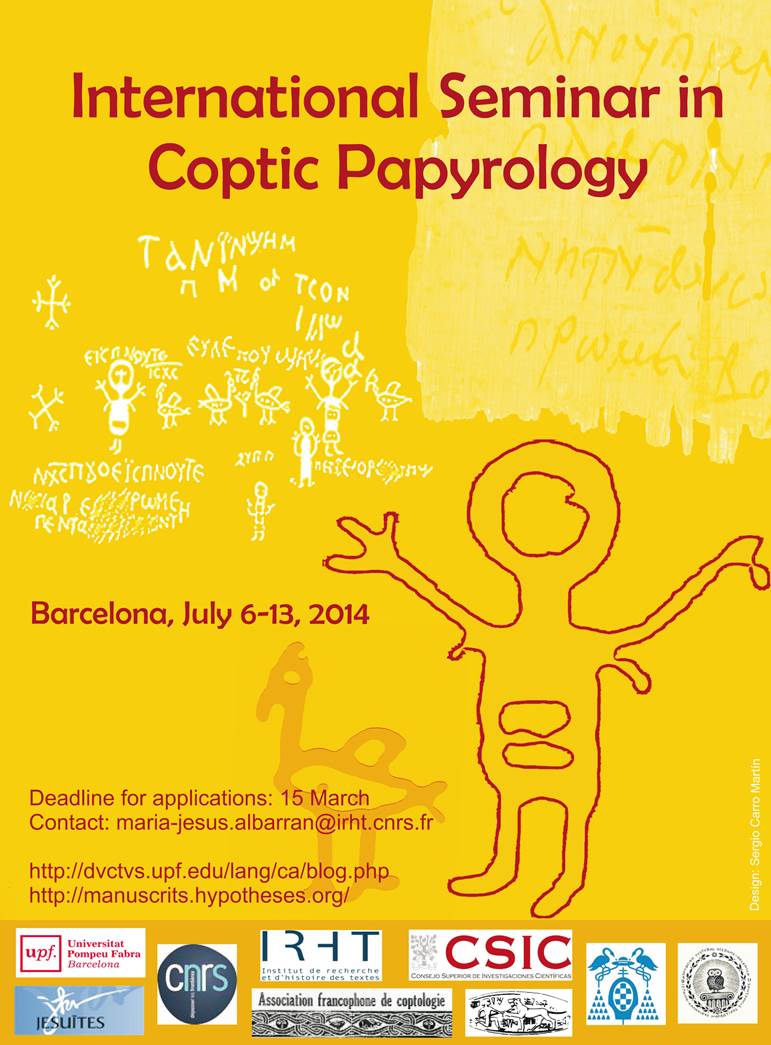
The International seminar in Coptic Papyrology will be held in Barcelona from 6 to 13 July 2014. It follows the seminars held in Vienna 2006, Leipzig 2008, Strasbourg 2010 and Heidelberg 2012. The event will be organised by Universitat Pompeu Fabra (UPF) around the Palau-Ribes Papyrus Collection, kept at Historical Archive of the Jesuits. The Institut de Recherche et d’Histoire des Textes, CNRS, Paris (IRHT), the Universidad de Alcalá (UAH), the Consejo Superior de Investigaciones Científicas (CSIC), the Association Francophone de Coptologie (AFC), the Centro de Estudios de Próximo Oriente (CEPO), and the Asociación Cultural Hispano-Helénica (ACHH) have taken part in the organization and funding of this event.

Seminar_Barcelona

Students and graduates from fields such as Coptology, Egyptology, Papyrology, Classics, religious studies, Ancient History, Arabic studies, or Byzantine studies are invited to participate, provided they have acquired a solid knowledge of Coptic.

There will be two workshops to apply for, one on literary (Biblical fragments) and one on documentary (epistolary, legal texts, etc.) Coptic papyri. Students will have the opportunity to work on unpublished original papyri.

A fee of € 300,- will include participation in all classes and activities, as well as accommodation in a nearby residence hall, daily breakfast and lunch.

The number of places is restricted to 15.

How to apply?

Applications should contain:

1. The applicant’s curriculum vitae.

2. An application letter indicating which workshop the applicant would like to participate in.

3. Two letters of reference should be sent confidentially to the same email address indicated below, stating clearly the name of the applicant and commenting specifically on his/her language skills in Coptic.

Please send applications and reference letters to:

Dr. María Jesús Albarrán
Institut de Recherche et d’Histoire des Textes, CNRS
Section Grecque et de l’Orient chrétien
Collège de France
52 rue du Cardinal Lemoine
75005 Paris
e-mail: maria-jesus.albarran@irht.cnrs.fr

The deadline for applications is 15 March 2014. Applicants will be informed whether they have been successful by the beginning of April 2014.

What’s going to happen?

This international seminar will provide an introduction to Coptic papyrology and its setting in the fields of Egyptology, Classics, Ancient History, Early Christianity and Archaeology.

Classes will be taught on palaeography and decipherment of literary as well as documentary hands, according to both kinds of manuscripts, and on their relationship to other textual or archaeological evidence. For practical exercise, each student will be given an unpublished document to work on.

Main instructors of the seminary will be María Jesús Albarrán (Paris), Anne Boud’hors (Paris), Alain Delattre (Brussels), T. Sebastian Richter (Leipzig), and Sofía Torallas (Madrid). Speakers will include Cristina Ibañez (Barcelona), Alberto Nodar (Barcelona), Margarita Vallejo (Madrid) and Amalia Zomeño (Madrid).

The intention is to offer a mixture of taught classes and workshops in which students may learn to appreciate the manifold information which the different kinds of papyri provide, as well as get acquainted with the wide range of questions raised by the papyrological material

Classes will be taught in English.

Looking forward to receiving your application,
Dr. María Jesús Albarrán
Dr. Anne Boud’hors
Dr. Alberto Nodar
Dr. Sofía Torallas

Posted in Announcements | Tagged , , , , , , , , , | 3 Comments

Coptic Sushi Night at SBL Monday, 25 Nov 2013

800px-Western_Sushi

I’ve just received this message from Christian Askeland. If you want to participate, you can leave your messages here and Christian will read them (I will not attend the SBL meeting).

For those who love Coptic, for those who love sushi, an evening out has been organized, and all are invited!  We have reserved a table at Geisha Sushi and Sake Bar.  Please RSVP in the comments, so we can add on to the 19:45 reservation.  If you are attending the Papyrology and Early Christian Backgrounds section, you can follow Christian Askeland to the restaurant.  Beer enthusiast, René Falkenberg, will lead a night on the town for those interested after dinner.

http://sushisakebaltimore.com/

Posted in Announcements | Tagged , , , , | 6 Comments

Postdoctoral Position at University of Oslo

Here is a message from Dr. Hugo Lundhaug:

A full-time position as Postdoctoral Research Fellow is available at The Faculty of Theology, University of Oslo. The position is attached to the ERC-project New Contexts for Old Texts: Unorthodox Texts and Monastic Manuscript Culture in Fourth- and Fifth-Century Egypt (NEWCONT). The fellowship is for a period of 2 years. Starting date is 1 August, 2014, and the application deadline is 15 January 2014.

pOxy 654

This is the perfect opportunity for a highly qualified and motivated young scholar to come to Oslo and work together in a team on reframing the study of the Nag Hammadi Codices in light of fourth and fifth century Christianity and monasticism.

The link to the job posting

Posted in Announcements | Tagged , , , , | 1 Comment

Another sad news: RIP François Bovon

Dr. Claire Clivaz writes on Facebook that François Bovon, the accomplished scholar of apocryphal literature and early Christianity, has passed away. His death is truly a great loss to the academic world. May his soul rejoice in the glory of God.

Here is a description of his academic persona:

SOURCE

François Bovon was a professor from 1967 to 1993 at the University of Geneva, in its Divinity School, which was founded by John Calvin in 1559. He was dean there from 1976 to 1979, and is still an honorary professor of the University of Geneva. He began teaching New Testament and early Christian literature at Harvard in 1993, and was chair of the New Testament Department from 1993 to 1998, and again in 2001-02. He was editor of Harvard Theological Review from 2000 to 2010. He was president of the international Studiorum Novi Testamenti Societas in 2000. In recent years he has developed his teaching and research in two directions: the exegesis of New Testament texts, particularly the Gospel of Luke, and the publication and interpretation of non-canonical Acts of the Apostles, particularly the Acts of Philip, legends on Stephen, the first Christian martyr, and apocryphal fragments. His critical commentary on Luke, in four volumes, has been completed in German, French, and Spanish. English and Italian will soon follow. The first volume in English appeared in the “Hermeneia” series, published by Fortress Press, in 2002. The second and the third, published together, appeared in Italian in 2007. His critical edition of the Acts of Philip, done in collaboration with Bertrand Bouvier and Frédéric Amsler, was published as volume 11 in the Corpus Christianorum: Series Apocryphorum by Brepols in 1999. His book The Last Days of Jesus was published in 2006, and a Spanish translation appeared in 2007. Two volumes of essays have been published in recent years: Studies in Early Christianity (2003; in paperback, 2005) and New Testament and Christian Apocrypha (2009; in paperback, 2011).

UPDATE (11.4.2013), AELAC announcement:

Aux membres et correspondants de l’AELAC


Chers Collègues,

C’est avec une immense tristesse que je vous informe que notre collègue et ami, le professeur François Bovon, vient de disparaître dans la nuit du 1er au 2 novembre, à l’âge de 75 ans.

Spécialiste éminent du Nouveau Testament et d’histoire de la littérature chrétienne ancienne, François Bovon a été co-fondateur de l’AELAC et son premier Président de 1981 à 1987. Il a ensuite continué d’être l’un des piliers de l’Association, à laquelle il a toujours accordé son soutien indéfectible, en dirigeant de nombreux projets, ou en animant de nombreuses conférences, ou encore par sa présence fidèle et savante à nos réunions de Dole et de Bex. Parmi les projets éditoriaux pour l’AELAC, on se souviendra en particulier du premier volume des Ecrits apocryphes chrétiens pour la collection de la Pléiade, qu’il avait co-dirigé avec Pierre Geoltrain (1997). En 1999, il avait publié, avec Bertrand Bouvier, l’édition critique des Actes de Philippe grecs (CCSA 11). Ces dernières années, il s’était intéressé aux récits relatifs à Etienne le proto-martyr et à sainte Thècle, en publiant de nombreux articles sur ces traditions; un dernier essai vient de paraître dans Analecta Bollandiana et un autre est actuellement sous presse dans Apocrypha.

Docteur de l’Université de Bâle (sous la direction d’Oscar Cullmann), il fut, de 1967 à 1993, professeur de Nouveau Testament à la Faculté de théologie de l’Université de Genève, dont il a été doyen de 1976 à 1979. En 1993, il fut nommé Frothingham Professor à la Divinity School de l’Université de Harvard, où, par son enseignement et ses recherches, il développa de manière remarquable l’étude de la littérature apocryphe chrétienne. En 2009, il avait co-édité The Apocryphal Acts of the Apostles: Harvard Divinity School Studies, pour la Harvard University Press.

Docteur honoris causa de l’Université d’Uppsala, il a été président de la Société suisse de théologie de 1973 à 1977 et de la Studiorum Novi Testamenti Societas en 2000. De 2000 à 2010, il a été éditeur en chef de la Harvard Theological Review et en 2006, il reçut la Honorary Membership in the Harvard Chapter of Phi Beta Kappa. Parmi ses nombreuses publications, il convient de mentionner encore le monumental commentaire de l’Evangile de Luc, en 4 volumes (publié en anglais, allemand, français, italien et espagnol) ; Studies in Early Christianity (2003) ; The Last Days of Jesus (2006), New Testament and Christian Apocrypha (2009).

Personnalité rayonnante, homme de grande générosité scientifique et humaine, il a laissé un souvenir chaleureux et impérissable non seulement dans le milieu académique, européen et américain, mais aussi tout autour de lui. J’ai appris la triste nouvelle de son décès à Cambridge, non loin de la maison où il avait habité lors de ses années à Harvard. Nombreux sont ceux qui m’ont demandé de ses nouvelles dans le Huron Village et qui ont évoqué son souvenir avec chaleur.

Comme  les Grecs le disaient: Koupha soi chthôn epanôthen pesoi “Que la terre te soit légère”. Reste pour nous la lourde tâche d’apprivoiser l’absence.

Au nom du comité de l’AELAC, je tiens à transmettre ici l’expression de toute notre sympathie et de nos condoléances les plus sincères à sa famille pour ce deuil devant lequel nous nous inclinons.

Valentina Calzolari

Présidente AELAC

Posted in Announcements | Tagged , , , , | 1 Comment

On Coptic Literary Fragments and the Principles of Editing Them

Here are some thoughts on editing Coptic manuscript fragments, especially those from the Monastery of Shenoute. This is part of a longer article which I will publish in the 2014 issue of the Journal of Coptic Studies.

UPDATE (AUGUST, 2015): You can now read the article which I mentioned in the paragraph above HERE.

Unlike the literary heritage of other traditions (Greek, Syriac, Ethiopic, Armenian, Georgian etc.), the literature of the Coptic church has survived in pieces. Although complete Coptic codices exist, and some of them are among the oldest such artifacts, most of the Coptic manuscripts are preserved only as fragments. The deplorable physical state of the manuscripts makes the study of Coptic literature a very peculiar endeavor. While the scholars of Syriac, Arabic or Ethiopic are normally able to offer text editions based on a rich manuscript tradition, the task of the Coptologist is completely different.

Thus, our main scholarly occupation is to identify isolated manuscript fragments, which usually do not carry any relevant mark as to their authorship. Therefore, Coptic literature is mostly a literature of fragments and the scholar of this literature is a sleuth who tries to identify small scraps of papyrus or parchment and to connect them to other paleographically related fragments. There are still enough unidentified Coptic manuscript fragments to give headaches to the next generations of Coptologists. The fact that so much material is still unidentified delays very much a proper history of Coptic literature (although we can write constant updates based on our current knowledge).

62Most of the Sahidic literary fragments came from the Monastery of Apa Shenoute, or the White Monastery, as it is usually called. Because of its vastness, the library of the Monastery of Shenoute offers an important glimpse into Coptic literature from the post-conquest period. Although too often neglected, to a certain extent the study of the Coptic literature depends upon the identification and codicological reconstruction of the White Monastery library.

Continue reading

Posted in Articles | Tagged , , , , , | Leave a comment

A Fragment from Genesis in Sahidic Sold at Christie’s

In memoriam Karlheinz Schüssler

Scholars of Coptic literature must be familiar not only with the content of the papyrological collections around the world but, as far as possible, also with different manuscripts or manuscript fragments which sometimes surface from private collections. However, as private owners usually do not understand the scientific value of the manuscripts they buy, their collections are not easily accessible to scholars.

Although one of the purposes of the CMCL database is to keep track of all extant Coptic manuscripts, we often find difficult to record in a satisfactory way the manuscripts in private hands. As manuscripts that circulate in a chain of private collectors change often the possessor, it is impossible to establish a system of reference which would be valid on a long run and serve the future generations of scholars. A good example is this papyrus sheet, formerly in the possession of Erik von Scherling, which passed later into the collection of Lawrence Feinberg and it is now in the hands of an unknown owner.

Editing, copying or preserving photographs of the manuscripts we find for sale can overcome such a difficulty, at least partly. Writing about several manuscript fragments sold on eBay, Brice Jones has made some remarkable work in that direction. During the course of time, I have also written about Coptic manuscripts sold by major auction houses like Sotheby or Christie’s. I became particularly interested in ten parchment fragments purchased by Bolaffi from Sotheby in July 2009. The current whereabouts of the fragments are unknown but I imagine they will surface again at a certain point. Whether this will happen during our lifetime or later cannot be predicted.

In this post, I want to draw attention to another Sahidic fragment, which was sold by Christie’s a couple of years ago. According to the report provided on the website of the auction house, the fragment was sold on November 20, 2011 for the sum of £ 21,250 (= $ 32.895).

30246867It seems that the fragment was part of a larger lot of ancient manuscripts which belonged to Malcolm S. Forbes, Jr., the famous editor of Forbes magazine, “who was twice a candidate for the nomination of the Republican Party for president.” Here is a (very bad!) description of the manuscript on Christie’s website (N.B. the fragment is Sahidic not Bohairic!):

Lot Description

GENESIS, Books VI and VII on a leaf from a Bible in BOHAIRIC COPTIC, MANUSCRIPT ON VELLUM [Egypt, ?10th century]. Approximately 365 x 280mm, 36 lines in two columns written in black ink in uncial script, capitals in red (worn, losses to margins, loss affecting eight lines of text in one column, some soiling and a few letters overpainted).

This fragmentary leaf contains part of Genesis, from Book VI:14 to VII:19, with references to the Ark and the Flood, in the Bohairic Coptic translation of the Septuagint (for the text, see ed. Melvin K. Peters, ‘A Critical edition of the Coptic (Bohairic) Pentateuch, Volume 1, Genesis’, Septuagint and Cognate Studies Series no 19, c.1985). Bohairic, the northern dialect of Coptic, originated in the western Nile delta and is still the liturgical language of the Coptic Orthodox Church.

Interestingly enough, a parchment fragment in the National Library in Paris belonged to the same codex as the Genesis fragment sold at Christie’s. Thus, Paris BnF Copte 1291, f. 3 is a codicologically related folio which contains Gen 7:13-24; 8:1-13.

21As the source of the Paris fragment is certainly the Monastery of Apa Shenoute (aka the White Monastery), it is obvious that the Christie’s leaf must come from the same library. The content of the two fragments makes clear that they were consecutive leaves in the original codex. This hypothesis is strengthened by the fact that both folios show the same damage pattern in the outer corners (upper and lower). The Christie’s fragment was the first leaf of the innermost bifolio of the first quire of the codex. As the next leaf, our Copte 1291, f. 3 in Paris, has the page numbers [8]/9 (even-odd!), it may be concluded that the Christie’s leaf must have been pages [6]/[7].

The only problem is that the verso of the latter, whose photo is not available on the internet, should have the text of Gen 7:2-19, whereas our Paris folio starts with Gen 7:13. However, it is very likely that there is a mistake in Christie’s description. Karlheinz Schüssler, with whom I shared this identification shortly before his tragic death, transcribed the recto of the Christie’s folio and wrote me: “The text of the recto has 24 lines in my Word transcription, exactly like the text of 7:2-13. On the other hand, the text of 7:2-7:19 would have 32 lines (and this would be too much for the verso).”

Actually, Karlheinz intended to edit the two fragments. To that end, he asked me if I could obtain photos of both sides of the Christie’s leaf. Until now, I have not managed. As I already said, manuscripts in private hands are sometimes as good as lost.

Posted in Bible, Genesis | Tagged , , , , , , , | 1 Comment

Guest Post: Nathalie Bosson – La Coptologie perd l’une de ses figures les plus marquantes

Le Professeur Rodolphe Kasser, né à Yverdon-les-Bains le 14 janvier 1927, s’est éteint dans sa ville natale le 8 octobre 2013, à l’âge de 86 ans. Professeur ordinaire puis émérite de langue et littératures coptes à l’Université de Genève, il fut animé sa vie durant de deux passions : l’archéologie et la langue copte, qui le mèneront à exercer une carrière internationale et à être non seulement un découvreur d’objets notoires, mais aussi un promoteur d’axes de recherche tant novateurs que fondamentaux.

RodolpheKasserRodolphe Kasser a fait ses études de théologie protestante à Lausanne (1946-1948), puis à Paris (1948-1950), où il fait une rencontre déterminante, celle de Jean Doresse (1917-2007), qui venait d’identifier les premiers manuscrits gnostiques de Nag Hammadi. En lieu et place de l’araméen, qui avait alors le « vent en poupe », Roudi, comme l’appelaient ses amis et collègues dans l’intimité, choisit le copte. Ce jeune protégé de Jean Doresse devra à ce dernier l’épanouissement de sa carrière de coptisant, grâce à la publication des codices coptes de la prestigieuse collection Martin Bodmer. De la même manière qu’aux pas de Jean Doresse s’attachèrent ceux de Rodolphe Kasser, ma rencontre avec cet éditeur d’exception, au début des années 80, dirigea les miens dans cette discipline qu’il enseignait à l’Université de Genève et décida de ma vie professionnelle et personnelle. Lorsqu’il m’échut l’honneur de reprendre le flambeau de la coptologie genevoise il y a deux ans, quelle ne fut pas sa fierté et sa joie…

Avant d’être nommé privat-docent en 1963, puis professeur ordinaire en 1976, sur financement du Fonds national suisse de la recherche scientifique, Rodolphe Kasser exercera le ministère pastoral dans le canton de Vaud puis en France. Une seconde rencontre marquera sa carrière lorsque François Daumas (1904-1984), alors directeur de l’Institut français d’archéologie orientale au Caire et son voisin à Castelnau-le-lez (Hérault) où tous deux résidaient, l’invite en 1964 à travailler à la bibliothèque de l’Institut. Il y croisa alors Antoine Guillaumont (1915-2000), qui cherchait à localiser les Kellia (« Cellules »)… Un concours de circonstances décida du reste. Ses deux collègues étant empêchés, il lui reviendra de redécouvrir, sur les indications d’Antoine Guillaumont, ce site monastique exceptionnel, situé en Basse-Égypte, découverte qui déboucha sur une grande entreprise de publication des monastères kelliotes. Il eut la satisfaction d’admirer le dernier volume de cette entreprise, débutée en 1964 et soutenue par l’Université de Genève, le FNRS et la Fondation pour la recherche archéologique aux Kellia (FRAK), ouvrage dont il fut l’un des artisans. Paru en juin 2013, il venait couronner une aventure archéologique ayant contribué au rayonnement de l’Université. Rappelons que dès 1976, Rodolphe Kasser fut nommé membre du Comité directeur de l’International Association for Coptic Studies, dont il fut président de 1984 à 1988, puis président d’honneur à partir de 2000.

Opiniâtre, d’une énergie débordante, ce savant éminent s’est aussi et surtout illustré dans le domaine de la dialectologie copte dont il sera l’initiateur sinon l’inventeur principal. Il s’en occupa inlassablement jusqu’à ses dernières heures.

Nombreux sont celles et ceux qui lui sont redevables dans les champs de la coptologie ou de l’archéologie, à Yverdon notamment, où il fonda l’Institut d’Archéologie yverdonnoise en 1974, assura la présidence du Castrum romain, fit des découvertes majeures, dont le célèbre vase tonnelet quadrichrome ou les deux pirogues.

La liste de ses contributions est impressionnante. Résignons-nous à ne citer que son ultime publication majeure, qui continue à fasciner le public savant : l’édition princeps du Codex Tchacos, renfermant notamment l’Évangile de Judas. L’état de délabrement du Codex Tchacos dont il avait hérité dépassait l’entendement. Qu’à cela ne tienne ! Il réussit, avec une ténacité sans pareille, à rendre les traités réunis dans ce codex accessibles au plus grand nombre. C’est avec une exigence rare mais toujours bienveillante, qu’il m’a appris à « dompter » un manuscrit lacunaire, que le temps avait parfois bien maltraité. Je conserve en mémoire sa reconstitution magistrale du Codex Tchacos, sur papier calque, et la « poupée » qui en résulta, un jour de printemps où le soleil inondait le jardin de sa maison… Car, avec son épouse Anna, il aimait recevoir dans ces lieux où s’étaient égrenées d’innombrables heures de travail, lieux envahis par les livres et les photos de manuscrits.

rodolphe_kasserRodolphe Kasser repose désormais en paix juste à côté du Castrum d’Yverdon-les-Bains qu’il aimait tant.

Posted in Uncategorized | Tagged , , , , , | 1 Comment

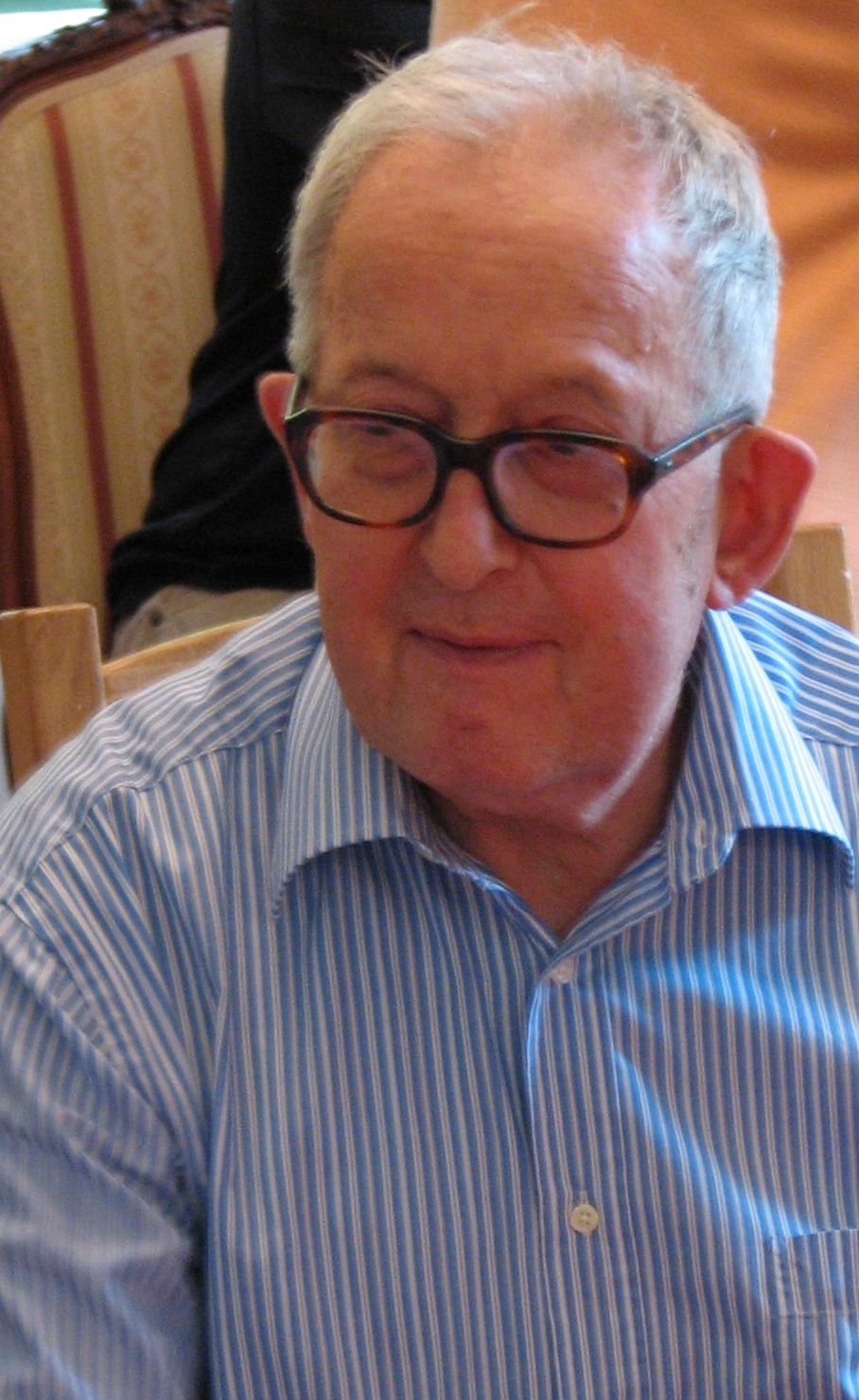
Obituary Karlheinz Schüssler

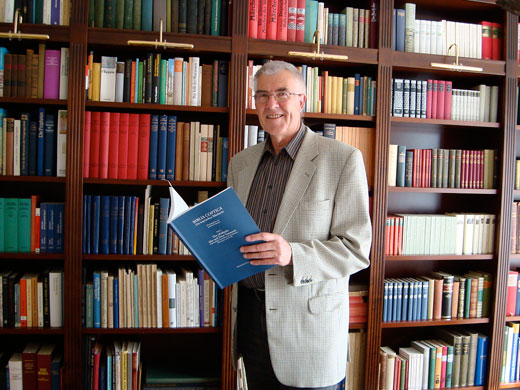
The sad news reached me that our colleague, Karlheinz Schüssler, has passed away. He died in a tragic car accident in Istria on October 7.

Schuessler_01

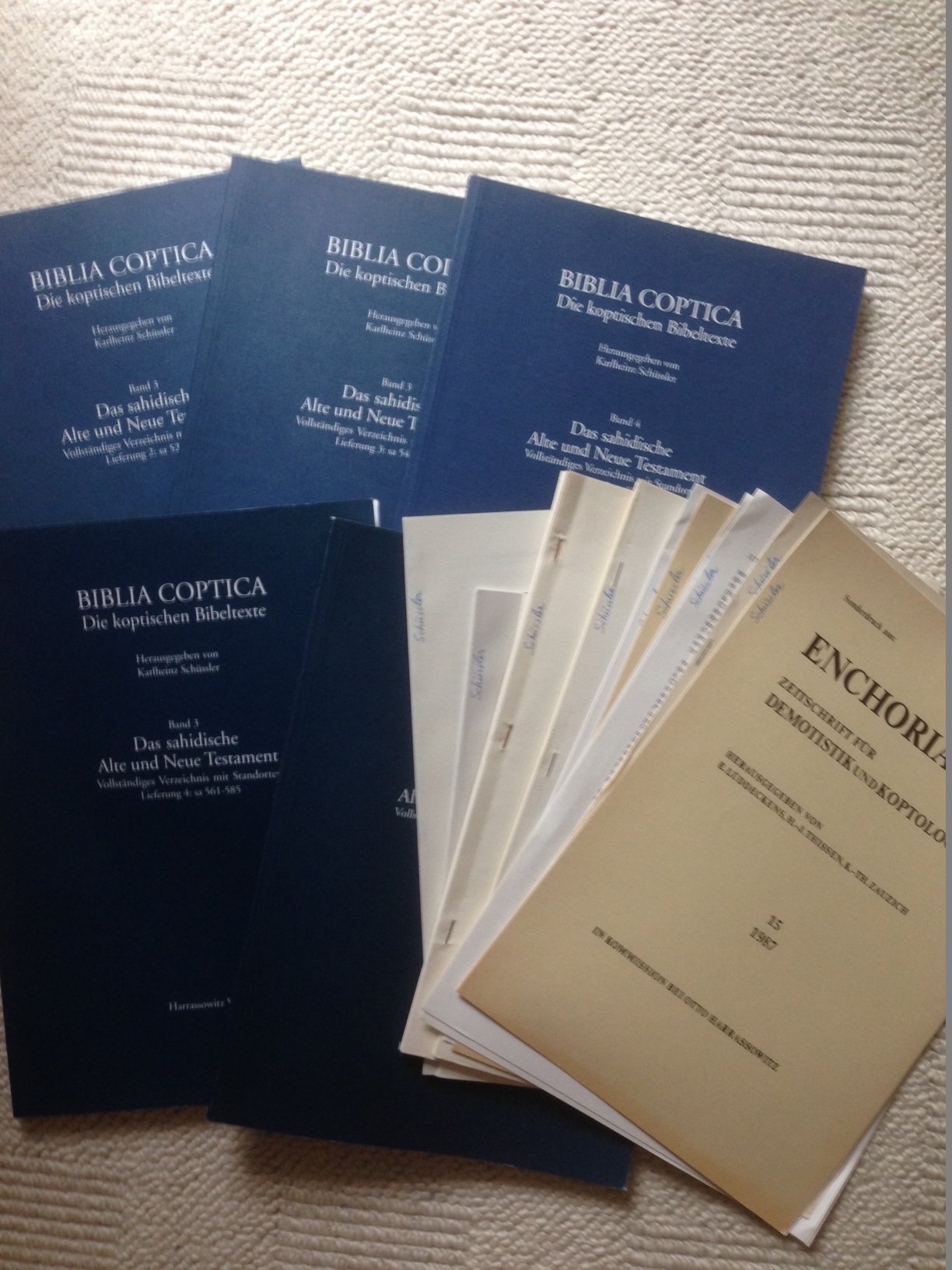
The Coptologists know Karlheinz mainly as the tireless editor of Biblia Coptica. Die koptischen Bibeltexte. He was always very generous, nice and friendly with me. Some years ago, he graciously sent me several volumes of Biblia Coptica and many off-prints of his articles.

photo

We often discussed Coptic manuscripts and have collaborated several times. The last time we spoke was on October 1, a week before his death. He will be sorely missed by his family, friends and colleagues.

Posted in Uncategorized | Tagged , , | 7 Comments

Guest Post: Nils Arne Pedersen & John Møller Larsen – Syriac-Manichaean fragments

It is my great pleasure to host on this blog the article which my friend, Nils Arne Pedersen (Aarhus University), wrote together with John Møller Larsen (Aarhus University) concerning the newly (re)discovered Manichaean fragments in Syriac. – A.S.

Recently we have published a monograph containing our edition and translation of a number of Syriac fragments in Manichaean script, together with studies of the palaeography of the Manichaean script (by Larsen) and the possible contents of the fragmentary texts (by Pedersen). The monograph also contains an art-historical study of the so-called Mani Seal by Dr Zsuzsanna Gulácsi and an account of the conservation of the Berlin fragments by Mrs. Myriam Krutzsch: Manichaean Texts in Syriac: First Editions, New Editions and Studies, Turnhout: Brepols 2013.

Since the fragments from the Berlin and Heidelberg papyrus collections have never been edited before, they have remained unknown to most scholars. The Allberry fragments had been partly edited, but later disappeared. It therefore makes sense to tell about their rediscovery, but firstly some background information.

The background story

Manichaeism was a religious movement founded by Mani who called himself “the apostle of Jesus Christ” and who lived in present-day Iraq from 216 to c. 277 AD. Mani’s writings were written in Syriac, except for the Middle Persian Šābuhragān. The eager Manichaean missionaries reached both the Atlantic Ocean and China, and Manichaeism existed for more than 1.000 years. Though an extinct movement today, the importance of Manichaean studies follows from the Manichaean interaction with other religions and cultures; for instance, the important Latin Church Father, Augustine of Hippo, had himself been a Manichaean and devoted a large part of his writings to their refutation.

During the 20th century numerous Manichaean manuscripts were unearthed. The German Turfan expeditions from 1902-1914 discovered Manichaean texts in Middle and New Persian, Parthian, Sogdian, Bactrian, Tocharian, and Uygur in the Turfan Oasis in the Xinjiang region of Western China. Most of them were written in a form of Aramaic script, deciphered in 1904 by F.W.K. Müller (1863-1930), Curator of the East Asian section of the Ethnological Museum in Berlin, and soon to be called ‘Manichaean script’. They were, however, not in Syriac, the original language of Mani.

The very same year, 1904, the two famous British ‘papyrus hunters’ Bernard Grenfell and Arthur Hunt discovered some Syriac papyrus fragments at Oxyrhynchus in Egypt, and it was soon etablished they also were written in Manichaean script. They now belong to the Bodleian Library and were firstly edited by the Oxford orientalist David Samuel Margoliouth in 1915. A few years later, in 1919, the well-known Coptic scholar Walter Ewing Crum wrote a small article about a parchment fragment in the British Museum (now in the British Library), which was also in Syriac language and Manichaean script, and which Crum believed stemmed from Ashmunain in Egypt.

The next major step in the research history of Syriac-Manichaean fragments was the publication in 1925 by Francis Crawford Burkitt (1864-1935; Professor of Divinity in Cambridge) of his book The Religion of the Manichees, containing an appendix with a reedition of the Oxyrhynchus fragments; a first edition of the Ashmunain fragment; and, furthermore, a partial first edition of “five tiny vellum scraps belonging to Mr W.E. Crum” that seemed to have been used to bind some ancient Coptic manuscripts.

Burkitt’s edition was a landmark and almost 70 more years passed before new fragments of Syriac literary texts in Manichaean script were found. Soon the importance of the tiny Syriac fragments was overshadowed by the amazing find in 1929 of the seven Coptic-Manichaean papyrus codices from Medinet Madi, the edition of which is still going on. One of the scholars working on these codices was Charles Allberry, a brilliant young scholar from Cambridge who published the second part of the Manichaean Psalm Book in 1938. Allberry’s work with the Psalm Book was, however, discontinued by the Second World War when he joined the Royal Air Force and was killed in action near Nederweert in Holland in 1943.

After the war there were few additions to the small collection of Syriac-Manichaean texts. A Syriac inscription in Manichaean script on a rock crystal gemstone, “Mani, the Apostle of Jesus Christ” (the Mani Seal) was published in 1945. Only in the 1990s followed the Syriac-Manichaean texts on wooden boards and papyri from Kellis in the Dakhleh Oasis in Egypt.

Rediscovery of the fragments

A random conversation at a lunch in a canteen at the University of Copenhagen in 1988 eventually lead to a significant increase in the small corpus of edited Syriac-Manichaean fragments. At the time Werner Sundermann (1935-2012) from the Berlin Turfan Collection was in Copenhagen to present his good friend, Jes Peter Asmussen (1928-2002; professor in Iranian Philology) with a Festschrift. During the lunch Sundermann told Pedersen that he had just identified some fragments in the Berlin Papyrus Collection as Syriac written in Manichaean script. Sundermann said that it was a sensation and that he was intended to make an edition of them. Pedersen remembered this, and many years later he started working with these fragments, encouraged by Sundermann. It turned out that the fragments had in fact been found by the conservator, Myriam Krutzsch, in the 1970s, in a cardboard box with no inventory number or information about their acquisition. It was Mrs. Krutzsch who had contacted Sundermann in order to have the script and language identified.

While preparing his work with these fragments Pedersen read an article “Syriaca” (Archiv für Papyrusforschung 1998) by William M. Brashear (1947-2000), which in a footnote referred to the existence of a Syriac fragment in Manichaean script in the Heidelberg Papyrus Collection. This increase in the number of such fragments induced us to include the Mani Seal and Burkitt’s fragments in a new large scale edition of most Syriac-Manichaean fragments (only leaving out the Kellis fragments, which had been edited quite recently by Majella Franzmann). Photographs were acquired of the Mani Seal, the Oxyrhynchus fragments, and the Ashmunain fragment, but it now turned out that nobody knew what had happened to the “five tiny vellum scraps” belonging to Crum.

Pedersen wrote to several persons and institutions in England in the hope that somebody knew the present whereabouts of the fragments. The search was in vain until he was suggested to have a look in Charles Allberry’s letters to Crum, where there might be a reference to them. In fact there was a letter in which Allberry confirmed that the fragments were in his possession. Subsequently Pedersen found out that they were still in the possession of Charles Allberry’s son, Mr David Allberry. David Allberry has now sold them to the Cambridge University Library, where they have been given the inventory numbers Or. 2552 and Or. 2553 and are known as ‘the Allberry fragments’.

Description of fragments and their contents

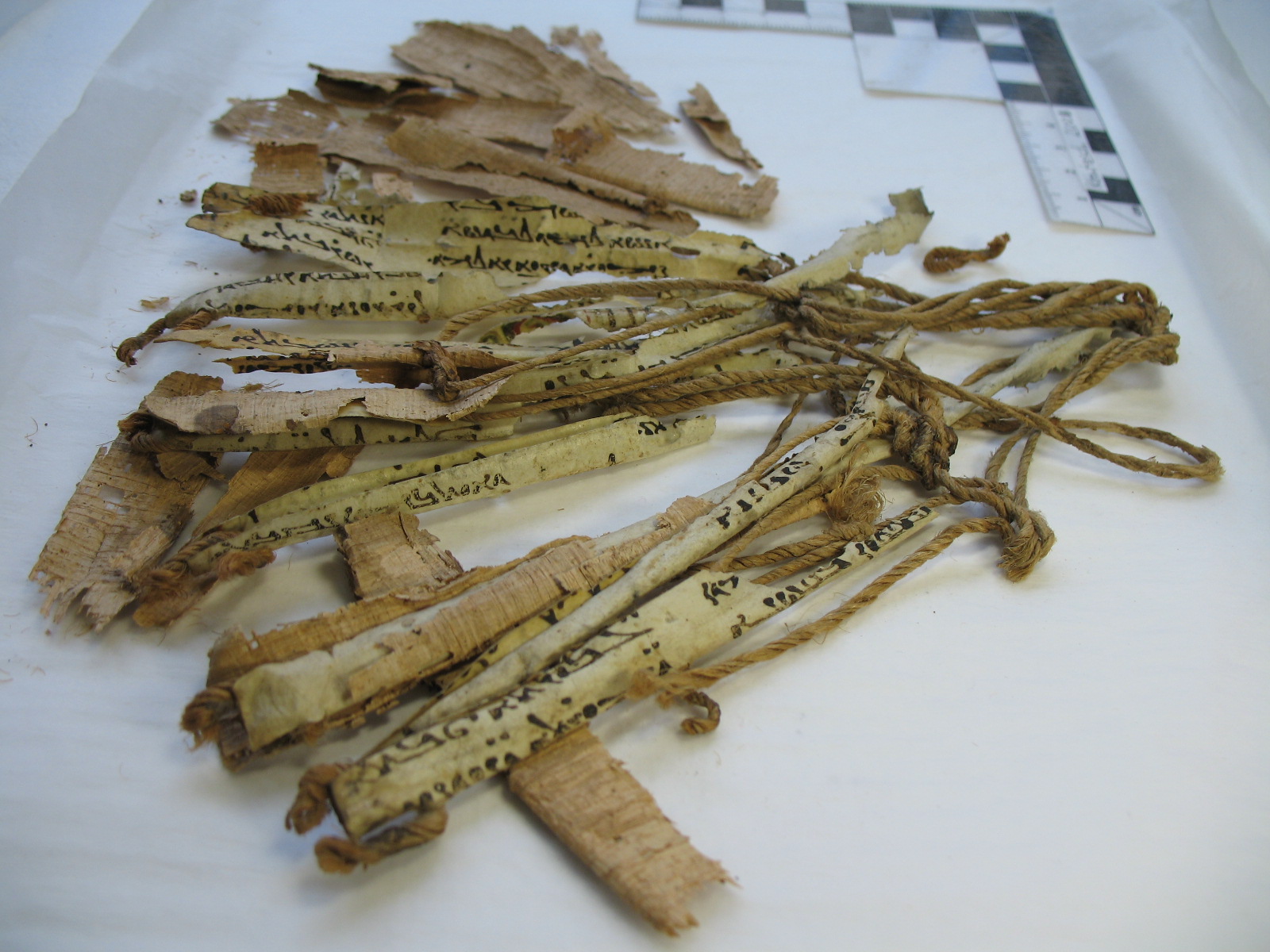
The largest amount of text is preserved on the Berlin fragments (P22364). They consist of 9 parchment fragments of which Nos. 1 and 3 and Nos. 6 and 7 can be joined. When Mrs. Krutzsch found them in the cardboard box they were joined with strings and papyrus fragments, as can be seen on the photograph. Mrs. Krutzsch has convincingly explained that the fragments were reused as support of the spine of a papyrus codex.
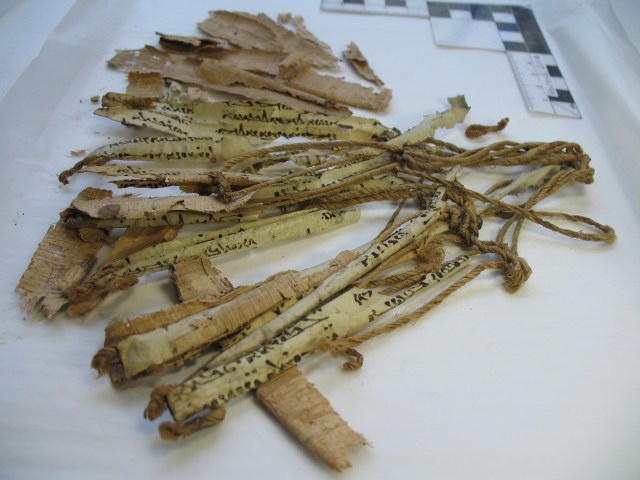
fragmentsThe Berlin fragments.

                                           (Photograph by Mrs. Myriam Krutzsch 2008)

Two of the fragments have no letters but remains of drawings in several colours; obviously the manuscript was illuminated. As for the text, it is remarkable that somebody is speaking in the first singular to a group he adresses as ḥabībē, “beloved ones” and as benayyā de-šarbetā ḥ[ayye, “children of the l[iving] race”. If the restoration “l[iving]” is accepted, we are in fact dealing with the same address as weew3which according to Wolf Peter Funk is attested in one of the excerpts from Mani’s Living Gospel preserved in the Coptic Synaxeis Codex. It therefore seems probable that the Berlin fragments contained one of Mani’s own writings.

There are, furthermore, several interesting passages in the fragments, i.a., a reference to “the shining and victorious garment of God”; a kind of lamentation; and fragments of a narrative or narratives which unfortunately could not be identified. The Manichaean character of the texts cannot be seriously doubted, and they may well stem from Mani himself.

The Heidelberg fragment is poorly preserved; it contains, i.a., a word meaning “places”, meūnē, which is very rare in Syriac; outside some of the ancient lexica it is only attested in Ephrem the Syrian’s prose refutations of Mani and Bardaisan.

The Ashmunain and Oxyrhynchus fragments were already edited by Burkitt. Among our new readings we should mention that it is very probable that the name Vizan occurs in the Oxyrhynchus fragments. Vizan is one of the characters in the apocryphal Acts of Thomas, and thus the fragments seem to confirm that these acts were already part of the background of Syriac Manichaeism.

The Allberry fragments were only partly edited by Burkitt. They contain astronomical (or rather astrological) terms and possibly references to the Manichaean version of the story about Adam and Eve.

The script of the fragments

The increased corpus of Syriac-Manichaean fragments is also important for palaeographical reasons. While the texts discovered in Central Asia belong to the 8th century and some centuries on (the timespans differing between the different languages), it is argued that the Syriac-Manichaean fragments and the Mani Seal can be assigned to the 3rd and 4th centuries. The script is closely related to the so-called cursive Palmyrene script, but it remains uncertain how the script came to be used by the Manichaeans. Traditionally the Manichaeans have been renowned for their love of the art of book production, and the Syriac-Manichaean fragments seem to confirm this, even at this early point in the history of their religion: Certainly, some of the fragments, particularly those from Berlin, evince a highly developed calligraphy.

The script employed in the different fragments shows a considerable uniformity, but there are certain notable differences, particularly in the use of ligatures, and these differences may possibly enable us to make a relative dating of the fragments. And finally, certain peculiarities of the later Manichaean script of Central Asia, such as letters which do not form ligatures to a preceding letter, are present already in our early fragments.

The fragments are an important testimony to Manichaeism in its original Aramaic-Syriac context. It has sometimes been discussed whether Mani really wrote in Syriac or in another Eastern Aramaic variant, but the fragments are all Syriac and thus they support the view that this was Mani’s language.
Posted in Guest Post, Manichaeism | Tagged , , , , , , | 2 Comments

My PhD Thesis: Apocryphon Berolinense/Argentoratense (Previously Known as the Gospel of the Savior)

On June 17, 2013 I successfully defended my PhD dissertation at the Faculté de théologie et de sciences religieuses, Université Laval, Québec.The dissertation is entitled Apocryphon Berolinense/Argentoratense (Previously Known as the Gospel of the Savior). Reedition of P. Berol. 22220, Strasbourg Copte 5-7 and Qasr el-Wizz Codex ff. 12v-17r with Introduction and Commentary.

The jury was composed of five members: Prof. Paul-Hubert Poirier (Université Laval, Québec, supervisor), Prof. Louis Painchaud (Université Laval, Québec, co-supervisor), Dr. Wolf-Peter Funk (Université Laval, Québec), Prof. André Gagné (Concordia University, Montreal), Prof. Pierluigi Piovanelli (University of Ottawa). The president of the jury was Prof. André Couture (Université Laval, Québec). I would like to thank all of them for having accepted to participate in my PhD defense!

The dissertation will be available soon on the website of the Faculté des études supérieures et postdoctorales, Université Laval. Until then,  the final version of the thesis is available upon request (just write me on one of the email addresses available in the ‘Curriculum vitae’ section of this blog).

p. 107

My thesis is about a Coptic text which is largely known as the “Gospel” of the Savior. Although this title suggests that the text is an uncanonical apocryphal gospel, literary evidences which I document in my thesis firmly indicate that the text does not belong to this genre, but it is rather one of the numerous “memoirs” of the apostles and disciples, which were composed in Coptic, most likely after the Council of Chalcedon (451 CE). Sometimes, the pseudo-apostolic memoirs were incorporated into sermons attributed to the Fathers of the Coptic Church. The fact that the text belongs to a well-defined genre, formed mostly of homilies with apocryphal insertions, has caused me to eschew the label “gospel,” which I find unsatisfactory and misleading. Instead, I have chosen to call the text the Apocryphon Berolinense/Argentoratense (ApoBA), after the location of the two main manuscripts. In fact, the label “apocryphon” is larger and more generous than “apocryphal gospel.”

Posted in Apocrypha, Curriculum vitae | Tagged , , , , , , , , | 8 Comments

Coptica Update: New Article on Coptic Manuscript Fragment (H. Förster, ZAC 16 [2013])

The latest issue of the Zeitschrift für antikes Christentum features the article of Dr. Hans Förster (University of Vienna), “‘Siehe, Magier kamen aus dem Osten’: Eine Paraphrase der Magier-Perikope aus dem Matthäusevangelium (Mt 2,1-12).” If your university has a subscription to ZAC, you can read the article here.

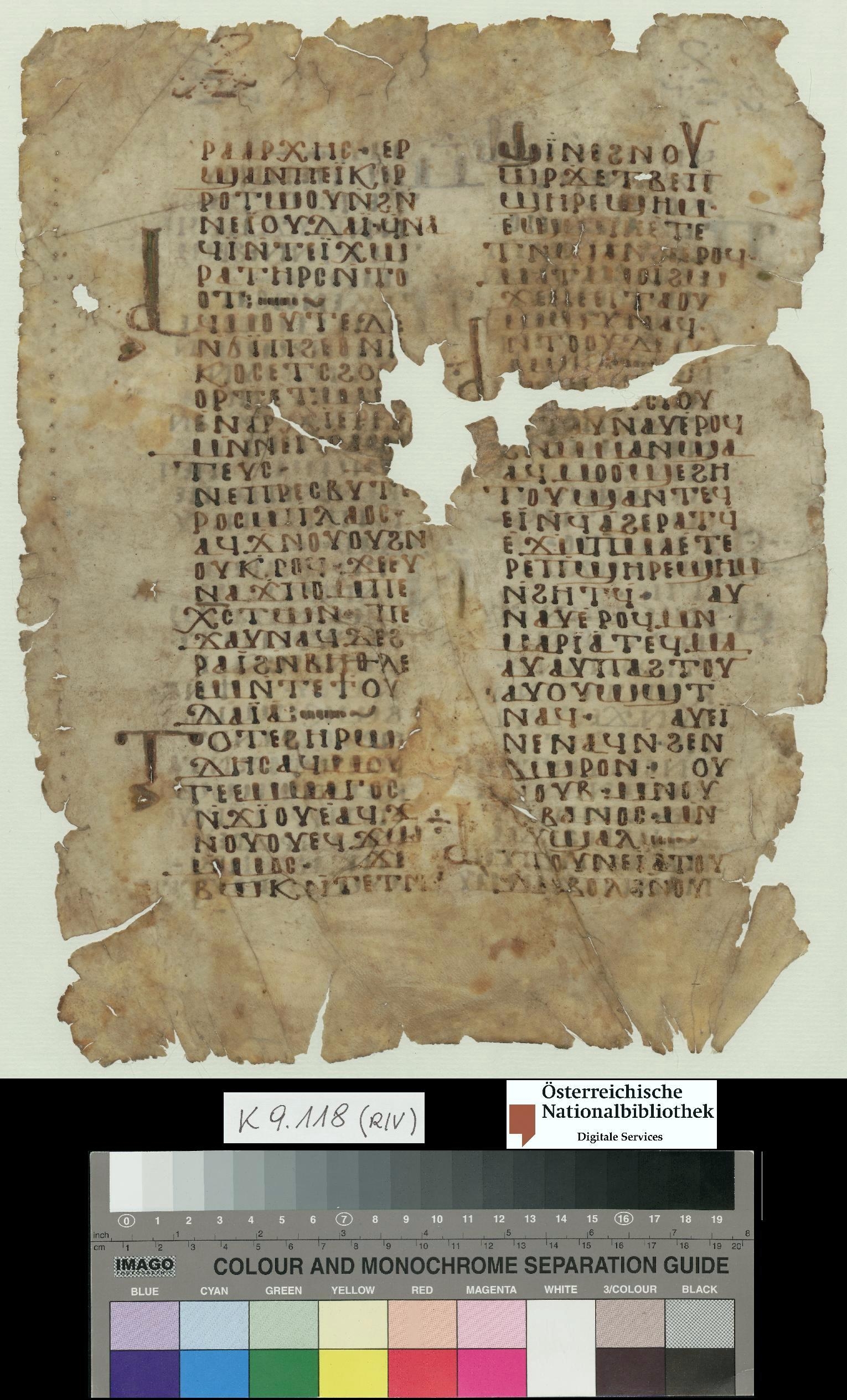
Our colleague published a parchment fragment in the National Library in Vienna (call number: K 9118), which he believes to be unidentified.

K 9118v(source of the photo)

The abstract of the article says:

A Coptic paraphrasing of one of the Gospels from the White Monastery contains a narration based on the so-called magi pericope from the Gospel of Matthew (Mt 2:1-12). It focuses this story onto the fight between Herod, a worldly King, and Jesus as the “King of Heaven.” This strengthens the parallels between the magi pericope and the Passion. Herod is identified with Pontius Pilate, and the phrase: “King of the Jews” which is focused throughout the Passion is integrated into the magi pericope. Some elements of the text indicate a liturgical usage in Egypt. Palaeographic analysis suggests dating it back to the 9th or 10th century C.E.

Actually, the fragment comes from a sermon on John the Baptist attributed to Theodosius of Alexandria (d. 567) (CPG 7151; clavis coptica 0386). This writing is preserved in several Sahidic codices. The Vienna leaf belongs to a White Monastery manuscript which has the siglum MONB.OY in the Corpus dei Manoscritti Copti Letterari database. What is more, the fragment in question was already published, and properly identified, by Karl Heinz Kuhn in A Panegyric on John the Baptist attributed to Theodosius Archbishop of Alexandria (CSCO, 268. Scriptores coptici, 33; Louvain: Secrétariat du CorpusSCO, 1966) 32-34.

Concerning the dating of the manuscript, I think I saw another codex copied in the same scribe’s hand, which is dated sometimes in the second half of the 10th century. This means that the dating proposed by H. Förster is correct. As to its provenance, paleographical features undoubtedly point out that it was produced in the scriptorium of Touton, in the Fayyum (from where it was later transferred to the White Monastery).

I hope this brief note will be useful for those interested in Coptic literature. The study of Coptic manuscript fragments has always been a tricky issue for Coptologists.

Posted in Encomium on John the Baptist, Theodosius of Alexandria | Tagged , , , , , , , | 1 Comment

Guest Post: Alistair C. Stewart – The “Gnomes” of the Council of Nicaea

What follows are drafts of a text and translation of the gnomes transmitted in the Coptic tradition with material relating to the Council of Nicaea.

These are a work in progress. Beyond a great deal of checking, which needs to be undertaken, I intend to provide an introduction and commentary. I also suspect that there are some fragments of this work elsewhere among the Turin papyri, which will in due course be added.

My interest and expertise is in the church order tradition and the history of liturgy; that is the reason for my engagement with this text. I am not a Coptologist. The work in progress has an intended audience of students of early Christian literature and church orders. However, I wish to provide a text with my discussion of the document for this audience so that, on the basis that the existing editions are hard to find, those who had some knowledge of Coptic might be enabled to check the text if there was something of particular concern. The main purpose of the work is to provide a translation with introduction and commentary with a view to making this text better known and to advance the debate regarding church orders by allowing us to map these “gnomes” as part of that tradition.

However, in undertaking the task of providing the text I have noted major variations between the versions. The text is based on T (see the sigla below) on the grounds that this is the most complete of the texts, and possibly the earliest. However, there are occasions where I have preferred a version to T. Lammeyer (see the sigla below) has done the same very thoroughly, noting all variations between P and the other versions, but because of the arrangement of his work it is hard to use.

In view of my own limitations in this regard I would be very grateful to anyone with proper expertise in Coptic who might take time to look at these drafts and to alert me to the many errors which no doubt lurk below. Updated versions will be posted at intervals.

Alistair C. Stewart

vicar@uptoncumchalvey.org.uk

AN00145659_001_l

Sigla:

B: Borgia collection, 239, 73-84, now in the Museo archeologico nazionale di Napoli. Published by Eugène Revillout, Le Concile de Nicée d’après les textes Coptes: nouvelle série de documents (Paris: Maisonneuve, 1876)

Lammeyer: v. sub P.

P: Bibliotheque nationale Copte-sahidique 129 14/75-82. Edited by Joseph Lammeyer Die sogenannte Gnomen des Concils von Nicaea: ein homiletischer Traktat des 4 Jahrhunderts (Beirut: np, 1912)

Revillout: v. sub T.

Rossi: v sub T.

T: Museo Egizio di Torino, cat. 63000. Edited by Eugène Revillout, Le Concile de Nicée d’après les textes Coptes: première série de documents (Paris: Maisonneuve, 1873) and again by Francesco Rossi, Trascizione di alcuni testi copti tratti dai papiri del Museo Egizio di Torino (Turin: Loescher, 1884).

Note: Rossi’s transcription of T is far superior to that of Revillout, who seems to have introduced several errors and seems to have been able to read far less than Rossi. Rossi provides an Italian translation, and Revillout a partial translation into French. When publishing B Revillout was content to reprint his translation of T. Lammeyer provides a German translation of P, supplemented by a translation of T where P is defective.

Download the Coptic text and English translation

Posted in Canons of the Church, Guest Post | Tagged , , , , , | 11 Comments

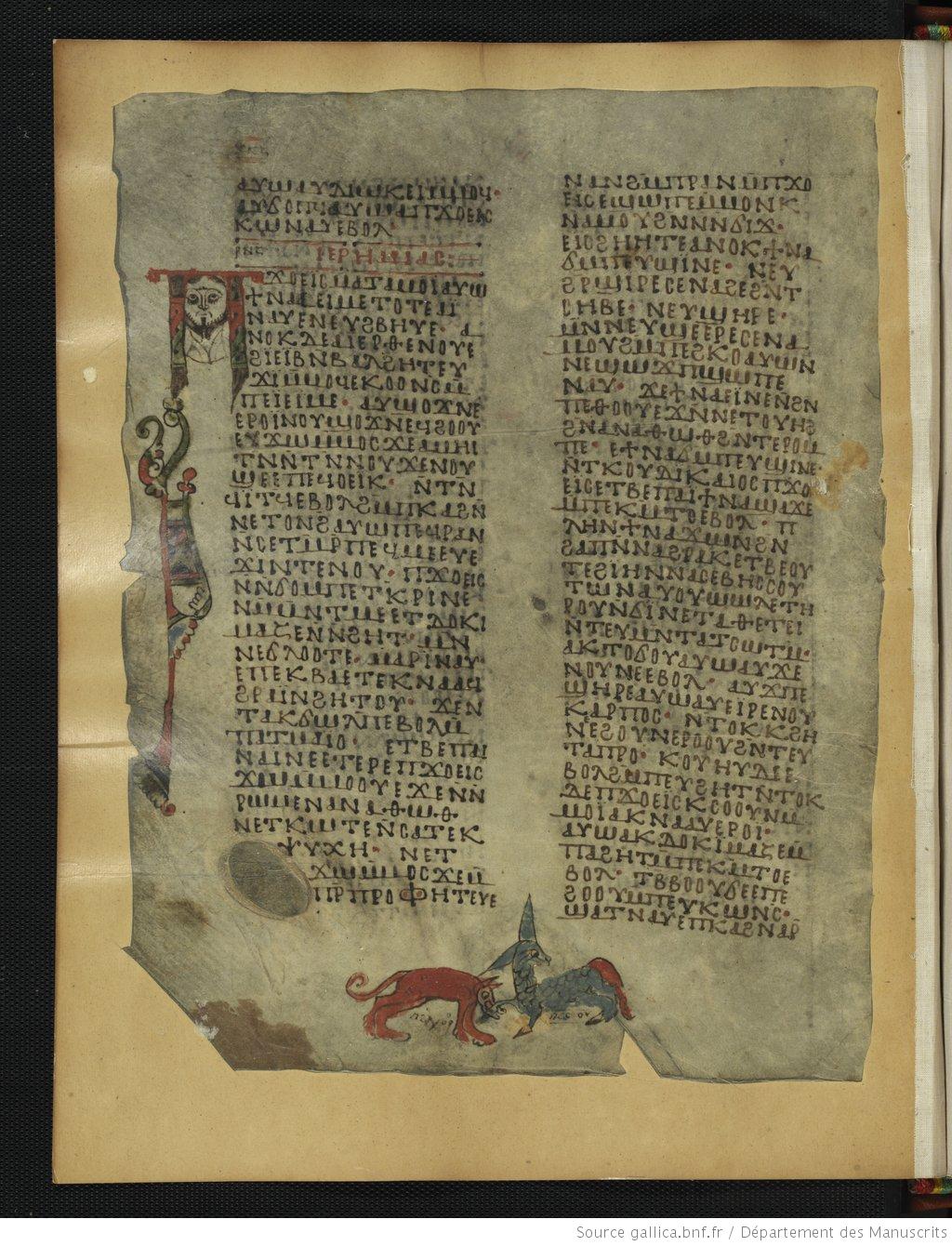
More Coptic Manuscripts at Gallica

At Gallica you can find now more digitized Coptic manuscripts from the Bibliothèque Nationale in Paris. All of them are Sahidic fragments from the Monastery of Apa Shenoute (i.e. White Monastery):

f36.highres

BnF Copte 102 Miscellanea

BnF Copte 129(11) New Testament. Acts of the Apostles, Catholic Epistles, Apocalypse

BnF Copte 129(13) Monastic rules and lives of the monks (second part)

BnF Copte 129(19) Katameros

BnF Copte 129(20) Katameros

BnF Copte 131(5) Sermons

BnF Copte 133(1), 102-138 Fragments

BnF Copte 133(2), 1-29 Fragments

BnF Copte 133(2), 42-59 Fragments

BnF Copte 133(2), 60-90 Fragments

BnF Copte 133(2), 195-258 Fragments

BnF Copte 133(2), 259-337 Fragments

BnF Copte 161(6) Miscellanea

Posted in Announcements | Tagged , , , , | 1 Comment