New Fragments of the Gospels in Fayyumic

The remnants of several Fayyumic Biblical codices which belonged to the White Monastery survive scattered in various modern collections. They were studied over the course of time by several scholars. For her part, Anne Boud’hors published some of the fragments which are kept in the National Library in Paris. They came from a parchment codex which seems to have contained at least the Gospels of Mark, Matthew and John. In an article which she published in the Mélanges Wolf-Peter Funk, Anne Boud’hors christened this manuscript “Codex B.”[1]

A few more fragments can be added to this codex. I am presenting them here briefly, but perhaps those interested in the Coptic versions of the New Testament will take the time to study them more closely.

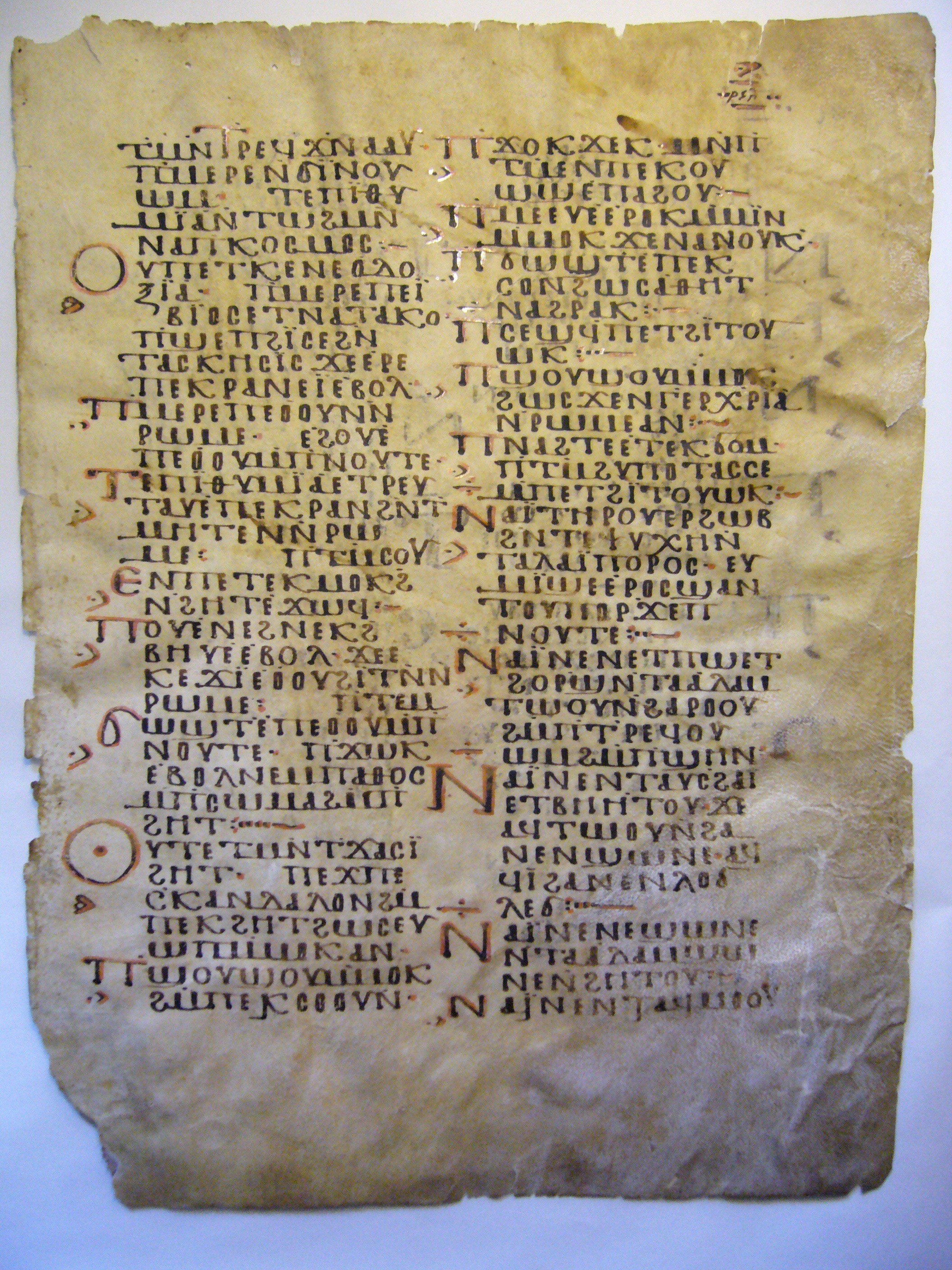
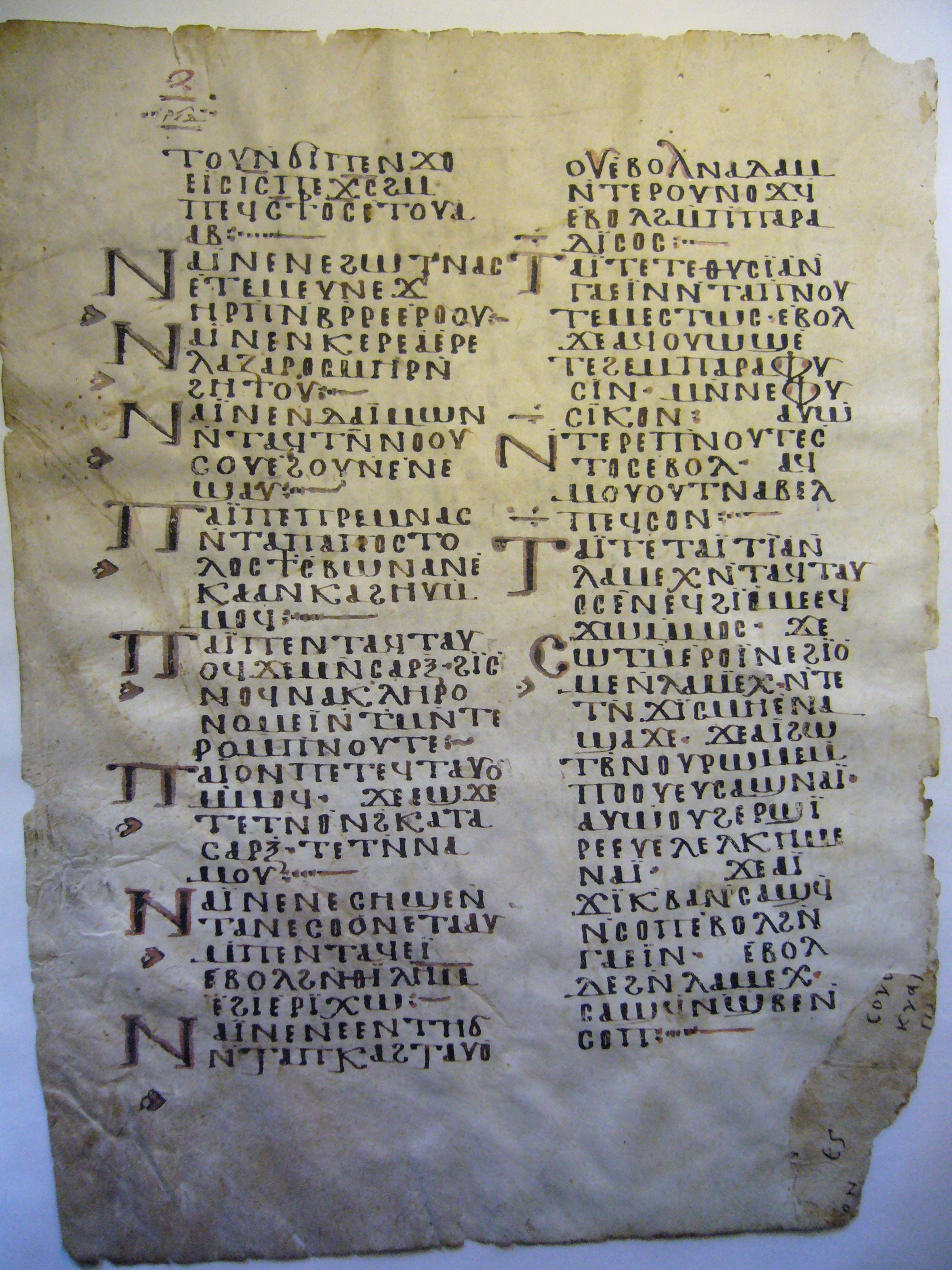
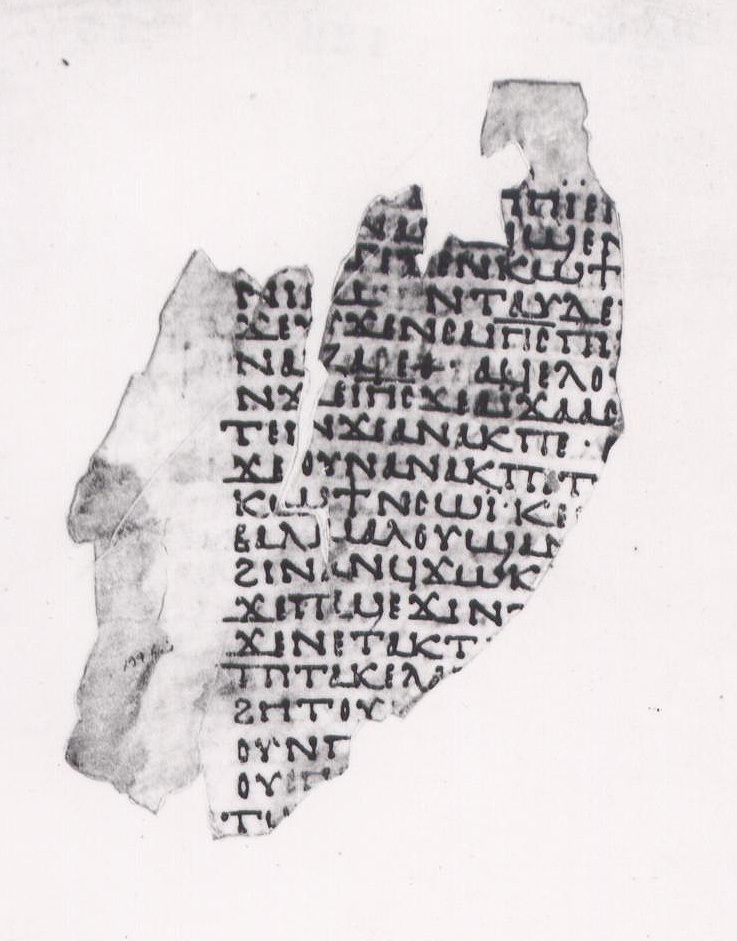
The first one is a fragment kept in the National Library in Paris as 129(18), fol. 124.

This fragment contains the Gospel of John 17:26-18:10 in Fayyumic. Christian Askeland, who recently received his Ph.D. degree in Cambridge with a thesis on the Coptic versions of John, has promised that he will soon present the fragment more extensively.

It is interesting to note that it was bound in a miscellaneous volume which is supposed to contain fragments from the Apocryphal Acts of the Apostles in Sahidic. Continue reading

Posted in Bible, Gospel of the Twelve, New Testament | Tagged , , , , , , , , , | 2 Comments

Articles on Ephraem the Syrian

E.A.W. Budge, “On a Fragment of a Coptic Version of Saint Ephraim’s Discourse on the Transfiguration of Our Lord,” Proceedings of the Society of Biblical Archaeology 9 (1886/1887) 317-329  (this is CPG 3939, In transfigurationem domini; the homily belongs to Isaac of Antioch, but it circulated as well under the name of Ephraem or John Chrysostom);

I. Guidi, “La traduzione copta di un omelia di S. Efrem,” Bessarione 2 (1902/1903) 1-21 (this is CPG 3952, In mulierem peccatricem; in Greek it was attributed also to John Chrysostom);

M. van Esbroeck, “Une homélie inédite éphrémienne sur le bon larron en grec, géorgien et arabe,” Analecta Bollandiana 101 (1983) 327-362 (the Arabic translation might indicate a lost, or not yet identified, Coptic version);

E. Beck, D. Hemmerdinger-Iliadou, J. Kirchmeyer, “Ephrem le Syrien (saint),” in Dictionnaire de spiritualité vol. 4 (Paris: Beauchesne, 1960-61) coll. 788-822 (very important article on Ephraem Graecus, but too laconic on the Coptic versions).

Posted in Bibliographies, Ephrem the Syrian | Tagged , , , , , , , , , | 2 Comments

An Unknown Fragment from a Discourse of Shenoute in the Cleveland Museum of Art

To Pierre Cherix

A few days ago, I read an interesting, but little-known, article concerning the conservation of two Coptic parchment fragments. The article was published in 2004 by Paul Hepworth and Maurizio Michelozzi in the journal The Paper Conservator (edited by the Institute of Conservation in London).[1] The two researchers have developed, independently, a similar technique of conservation and treatment of parchment manuscripts. They managed to treat successfully the parchment by using re-moistenable repairing material: fish swim bladder membrane in one case, and fine Japanese tissue in the other.

The two conservators used the new techniques on a Coptic parchment leaf in the Cleveland Museum of Art and a bifolio in the Walters Art Museum in Baltimore. Now, I was surprised to learn that there are Coptic manuscripts kept in these two locations, since I did not remember them being mentioned elsewhere.

The bifolio in Baltimore is said to contain a portion from the Book of Exodus in Coptic. As to the leaf in the Cleveland Museum of Art, it is thought to be “from a Christian homily, dated to AD sixth to seventh century, from Fayum, Egypt.”[2]

Luckily, the authors published the photo of the folio’s recto before and after conservation, thus making possible the examination both of the handwriting and of a portion of the text. I found the same picture on the website of Cleveland Museum of Art:

The fragment is paginated 159 on the recto (the verso must be thus page 160) and it can be recognized as Continue reading

Posted in Shenoute of Atripe | Tagged , , , , , , | 2 Comments

New Blog on Christian Culture in the Middle East

Adam McCollum, lead cataloger of Eastern Christian manuscripts at the Hill Museum and Manuscript Library (HMML), announced his new blog on various aspects of the Christian culture in the Middle East. Adam promised he will show us many manuscript images!

http://hmmlorientalia.wordpress.com/

Posted in Uncategorized | Tagged , , , , , , | Leave a comment

G. Garitte, Le calendrier palestino-géorgien du Sinaiticus 34

Here is a useful book for those interested in the hagiographical traditions of the Eastern Churches: Gérard Garitte, Le calendrier palestino-géorgien du Sinaiticus 34 (Xe siècle) (Subsidia hagiographica, 30; Brussels: Société des Bollandistes, 1958).

download the book here

Picture in which Gérard Garitte appears together with the Archimandrite Christophoros, skeuophylax and librarian of the Monastery of St. Catherine, Sinai (1957):

Posted in Bibliographies, Liturgical Books | Tagged , , , , , , , , | 5 Comments

A Coptic Codex of the Asceticon of Abba Isaiah (Guillaumont Codex A)

The Coptic version of the Asceticon of Abba Isaiah became known due to Antoine Guillaumont edition of several fragmentary Sahidic witnesses.[1] A few years before this edition appeared, Guillaumont published in Mélanges Crum a list of the available Coptic manuscripts of the Asceticon.[2]

I would like to discuss briefly here only one of these manuscript witnesses, which belonged once to the library of the White Monastery. Apparently, this codex is one of the two White Monastery manuscripts which contained exclusively the logoi of Avva Isaiah. As the fragmenta inedita outnumber the edited parts, my purpose is to trace a preliminary directory of the codex for a future edition. In the Corpus dei Manoscritti Copti Letterari database, the codex discussed here is designated by the sigla MONB.BQ. The references to the Asceticon are given according to the Syriac version published by René Draguet in Corpus Scriptorum Christianorum Orientalium series.

First of all, we have six supplementary leaves, known for a long time, in the collection of the French Institute in Cairo (nos. 52-57), whose publication was envisaged, but unfortunately never accomplished, by Antoine Guillaumont and René-Georges Coquin.[3]

They are paginated consecutively from 193 to 204 and can be ascribed to Logos 28 (= Syriac Logos 22). Continue reading

Posted in Ascetic Authors, Isaiah of Scetis, Patristics | Tagged , , , , , , , , , , , | 2 Comments

A Fragment from a Homily Attributed to Athanasius of Alexandria

In 1937, Joseph Buchanan Bernardin edited and translated into English a Sahidic homily entitled On the Passion of Christ and the Judgment (CPG 2184), attributed to Athanasius of Alexandria.[1] This homily is entirely preserved in codex M595, ff. 100v-108r, a parchment manuscript which belongs to the Pierpont Morgan Library in New York.[2] A photographic reproduction of the manuscript was published in volume XLIII of Henri Hyvernat’s facsimile edition of the Pierpont Morgan Coptic codices.[3]

According to the colophon,[4] the codex was copied in the year 571 Era of the Martyrs – which corresponds to 855 A.D. – for the Monastery of the Archangel Michael, situated in the Fayyum oasis. Nothing is mentioned concerning the place where the codex was copied, but the paleographical evidences suggest that this might be an “early Touton” manuscript, antedating with several years the classical Toutonian scribal productions.[5]

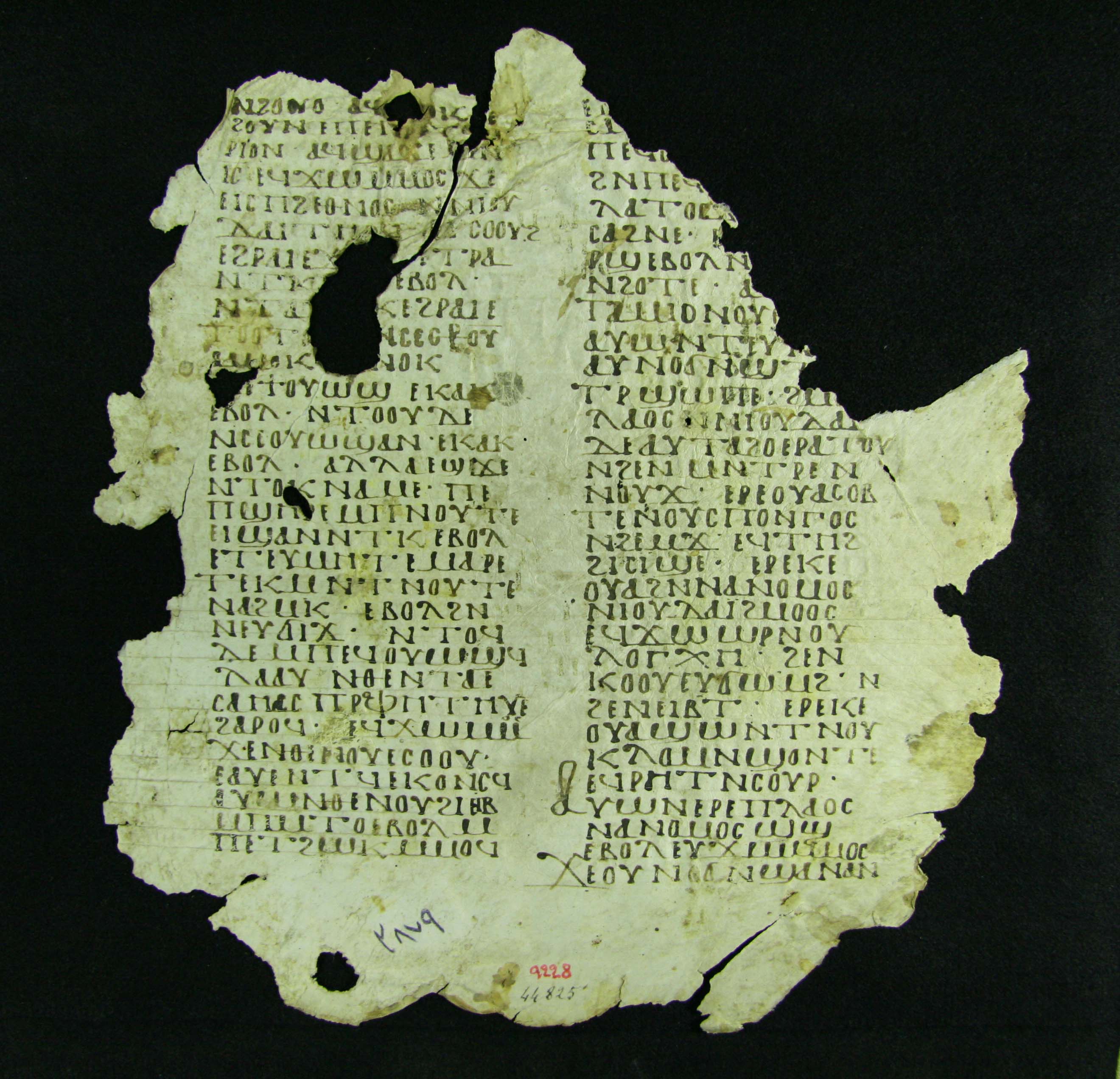
In his introduction, Bernardin stated that he edited the homily On the Passion after the codex unicus M595, since there is “no other copy of this sermon in Coptic or any other language.”[6] However, Bernardin was not aware that approximately twenty years before him, Henri Munier published in his catalogue of the Sahidic manuscripts in the Coptic Museum a fragment belonging to another copy of the same work (call number 9228).[7] Although Munier did not identify the content of the fragment and described it cautiously as “Récit (?) de la passion,” the text parallels ff. 103r-104r of the Pierpont Morgan codex which contains the homily attributed to Athanasius.

During a research trip in Cairo in the spring of 2008, I made an autoptic examination of the fragment in question and I obtained the rights to photograph and publish it.

Translation:

[…] he entered into the praetorium. He spoke with Jesus, saying: “Behold, Continue reading

Posted in Athanasius of Alexandria, Patristics | Tagged , , , , , , , , , | Leave a comment

Guest Post: Anne Boud’hors-Chartres BM n° 906

This is a preliminary report by Anne Boud’hors concerning a Coptic parchment leaf which hopefully we will publish soon.

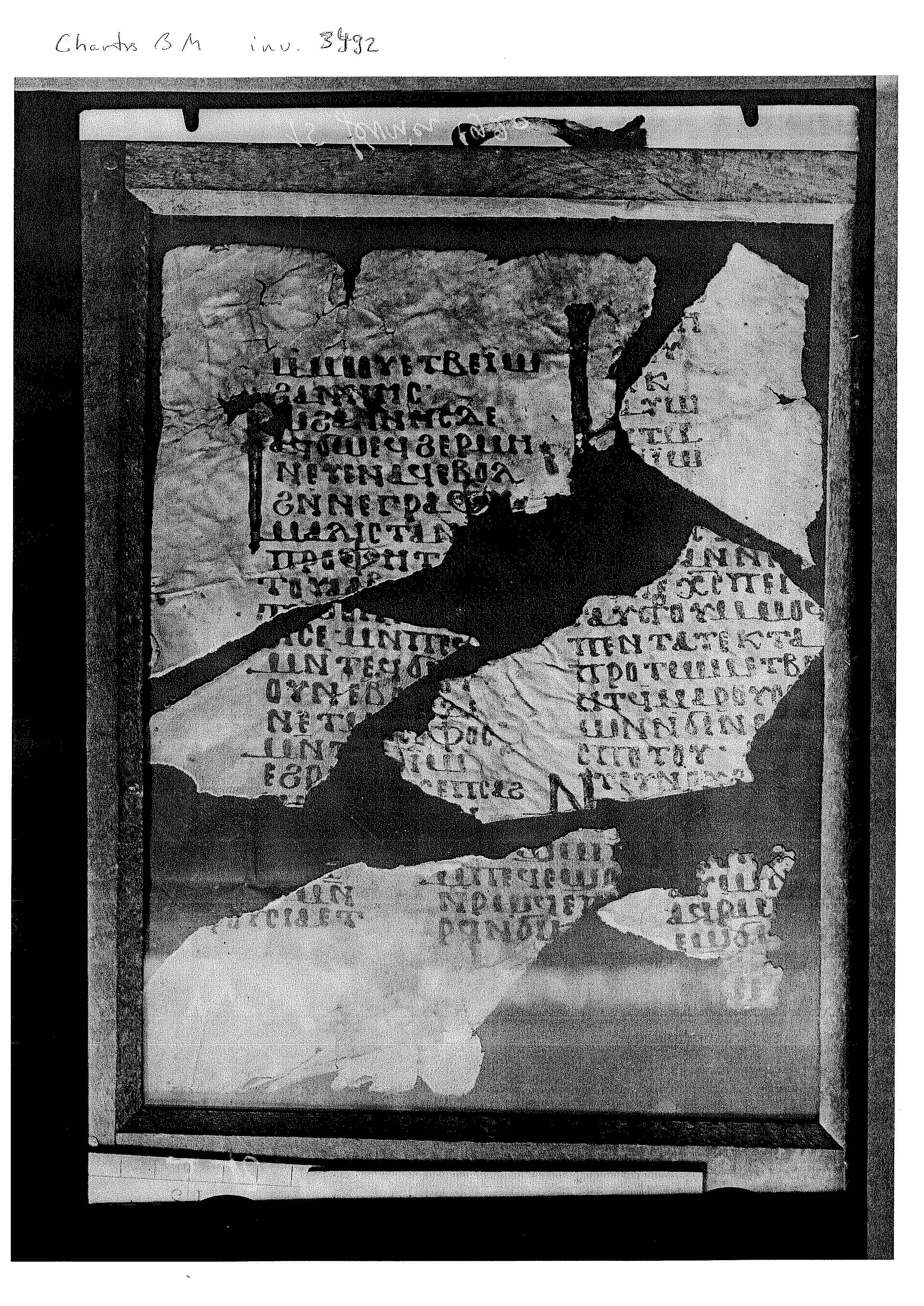
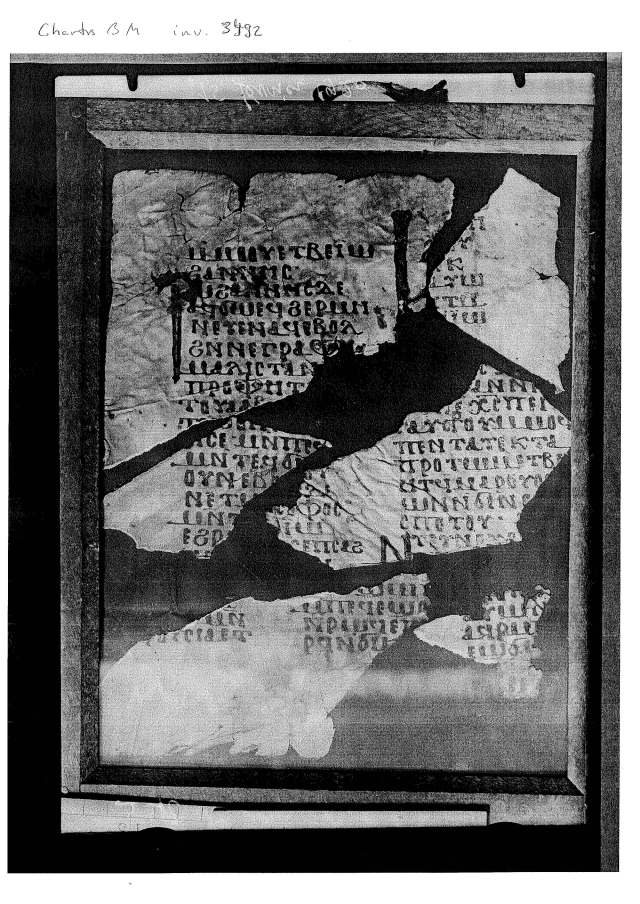
Plus de la moitié des 2000 manuscrits de la Bibliothèque municipale de Chartres ont disparu dans un incendie consécutif à un bombardement en 1944. Un projet de restauration et d’identification des textes rescapés est en cours à l’Institut de Recherche et d’Histoire des Textes. Au cours d’un classement dans le cadre de ce projet, deux clichés de fragments coptes disparus ont été retrouvés. Ces fragments portaient le n° d’inventaire 906, qui les décrit ainsi :

 « 1°- Paul DURAND : Fragments encadrés, d’un feuillet de manuscrit copte, rapporté d’Égypte, vers le milieu du 19° siècle, par M. Paul Durand.

XI° siècle. Parchemin. I fol. 280 sur 180 mill.

2° – Texte traduit par M. Louis Delaporte, appartenant à la vie ou au panégyrique d’un personnage du nom de Jean qui rend la parole au nom du Christ, à un muet, lorsque ce dernier reconnaît l’existence du vrai Dieu.

XX° siècle. Papier. 5 fol. 220 sur 170 mill. 1 cahier in-4°.

Don de Mme Paul DURAND »

Du manuscrit décrit sous 1°, il reste deux clichés qui représentent six fragments de parchemin appartenant à un même feuillet, mais montés sous verre dans un certain désordre (le n° d’inventaire 3492 a été attribué au cliché d’un côté du montage, le n° 3493 à l’autre). Le cliché porte la date du 15 février 1920. Quant à la traduction de L. Delaporte, elle n’a pas été retrouvée.
Le donateur est probablement Paul Durand (1806-1882), archéologue et dessinateur, qui a beaucoup travaillé sur les monuments de Chartres (cf. France savante. Dictionnaire prosopographique).

Quant à Louis Delaporte, il s’agit de Louis-Joseph Delaporte (1874-1944), mieux connu comme assyriologue, mais qui entreprit au début du xxe siècle le catalogue des manuscrits coptes de la Bibliothèque nationale, entreprise qui se limita aux manuscrits écrits en copte bohaïrique, majoritairement liturgiques (Catalogue sommaire, publié en 1912 à Paris) et à une partie des fragments bibliques en sahidique (articles de la Revue de l’Orient chrétien de 1912 et 1913).

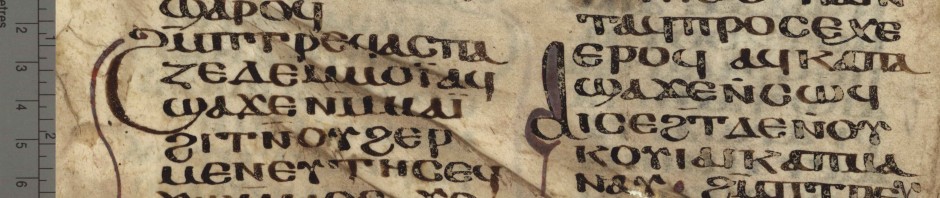
Les photos permettent de reconnaître des fragments du monastère Blanc. Alin Suciu les a identifiés : il s’agit du manuscrit MONB.DO, qui contient des textes relatifs à l’apôtre Jean et les fragments de Chartres appartiennent aux Actes apocryphes de Jean du pseudo-Prochore (un texte grec datable autour du ve siècle). L’épisode se situe au chapitre 27, où Jean rend muet un juif nommé Charus qui blasphémait contre le Fils de Dieu, puis, lorsque ce dernier vient implorer son pardon, le guérit.

Anne Boud’hors is researcher at Centre national de la recherche scientifique (CNRS), Paris. She is the president of the International Association for Coptic Studies (IACS).
Posted in Acts of John, Apocrypha, Apocryphal Acts of the Apostles, Guest Post, Pseudo-Prochorus | Tagged , , , , , , , | 1 Comment

Concordance of the Sahidic New Testament

An invaluable resource for the study of Coptic literature: the concordance of the Sahidic version of the New Testament, published in the Corpus Scriptorum Christianorum Orientalium series.

L.-Th. Lefort, Concordance du Nouveau Testament sahidique, I. Les mots d’origine grecque (CSCO, 124. Subsidia, 1; Louvain, Imprimerie orientaliste L. Durbecq, 1950)

M. Wilmet, Concordance du Nouveau Testament sahidique, II. Les mots autochtones, 1 (CSCO, 173. Subsidia, 11; Louvain: Secrétariat du CorpusSCO, 1957)

M. Wilmet, Concordance du Nouveau Testament sahidique, II. Les mots autochtones, 2 (CSCO, 183. Subsidia, 13; Louvain: Secrétariat du CorpusSCO, 1958)

M. Wilmet, Concordance du Nouveau Testament sahidique, II. Les mots autochtones, 3 (CSCO, 185. Subsidia, 15; Louvain: Secrétariat du CorpusSCO, 1959)

Posted in Bible, Bibliographies, Corpus Scriptorum Christianorum Orientalium, New Testament | Tagged , , , , | 10 Comments

Abba Isaiah of Scetis: Bibliography

Vailhé, H., “Un mystique monophysite: le moine Isaïe,” Échos d’Orient 9 (1906) 81-91

The monk Augustinos, Tou hosiou patros hemon abba Esaiaou logoi 29 (Jerusalem, 1911; 2nd ed. S. Schoinas, Volos, 1962)

Nau, F., “À propos d’un feuillet d’un manuscrit arabe,” Le Muséon 43 (1930) 85-116

Keller, H.D., “L’abbé Isaie-le-jeune,” Irénikon 16 (1939) 113-126

Hardy, E. R., “A Fragment of the Works of the Abbott Isaias,” Annuaire de l’Institut de Philologie et d’Histoire Orientales et Slaves 7 (1944) 127-140

Guillaumont, A., “La recension copte de l’Ascéticon de l’Abbé Isaïe,” in Coptic Studies in Honor of Walter Ewing Crum (Boston 1950) 49-60

Mercati, G., “Sul papiro greco dell’Archivio di Stato di Firenze,” Aegyptus 32 (1952) 464-473

Continue reading

Posted in Ascetic Authors, Bibliographies, Isaiah of Scetis | Tagged , , , , | 1 Comment

Two Other Scraps from a Parchment Leaf Containing the Apocryphal Acts of John in Coptic

Recently, I reported that one of the Coptic fragments which were auctioned by Sotheby’s in July 2009 contains a portion from Metastasis Iohannis. This apocryphal writing, originally written in Greek, is actually part of the Acts of John (chapters 106-115).
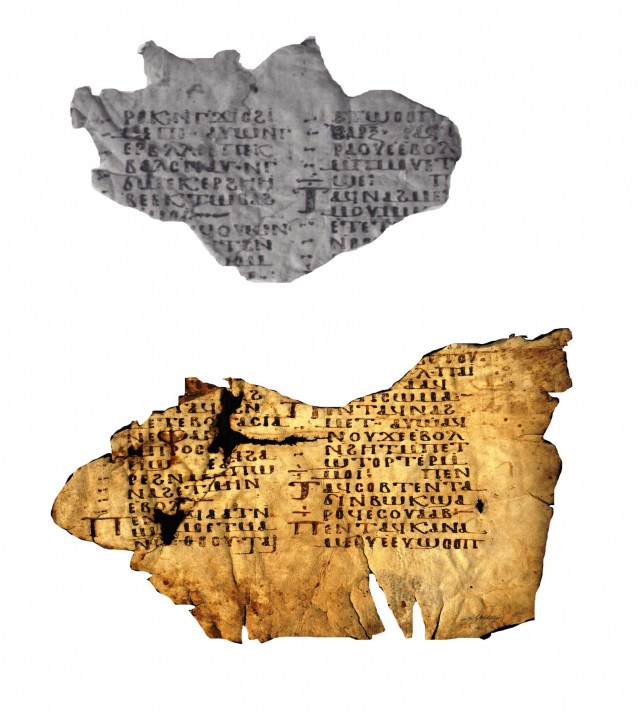
Those who read this blog regularly know how much I enjoy reconstructing from scattered pieces the torn leaves of Coptic manuscripts. In my previous article on Metastasis Iohannis, I showed that a parchment scrap kept in the Louvre Museum in Paris (call number E 10 015) and the Sotheby-Bolaffi fragment are two bits of the same mutilated codex leaf.

The kinship of the two fragments can be ascertained with the help of a photo montage.
It can be seen in the picture above that a stripe in the middle of the leaf is still missing.

Fortunately, a few days ago, I found two other scraps Continue reading

Posted in Acts of John, Apocrypha, Apocryphal Acts of the Apostles | Tagged , , , , , , , , , | 5 Comments

Two Extracts from Proclus of Constantinople in a Coptic Fragment in Louvre

(Thank you, David Tibet, for the useful suggestions, especially regarding the Coptic text!)

Proclus of Constantinople was held in high regard in Coptic Egypt. His fame was largely due to the fact that Proclus allied himself, from the beginning, with Cyril of Alexandria in the controversy with Nestorius.

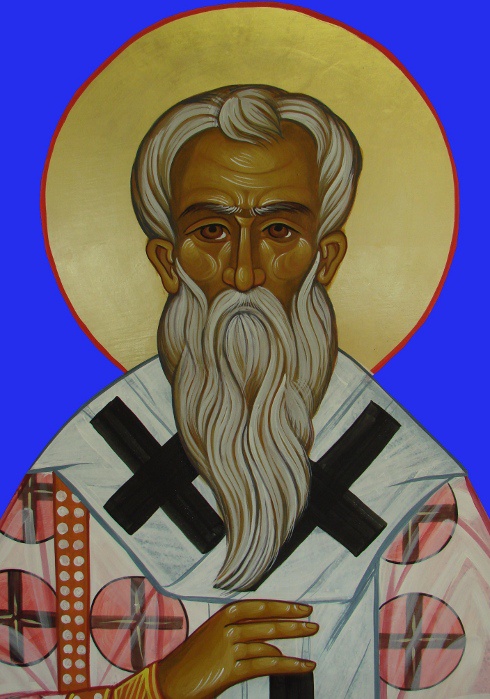
(This icon of Proclus is taken from here)

Besides the four genuine homilies that have been reported to date in Coptic (CPG 5800, 5812, 5822, 5832), we have also a number of other spurious texts attributed to his name. In this post I would like to introduce an interesting fragment in the Sahidic dialect, which contains two Christological extracts from the works of Proclus. The fragment has not been identified until now in any publication. As we shall see, it raises several problems that I have been unable yet to solve. Continue reading

Posted in Patristics, Proclus of Constantinople | Tagged , , , , , , , , , | 7 Comments

Coptic Bible Resources

Some useful resources for the study of the Coptic Bible:

H. Hyvernat, “Étude sur les versions coptes de la Bible I,” Revue biblique 5 (1896) 427-433, 540-569

H. Hyvernat, “Étude sur les versions coptes de la Bible II,” Revue biblique 6 (1897) 48-74

A. Vaschalde, “Ce qui a été publié des versions coptes de la Bible,” Revue biblique 28 (1919) 220-243, 513-531

A. Vaschalde, “Ce qui a été publié des versions coptes de la Bible,” Revue biblique 29 (1920) 91-106, 241-258

Continue reading

Posted in Bible, Bibliographies, Old Testament | Tagged , , , , , , , , , | 3 Comments

Guest Post: Hugo Lundhaug-A New Fragment of the Martyrdom of Apa Nahroou

In the collection of the Museum of Cultural History at the University of Oslo there is one single fragment (15,5 cm by 18,5 cm at its largest points) of a Coptic parchment codex. Thanks to the keen eye of Alin Suciu it can now be identified as a fragment of White Monastery Codex ET, and as a hitherto unattested part of the Martyrdom of Apa Nahroou. Here is another fragment from the same codex:

Apart from a title page preserved in a Bohairic manuscript now in Leipzig, the Martyrdom of Apa Nahroou is attested, fragmentarily, only in Codex ET from the White Monastery (in Sahidic). This is a codex that was most probably manufactured at the Touton scriptorium in the Fayum in the tenth century and donated to the monks of the White Monastery in Upper Egypt.

The preserved fragment contains a part of the narration of the torture of Apa Nahroou at the hands of Roman emperor Diocletian, and seems to fit in as the first of the series of presently identified leaves, of which the other ten are to be found in Vienna, Paris, and Cairo. The text is a typical Coptic Martyrdom account, conforming to what Theofrid Baumeister, in his seminal work Martyr Invictus (1972), has termed the “koptischer Konsens.” The fragment in Oslo relates how Apa Nahroou quotes Heb 13:8 and how he prays for, and receives, the help of the archangel Michael.

For photographs, transcription, English translation, and further analysis of the fragment, see my forthcoming article “‘The Power of Michael Protected Him’: A New Fragment of the Coptic Martyrdom of Apa Nahroou,” in The Collection of Antiquities: Museum of Cultural History, University of Oslo. Edited by Marina Prusac Lindhagen.

Hugo Lundhaug (Dr. art. University of Bergen, 2007) is currently Associate Professor of Patristics and the History of Religions at the Norwegian School of Theology (MF) in Oslo, Norway. He was recently the recipient of an ERC-Starting Grant for the research project New Contexts for Old Texts: Unorthodox Texts and Monastic Manuscript Culture in Fourth- and Fifth-Century Egypt (NEWCONT), a five-year project which will be undertaken at the University of Oslo, starting January 2012. His most important publication is the book Images of Rebirth: Cognitive Poetics and Transformational Soteriology in the Gospel of Philip and the Exegesis on the Soul (Nag Hammadi and Manichaean Studies 73; Leiden: Brill, 2010).

Posted in Acts of the Martyrs, Apa Nahrou, Guest Post | Tagged , , , , , , , , | 1 Comment

A Hitherto Unnoticed Coptic Fragment from the Apocalypse of John

Earlier this year, my friend Christian Askeland completed and defended successfully his doctoral thesis at the University of Cambridge. The title of his dissertation is “John’s Gospel: The Coptic Translations of Its Greek Text,” and it was already accepted for publication by a prestigious publishing house. Christian will soon have a guest post on this blog concerning a fragment from the Gospel of John in Fayyumic, which came to light recently.

The Askelands are living now in Münster, where Christian is pursuing a research project on the Sahidic version of the Apocalypse of John. This text occupies a special place among the Coptic translations of the New Testament books. Although Athanasius mentions the Apocalypse in a festal letter from 367 CE as part of the New Testament canon, the Egyptian authors were not very eager to quote it until a relatively late period. For example, in the 5th century, authors like Shenoute and Besa, his successor as archimandrite of the White Monastery, hardly ever cite the Apocalypse. It would be interesting if, in the future, somebody would study the reception of the Apocalypse of John in Egypt. Unfortunately, such a task might be difficult to accomplish since a good part of the Coptic literature relevant to this topic is still difficult to date.

Until this research will be done, it is good that somebody has taken over the systematic study of the Sahidic version of the Apocalypse. Although the early period of its transmission is hard to document since we lack manuscript evidences, for its later period the situation is different. We have quite a decent number of 9th to 10th century manuscripts, although all of them fragmentary. But even so, when put together, the pieces of the dismembered Apocalypse codices contain most of its text.

I will end this post by signaling a previously unidentified fragment of the Apocalypse in Coptic. Even though this new fragment does not contain a portion previously unattested, its variant readings should be nevertheless recorded.

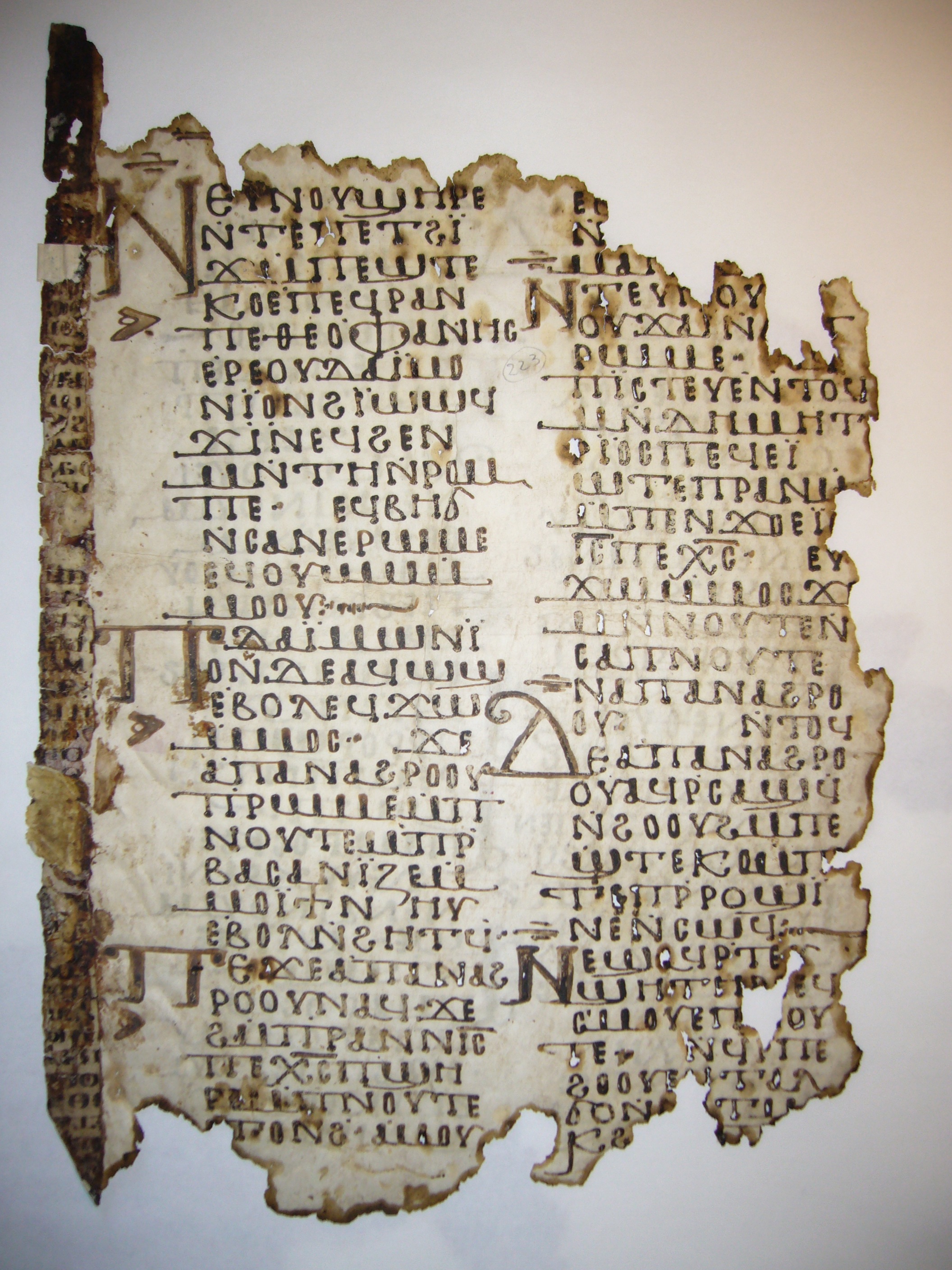
The newly identified fragment is kept today in the National Library in Paris as BnF Copte 1318, f. 114.

It is interesting to note that Paris BnF Copte 12911, f. 153 is another piece of the same parchment leaf Continue reading

Posted in Apocalypse of John, Bible, New Testament | Tagged , , , , , , , , , , , , | 2 Comments

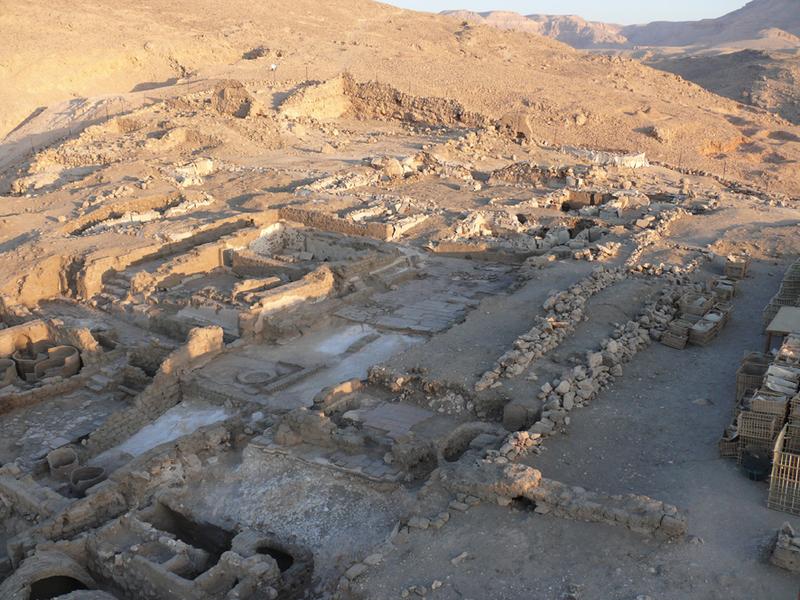
The Identification of Deir el-Bachit Monastery (Western Thebes)

The German archaeological mission in Egypt announces here the identification of Deir el-Bachit monastic site. The name of this place appears on some Theban ostraka as “the monastery of Apa Paul, on the mountain of Djeme.”

Posted in Monasteries | Tagged , , , , , , | Leave a comment

Pachomian Bibliography 4

The last series of Pachomian “goodies.”

M. Chaîne, Le manuscrit de la version copte en dialecte sahidique des “Apophthegmata Patrum” (Bibliothèque d’études coptes, 6; Cairo: Imprimerie de l’IFAO, 1960)

H. Quecke, Die Briefe Pachoms. Griechischer Text der handschrift W.145 der Chester Beatty Library eingeleitet und herausgegeben von hans Quecke. Anhang: Die koptischen Fragmente und Zitate des Pachombriefe (Textus Patristici et liturgici, 11; Regensburg: Kommissions-Verlag, 1975)

L. Regnault, Les chemins de Dieu au désert. Collection Systématique des Apophtegmes des Pères (Solesmes: Editions de Solesmes, 1992)

L. Regnault, The Day-to-Day Life of the Desert Fathers in the Fourth-Century Egypt (Petersham: St. Bede’s Publications, 1999)

Continue reading

Posted in Bibliographies, Pachomius | Tagged , , , , , , , , , | 12 Comments

Pachomian Bibliography 3

E. König, “Die Regeln des Pachomius,” Theologische Studien und Kritiken 51 (1878) 328‑332

P. Ladeuze, “Les diverses recensions de la vie de S. Pakhôme et leurs dépendances mutuelles,” Le Muséon (1897) 148‑171

P. Ladeuze, “Les diverses recensions de la vie de S. Pakhôme et leurs dépendances mutuelles,” Le Muséon (1898) 145‑168; 269‑286; 378‑395

W. E. Crum, Der Papyruscodex saec. VI‑VII der Phillipsbibliothek in Cheltenham (Schriften der Wissenschaftlichen Gesells. in Strassburg, 18; Strasbourg: Karl Trübner, 1915)

L. Th. Lefort, “Un texte original de la règle de saint Pachôme,” Comptes rendus de l’Académie des Inscriptions et Belles‑Lettres, 1919, 341‑348

L. Th. Lefort, “S. Pachôme et Amen‑em‑ope,” Le Muséon 40 (1927) 65‑74

L. Th. Lefort, “Littérature bohaïrique,” Le Muséon 44 (1931) 115‑135

L. Th. Lefort, “S. Athanase écrivain copte,” Le Muséon 46 (1933) 1‑33

A. van Lantschoot, “Allocution de Timothée d’Alexandrie prononcée à l’occasion de la dédicace de l’église de Pachôme à Pboou,” Le Muséon 47 (1934) 13‑56

R. Draguet, “Le chapitre de l’Histoire Lausiaque sur les Tabennésiotes dérive‑t‑il d’une source copte?,” Le Muséon 57 (1944) 52‑145 part 1 part 2

R. Draguet, “Le chapitre de l’Histoire Lausiaque sur les Tabennésiotes dérive‑t‑il d’une source copte?,” Le Muséon 58 (1945) 15‑95 part 1 part 2

L. Th. Lefort, “Un document pachômien méconnu,” Le Muséon 60 (1947) 269-283

D. Chitty, “Pachomian Sources Reconsidered,” Journal of Ecclesiastical History 5 (1954) 38‑77

R. Draguet, “Un morceau grec inédit des Vies de Pachôme apparié à un texte d’Évagre en partie inconnu,” Le Muséon 70 (1957) 267‑306

J. Vergote, “La valeur des Vies grecques et coptes de S. Pakhôme,” Orientalia Lovaniensia Periodica 8 (1977) 175‑186

A. Campagnano, “Monaci egiziani fra V e VI secolo,” Vetera Christianorum 15 (1978) 223‑246

D. Spanel, “A Toronto Sahidic Addition to the Pakhom Dossier (Fisher Al, ff. 1‑2),” The Ancient World 6 (1983) 115‑125

Posted in Bibliographies, Pachomius | Tagged , , , , , , | 2 Comments

Pachomian Bibliography 2

L. Th. Lefort, “Théodore de Tabennêsi et la lettre pascale de S. Athanase sur le canon de la Bible,” Le Muséon 29 (1910) 205‑216

L. Th. Lefort, “La Règle de S. Pachôme (étude d’approche),” Le Muséon 34 (1921) 61‑70

L. Th. Lefort, “La Règle de S. Pachôme (2e étude d’approche),” Le Muséon 37 (1924) 1‑28

L. Th. Lefort, “La Règle de S. Pachôme (Nouveaux documents),” Le Muséon 40 (1927) 31‑64

L. Th. Lefort, “La Règle de S. Pachôme (nouveau fragment copte),” Le Muséon 48 (1935) 75‑80

L. Th. Lefort, “Vies de S. Pachôme (Nouveaux fragments),” Le Muséon 49 (1936) 219‑230

L. Th. Lefort, “Les sources coptes pachômiennes,” Le Muséon 67 (1954) 217‑229

E. Amand de Mendieta, “Le système cénobitique basilien comparé au système cénobitique pachômien,” Revue de l’histoire des religions 152 (1957) 31‑80

H. Quecke, “Ein Pachomiuszitat bei Schenute,” in P. Nagel (ed.),  Probleme der koptischen Literatur. Wissenschaftliche Beiträge der Univ. Halle‑Wittenberg 1968/1 (Halle, 1968) 155‑171

T. Orlandi & A. de Vogüé, “Nuovi testi copti pacomiani,” in J. Gribomont (ed.), Commandements du Seigneur et Libération évangélique: Études monastiques proposées et discutées à St. Anselme 15‑17 février 1976 (Studia Anselmiana, 70; Rome, 1977) 241‑243

Th. Baumeister, “Der aktuelle  Forschungsstand zu den Pachomiusregeln,” in W. Godlewski (ed.), Coptic studies: acts of the Third International Congress of Coptic Studies, Warsaw, 20-25 August, 1984 (Warsaw, 1990) 49-54

Posted in Bibliographies, Pachomius | Tagged , , , , , , | 2 Comments

Pachomian Bibliography 1

E. Amélineau, Monuments pour servir a l’histoire de l’Egypte chrétienne au IVe siècle. Histoire de Saint Pakhome et de ses communautés (Annales du Musée Guimet, 17; Paris: Ernest Leroux, 1889)

F. Halkin, Sancti Pachomii Vitae Grecae (Subsidia Hagiographica, 19. Brussels: Société des Bollandistes, 1932)

L. Th. Lefort, Œuvres de S. Pachôme et de ses disciples (CSCO, 59. Scriptores coptici, 23; Louvain: Imprimerie orientaliste L. Durbecq, 1956) (Coptic text)

L. Th. Lefort, Œuvres de S. Pachôme et de ses disciples (CSCO, 60. Scriptores coptici, 24; Louvain: Imprimerie orientaliste L. Durbecq, 1956) (French translation)

Two volumes offered by the courtesy of the Oriental Institute in Chicago:

L. Th. Lefort, S. Pachomii vita bohairice scripta, Paris, 1925

L. Th. Lefort (ed.), S. Pachomii vitae sahidice scriptae, Paris, 1933

And Peeters’ review on Lefort’s edition:

P. Peeters, “L’édition critique des Vies coptes de S. Pacôme par M. le Professeur Lefort,” Le Muséon 59 (1946) 17-34; reprint. in P. Peeters, Recherches d’histoire et de philologie orientale vol. 2 (Subsidia Hagiographica, 27; Brussels: Société des Bollandistes, 1951) 91-103

A. Veilleux, La liturgie dans le cénobitisme pachômien au quatrième siècle (Studia Anselmiana, 57; Rome: Libreria Herder, 1968)

R.-G. Coquin, “Un complément aux Vies sahidiques de Pachôme: le Manuscrit Ifao, Copte 3,” BIFAO 79 (1979) 209-247

Posted in Bibliographies, Pachomius | Tagged , , , , , , , , , | 9 Comments